Scroll


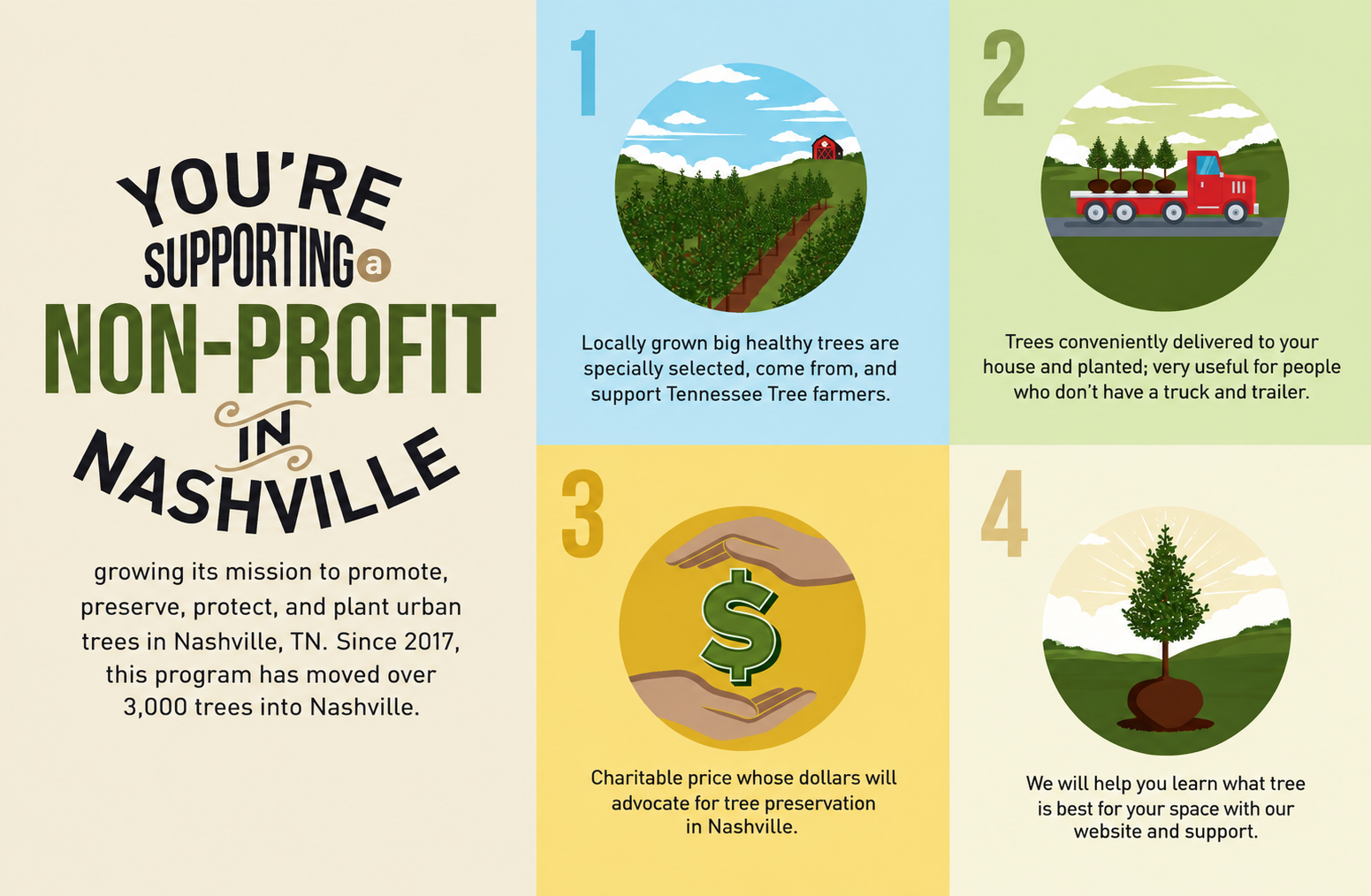
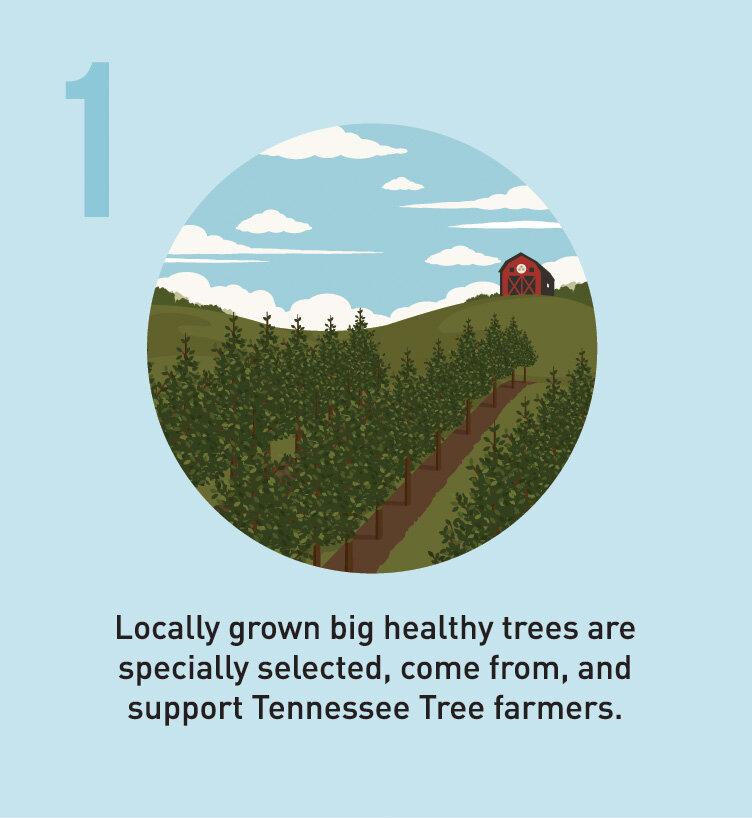
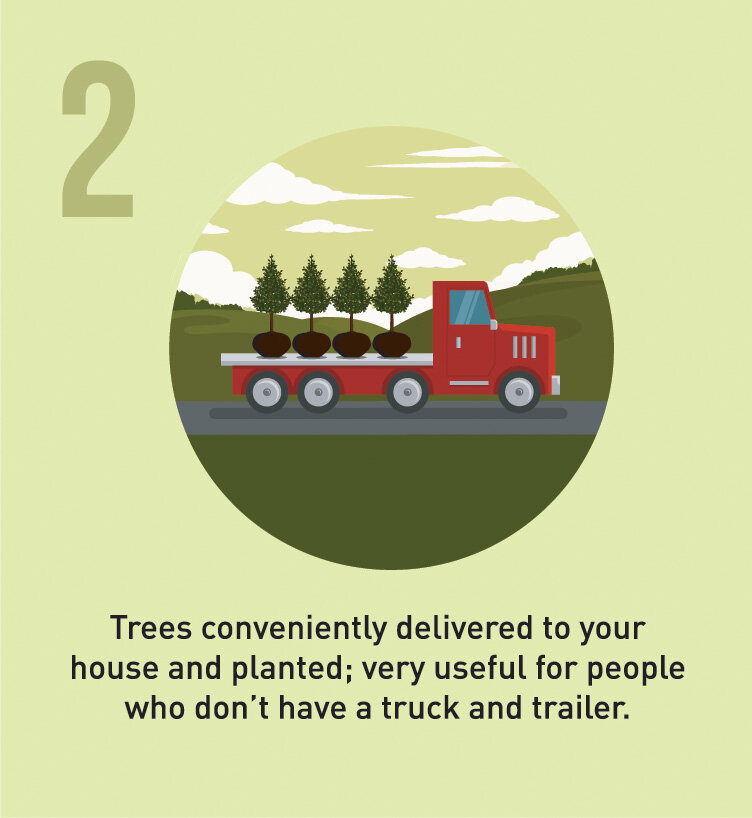

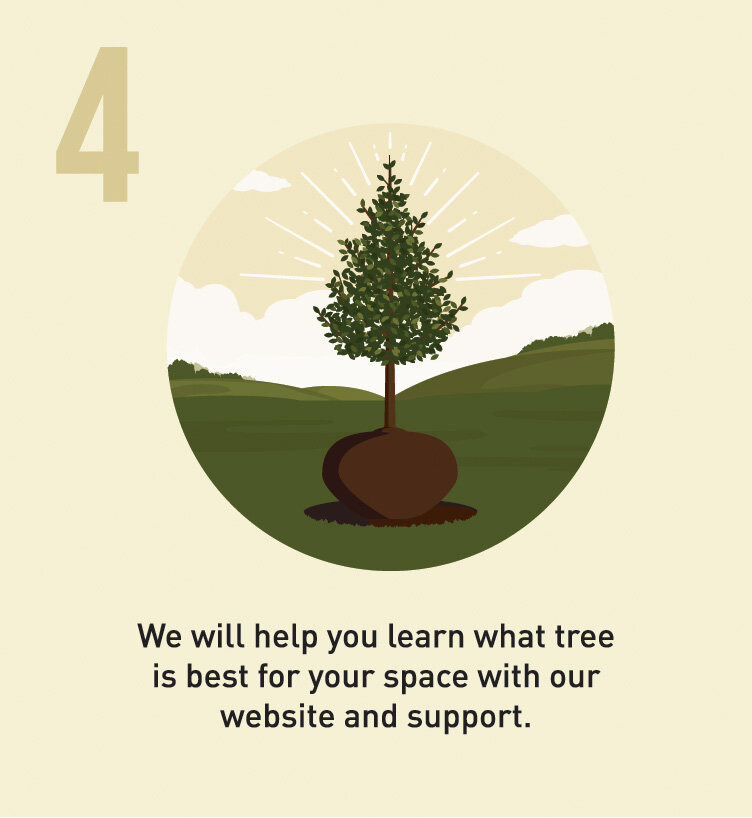


We have expanded the tree sale to include Davidson county and surrounding Nashville areas!
To allow us to accommodate such a large area, please order a minimum of three trees in the following zip codes:
37027 Brentwood, 37122 Mt Juliet, 37086 LaVergne, 37067 Franklin, 37121 Mt Juliet, 37167 Smyrna, 37069 Franklin, 37127 Murfreesboro, 37135 Nolensville, 37075 Hendersonville, 37218 Murfreesboro, 37014 Arrington, 37075 Gallatin, 37130 Murfreesboro, 37179 Thompson’s Station, 37066 Gallatin, 37174 Spring Hill, 37070 Goodlettsville, 37072 Goodlettsville
Delivery times and planting service availability may vary
Thank you for supporting Tennessee Trees!
Featured
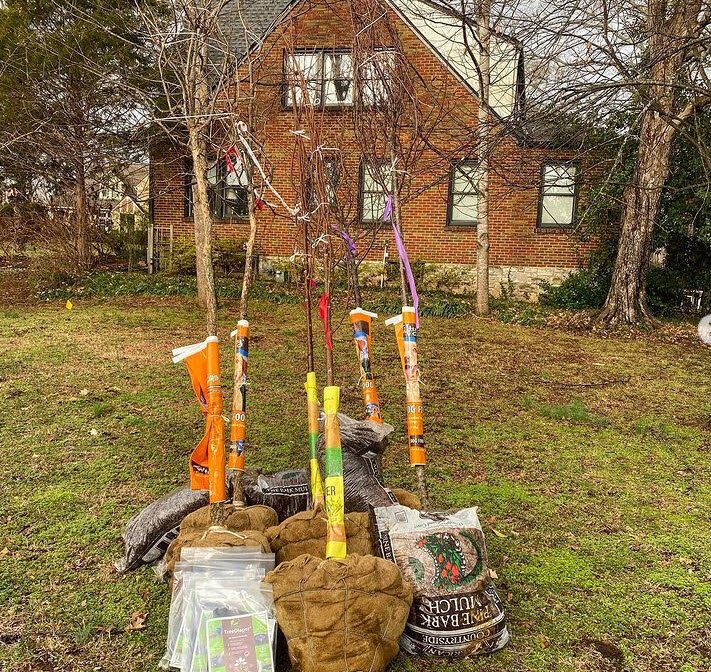
from $100.00
Trees are a gift that keeps growing with your friends and family, trees are also a gift to the community, and for the next generation to enjoy. Trees are a pretty awesome gift we think!
Purchasing this digital gift card creates a unique code. The gift card recipient can enter this code at checkout to subtract the gift card value from their order total.
This gift card never expires.

$199.50
LARGE CANOPY TREE; GROWS VERY FAST AND VERY STRONG; BEAUTIFUL TULIP LIKE FLOWERS; GREAT YELLOW FALL COLOR USUALLY; PLANT THIS TREE FOR FAST GROWTH AND FAST SHADE.
Species: Liriodendron tulipifera
Plant Size, Type & Delivery Height: 1.5” diameter trunk; Greater than 6 Feet Tall; Balled & Burlap
Ball & Burlap or Potted: Ball & Burlap
Mature Height: 80 feet
Growth Rate: Fast; >24”/year
Sunlight: Full Sun
Drought & Heat Tolerant: Yes
Description: The State tree of Tennessee, Kentucky and Indiana, it’s obvious this tree is a favorite. It is one of the fastest growing hardwood trees meaning you can watch this tree grow by leaps and bounds each year. The tree usually grows straight up in a single trunk and has a bulb like shape to it. As a large tree, it keeps rather compact and just likes to get tall. The tree is also known for its beautiful flowers which looks like a tulip blossom with an orange strip. It’s fall color is bright yellow during wet fall seasons. This tree is a great choice for so many reasons!
Size Options: We offer size options from 1.5” caliper (diameter) to 3” caliper (diameter) trunk sizes. The 1.5” root ball is entirely feasible for the average healthy homeowner to manage with a 24” root ball at about 200 lbs. The 3” option, however, has a root ball that is 750+ pounds and so it will cost extra labor and equipment to move. We also include the cost of planting the 3” diameter trees we offer because we don’t want you to risk planting a 750 lbs root ball by yourself. So don’t be shocked by the price of the 3” option, it includes everything delivery & planting. If you are wanting to plant a 750lb root ball yourself, please contact us ahead of time and we will discuss your plan and discount or refund the $200 tree planting service fee with the 3” option.
Growing Considerations: This tree likes to grow in full sun. It grows in a broad range of soil types from acidic loamy to sandy to clay alkaline soils. It prefers to be a little more moist than dry, but it can tolerate dry spells with little struggle.
Mono-Culture Risk: None; Not Frequently Planted
Invasive Risk: None

$205.80
LARGE CANOPY; GOOD URBAN TREE CHOICE; DISEASE RESISTANT; INTERESTING BARK
Plant Size, Type & Delivery Height: 8 feel tall; container grown (15 gallon); 1.5” caliper
Mature Height: 70-100 feet
Growth Rate: Fast; 3-4’/year
Sunlight: Full Sun
Drought & Heat Tolerant: Drought Tolerant
Wood Type: Hardwood; Strong Tree
Tree Form: Umbrageous; Large & Wide; Big Leaves; Produces Dappled Shade
Description: The London Plane Tree can be often misidentified for the American Sycamore and the easiest way to tell the different is to ask, is it growing in the middle of the city? If it is growing in the middle of a concrete and asphalt jungle, then it is very likely the London Plane Tree. This tree is a cross between the American Sycamore and the Asian Plane Tree. The result of this cross is a tree that looks like the American Sycamore with the toughness to grow through drought, heat, pollution and pollution. The London Plane Tree has a slight green-gray appearance compared to the ivory white bark of the American Sycamore. Aside from these differences, the London Plane Tree gives you all the things you like about the American Sycamore. Interesting bark, amazing height, strong growth form, and non-aggressive root systems around concrete/asphalt.
Special Growing Considerations: The London Plane Tree is suitable for most any growing condition but prefers to avoid severe drought and heat and so avoid planting the tree boxed in by concrete and asphalt as best as you can, but even so, the tree can tolerate those conditions as well. For the happiest tree planting, find a moist, dark, loamy place in your yard to plant this tree. If you don’t have a spot like that, clay is find too. Just be sure to water this tree for the first couple years after transplanting.
Mono-Culture Risk: Slight
Invasive Risk: Slight

$199.50
MEDIUM CANOPY TREE; NEON RED FALL COLORS; RED FLOWERS IN VERY EARLY SPRING; POLLINATORS NEED TREES LIKE THIS IN THE SPRINGTIME FOR EARLY FOOD.
Species: Acer rubrum
Plant Size, Type & Delivery Height: 1.5” diameter trunk ; Greater than 6 Feet Tall; Balled & Burlap
Ball & Burlap or Potted: Ball & Burlap
Mature Height: 60 feet
Growth Rate: Medium; 12-24”/year
Sunlight: Full Sun
Drought & Heat Tolerant: Slightly
Description: The red maple is an easy choice for most any yard. The tree is best known for it’s stunning intense red color in the fall and it’s usually the first tree to bloom in the spring with deep red flower poofs, bees foraging for an early spring food source especially love red maples. The young stems of this tree are usually tinged red in the winter as well and it has a smooth gray trunk that appears almost ceramic. It’s a tree you can’t go wrong with if you’re not sure exactly what kind of tree to get, you can’t really go wrong with a red maple for your selection.
Growing Considerations: This is a fairly tough tree. It likes most any soil type. It prefers a more wet soil year-round but can withstand a period of dryness once a year. Not the best tree to plant near asphalt and concrete for this reason. Unlike its sugar maple cousin, this tree prefers a yard that is in full sun. For maximum fall color interest, consider planting red maple with sugar maple to have alternating varied fall color patterns.
Mono-Culture Risk: Overplanted in Some Areas; Consider Sugar Maple
Invasive Risk: None

$195.30
MEDIUM CANOPY; TOUGH NATIVE; GREAT FOR SCREENING; EVERGREEN; EXCELLENT FOR BIRDS
Species: Juniperus virginiana
Plant Size, Type & Delivery Height: 24'“ Ball and Burlap; 5+ foot tree
Mature Height: 50 feet
Growth Rate: Medium; 12-24”/year
Sunlight: Full Sun
Urban Hardy Tree: Yes
Description: Oh what a tree! The eastern red cedar has a place in Nashville and well, pretty much anywhere in America because there is little that detours this amazing tree from growing. Whether it finds a crack in asphalt, or an open wild field, you can find the eastern red cedar growing. This tree is so common it is often overlooked in the landscape, and we’d like to change that because it’s a beautiful tree that can be used for making excellent screening. This tree also makes an excellent food source for birds who need all the help they can get these days to grow their families. (Bird populations are sharply declining)
Growing Considerations: The eastern red cedar is often thought of as a tank of a tree, and it is pretty tough, but it doesn’t like to be transplanted. That’s why these trees are between the height of 4-5 feet tall and have a little bigger root ball than usual. If you grow apple trees in your yard, or if your neighbors have apple trees, this tree is not a good choice unless you don’t care about your apple trees because they can pass on cedar-apple rust. Once this tree is established very little stops this tree from growing. It is drought tolerant, love clay soil, loves sandy soil, loves loamy soil, can be a little wet, can be a little more dry… it’s just a tree that just lives to thrive wherever it grows.
Mono-Culture Risk: None; Not Frequently Planted
Invasive Risk: None

$208.95
SMALL CANOPY TREE; GLOBALLY RECOGNIZED SYMBOL FOR LIFE; A TREE WORTH TALKING ABOUT.
Species: Prunus × yedoensis
Plant Size, Type & Delivery Height: 1.5” diameter trunk; Greater than 6 Feet Tall; Balled & Burlap
Mature Height: 15-40 feet
Growth Rate: Medium; 13-24”/year
Sunlight: Full Sun to Part Shade
Drought & Heat Tolerant: Definitely
Description: The Yoshino Cherry is a symbol for life’s fleetingness. Its burst of light pink flower blossoms beckon springtime in Nashville. This small tree is an excellent choice for spaces not big enough for a large tree but just big enough for something that can fill a space with dense shade in the summertime and create a stunning show in the springtime. This tree is world famous, it is the same tree that fills the parks of Washington D.C. with blossoms in the spring and it is the same tree whose beauty in bloom inspired the city of Nashville to rise up in protest against their removal in the spring of 2019’s NFL Draft event.
Special Growing Considerations: The Yoshino cherry’s flowers may be delicate but this tree is a relatively easy to grow tree. It can grow in a wide variety of soil types, doesn’t mind city heat or pollution, and it is drought tolerant.
Mono-Culture Risk: Overplanted in Some Areas
Invasive Risk: None

$245.30
SMALL CANOPY TREE; BLOOMS FOR WEEKS STARTING MID-SPRING; LIKES TO BE PLANTED IN THE SHADE OF OTHER TREES; BIRDS LOVE THEM.
Species: Cornus florida
Plant Size, Type & Delivery Height: Single Stem; 1.5” diameter trunk; Greater than 6 Feet Tall; Balled & Burlap
Mature Height: 25 feet
Growth Rate: Medium; 13-24”/year
Sunlight: Part Shade to Full Sun
Drought & Heat Tolerant: Not Really
Description: The dogwood tree is a springtime favorite. Blooming sometime after the red buds and cherry trees, dogwoods keep springtime’s color burst going with bright white flowers that last for weeks. This dogwood variety is obviously different in one way—it has gorgeous pink flowers! It also has stunning fall color and beautiful non-messy red berries which are a nice snack for passing birds. Dogwoods are an understory tree and are not particularly drought tolerant. Too often we see folks planting these in full sun where they will struggle with Nashville’s blistering heat. Consider planting these on yard edges in the part-shade of another tree or house.
Growing Considerations: This tree is an under-story tree meaning it likes part-shade with exposure to direct sunlight for part of the day. It prefers moist soil as well. Despite these preferences, the tree is adaptable, and can tolerate periods of drought and full fun, but it certainly will be more likely to struggle and increase mortality of the tree. The dogwood is not a tree that should be planted near asphalt and concrete but is an excellent tree for a neighborhood yard in the shade of another tree or a house.

$330.00
MEDIUM CANOPY TREE; BRED TO BE DISEASE RESISTANT URBAN HARDY TREE; GREAT FALL COLOR.
Species: Ulmus minor × parvifolia
Categories: Medium Canopy, Hybrid, Deciduous, Disease Resistant
Plant Size, Type & Delivery Height: 1.75” diameter trunk ; Greater than 10 Feet Tall, Container
Mature Height: 40 feet
Growth Rate: Medium; 12-24”/year
Sunlight: Full Sun
Drought & Heat Tolerant: Yes
Description: This medium sized pyramidal shaped hybrid elm tree is a relatively new variety of elm that is a hybrid cross between European Elm (minor) and Chinese Elm (parvifolia). It is a tree that is designed to be a solid choice for an urban tree. Not too big, not too small , just the right size and that is hardy in both disease resistance and drought tolerance. One more thing, FALL COLOR! This tree achieves a beautiful deep shade of red.
Growing Considerations: This tree is hybridized to be urban hardy. It is a good fit for most any yard.. It is drought tolerant, disease resistant, and it is not susceptible to many pests.
Mono-Culture Risk: None; Not Frequently Planted
Invasive Risk: Low to Moderate

$208.95
LARGE CANOPY TREE; FAST GROWING OAK TREE; DROUGHT TOLERANT; GREAT FALL COLORS; TENDS TO GROW TALL AND STRAIGHT; OAK TREES ARE, IN GENERAL, VERY STRONG TREES.
IMPORTANT NOTE! All oaks will be planted after January 1 to ensure transplant success.
Species: Quercus shumardii
Plant Size, Type & Delivery Height: 1.5” diameter trunk; Greater than 6 Feet Tall: Balled & Burlap
Ball & Burlap or Potted: Ball & Burlap
Mature Height: 80 feet
Growth Rate: Medium; 12-24”/year
Sunlight: Full Sun
Drought & Heat Tolerant: Yes
Description: The Shumard oak is a red oak variety that calls the south its home This tree makes a wonderful stately tree for any home’s front yard or backyard. It usually grows in a round shape. Like all oak trees, it grows slowly and strongly. You or whoever lives in your house when this becomes a large tree, will not have to worry about regular windstorms knocking this tree down at night. It is also one of the more beautiful oak trees in the fall, as it usually has a deep red color to its leaves in the fall instead of just turning brown. The acorns of this particular variety are small.
Size Options: We offer size options from 1.5” caliper (diameter) to 3” caliper (diameter) trunk sizes. The 1.5” root ball is entirely feasible for the average healthy homeowner to manage with a 24” root ball at about 200 lbs. The 3” option, however, has a root ball that is 750+ pounds and so it will cost extra labor and equipment to move. We also include the cost of planting the 3” diameter trees we offer because we don’t want you to risk planting a 750 lbs root ball by yourself. So don’t be shocked by the price of the 3” option; it includes everything delivery & planting. If you are wanting to plant a 750lb root ball yourself, please contact us ahead of time, and we will discuss your plan and discount or refund the $200 tree planting service fee with the 3” option.
Growing Considerations: This tree can grow in almost any soil type, including compacted alkaline soil, which makes this tree an especially good choice for a newly built home that may have trucked in new soil or recently disturbed and compacted soil from construction equipment. It prefers moister soil, but can tolerate droughts as well.
Mono-Culture Risk: None; Not Frequently Planted
Invasive Risk: None

$240.90
LARGE CANOPY TREE; OUR FAVORITE OAK TREE; TRUE SOUTHEAST NATIVE; QUINTESSENTIAL OAK TREE; INTERESTING
IMPORTANT NOTE! All oaks will be planted after January 1 to ensure transplant success.
Species: Quercus macrocarpa
Plant Size, Type & Delivery Height: 1.5” - 3“ diameter trunk options; Balled & Burlap
Mature Height: 80 feet
Growth Rate: Slow; less than 12”/year
Sunlight: Full Sun
Drought & Heat Tolerant: Yes
Description: In our opinion, one won’t find a better oak tree than the bur oak. If you imagine an oak tree, it’s shape, it’s mammoth size potential, its strength, and poetic shape, this is the tree of your dreams. The bark of this species of oak tree is very interesting looking and the acorns are larger than normal. The acorns are how this tree gets its name because the have a fringed cap that looks like burs, but don’t worry, they are not thorny like burs. These trees are a little harder to find and so their demand drives their cost up and we may have to remove this tree from time to time as availability fluctuates.
Size Options: We offer size options from 1.5” caliper (diameter) to 3” caliper (diameter) trunk sizes. The 1.5” root ball is entirely feasible for the average healthy homeowner to manage with a 24” root ball at about 200 lbs. The 3” option, however, has a root ball that is 750+ pounds and so it will cost extra labor and equipment to move. We also include the cost of planting the 3” diameter trees we offer because we don’t want you to risk planting a 750 lbs root ball by yourself. So don’t be shocked by the price of the 3” option, it includes everything delivery & planting. If you are wanting to plant a 750lb root ball yourself, please contact us ahead of time and we will discuss your plan and discount or refund the $200 tree planting service fee with the 3” option.
Growing Considerations: The bur oak is moderately drought tolerant, but prefers moist soils. As with all newly planted trees, you do not want to let your newly planted tree endure the brunt of a drought for at least two years and throughout the life of your tree, it will always appreciate it when you give it a nice watering during the dry months of the year. The bur oak will grow well in a variety of soils.
Mono-Culture Risk: None
Invasive Risk: None

$254.10
LARGE CANOPY TREE; NOT WIDELY ADAPTED INTO LANDSCAPES; SLOW GROWING; OAK TREES ARE, IN GENERAL, VERY STRONG TREES.
IMPORTANT NOTE! All oaks will be planted after January 1 to ensure transplant success.
Species: Quercus lyrata
Plant Size, Type & Delivery Height: 1.5” diameter trunk; Greater than 6 Feet Tall; Balled & Burlap
Ball & Burlap or Potted: Ball & Burlap
Mature Height: 80 feet
Growth Rate: Medium; 12-24”/year
Sunlight: Full Sun
Drought & Heat Tolerant: Yes
Description: This oak tree is the toughest oak tree we offer. It is a particularly important urban tree due to its hardiness, compact growing behavior, and shade-producing benefits. Like all oak trees, this is a strong tree that you won’t have to worry about breaking in ordinary storms. These trees are among the last trees to leaf out in spring, and it is easy to think these trees did not make it through the winter. It is often well into spring before the tree’s chartreuse green leaves emerge. This oak gets its name from its unique acorn structure, which has a cap on the acorn nut.
Size Options: We offer size options from 1.5” caliper (diameter) to 3” caliper (diameter) trunk sizes. The 1.5” root ball is feasible for the average healthy homeowner to manage with a 24” root ball at about 200 lbs. The 3” option, however, has a root ball that is 750+ pounds and so it will cost extra labor and equipment to move. We also include the cost of planting the 3” diameter trees we offer because we don’t want you to risk planting a 750 lbs root ball by yourself. So don’t be shocked by the price of the 3” option; it includes everything delivery & planting. If you want to plant a 750lb root ball yourself, please get in touch with us ahead of time, and we will discuss your plan and discount or refund the $200 tree planting service fee with the 3” option.
Growing Considerations: This overcup oak tree is amongst the hardiest oak trees you can plant in an urban environment. It has a compact shape and non-aggressive roots. This oak is an ideal tree for sidewalk infrastructure considerations. It tolerates any soil type, wet or dry, but it prefers to be kept wet. It is also adept to city pollution as well.
Mono-Culture Risk: None; Not Frequently Planted
Invasive Risk: None

$208.95
MEDIUM CANOPY TREE; VERY TOUGH; NATIVE FRUIT TREE; FALL COLOR; POLLINATOR FAVORITE
Species: Diospyros virginiana
Plant Size, Type & Delivery Height: 1.25” caliper (diameter trunk); Balled & Burlap
Mature Height: 35-60 feet
Mature Spread: 20-30 feet
Tree Gender: Unknown
Growth Rate: Medium; 12-24”/ year
Sunlight: Full Sun to Part Shade
Drought & Heat Tolerant: Very Drought Tolerant
Description: The common persimmon tree one of the toughest trees in the southeast and is under appreciated in the urban landscape. This is a medium canopy tree, so it is ideal for smaller spaces that need some shade. It doesn’t have aggressive roots, so it isn’t as likely to cause issues with various urban infrastructures surrounding it. In the fall the persimmon tree puts on quite a show with shades of yellow, orange, and red. If pollinated, the tree can be loaded with delicious beautiful orange fruits that both humans and critters enjoy alike. After the first few heavy frosts, the fruit can be made into persimmon ice cream, persimmon pudding, persimmon puree, or simply just enjoyed plucked right off the tree. This species have both male and female tree types and fruit will not produce unless pollinated.
Special Growing Considerations: The persimmon tree is especially adapted to grow in dry areas. This doesn’t mean that it doesn’t like water, but it can go where other trees simply can not in an urban environment. You don’t have to worry about soil quality with this tree either. It can grow in hard clay or rich and loamy, it doesn’t often care too much as long as it is in the ground, it will figure out how to grow with that it has been given. If you are concerned about fruit mess, do not plant the tree over common areas such as patios or sidewalks because if pollinated, it will produce fruit that will drop.
Mono-Culture Risk: None
Invasive Risk: None

$150.00
We all forget something, we just don’t remember what.
Whether you forgot, or didn’t know how big your tree would be, no worries we have you covered! You can still order it and we will take care of it during or shortly after the tree delivery period ends.
This product is for one tree planting service. Do not add it again if you get a pop-up asking if you’ d like to add it to your product. Once you have placed your order for tree planting service, we will get your tree planted. Thank you!

$201.60
SMALL CANOPY TREE; NATIVE SOUTHEAST HARBINGER OF SPRING; EXCELLENT TREE FOR SMALL SPACES
Species: Cercis canadensis
Plant Size, Type & Delivery Height: 1.5” diameter trunk ; Greater than 6 Feet Tall; Balled & Burlap
Mature Height: 25-35 feet
Growth Rate: Medium; 13-24”
Sunlight: Part Shade to Full Sun
Drought & Heat Tolerant: Moderately
Description: A true hallmark of Spring, Redbuds show off their purplish/pink flowers early on, even before their foliage comes out. With their wide, umbrella-like crowns and short height at maturity, Redbuds are great choices for many home landscapes, even near streets.
The fragrant flowers are edible, with a slightly sour taste, and can be added to salads, breads and pancakes. Unopened buds can be pickled and used as substitutes for capers. Butterflies, hummingbirds and song birds are attracted to Redbuds and bees use the flowers for pollen. Deer might be a pest as they like to munch on the foliage and twigs; sometimes squirrels eat the buds and bark.
Redbuds are loved for their four seasons of attractive displays. And because they’re small, they fit well in tight urban gardens.
Growing Considerations: Can grow in a variety of soil types and is moderately drought tolerant. This is an excellent tree for small patches of yard and small places.
Mono-culture Risk: Overplanted in General, Consider Buckeye as an alternative which is also offered in this sale.
Invasive Risk: None

$205.80
NATIVE SHADE TREE; POLLINATOR MAGNET; FRAGRANT FLOWERS
Species: Tilia americana
Delivery Plant Size, Type & Height: 1.5” diameter trunk ; Greater than 7 Feet Tall; Container Grown
Mature Height: 50-80 feet
Mature Spread: 30-40 feet
Growth Rate: Slow 1’/year
Sunlight: Full Sun to Partial Shade
Drought & Heat Tolerant: Moderate Drought Tolerance Once Established
Description: When the American Sentry is in full bloom, its abundant fragrant yellow flowers attract so many bees, hummingbirds and butterflies that the entire tree seems to buzz with activity. Tea can be made from the flowers and their nectar produces a honey that is prized for its gourmet flavor. Even the sweet sap can be made into a syrup. With its symmetrical shape and dark green heart-shaped leaves, the American Sentry makes an attractive shade tree.
Throughout history, Linden trees have been used in homeopathy to reduce nasal congestion, throat irritation and cough. Its sedative effects are used as remedies for nervousness and to relieve itchy skin. Since ancient times, the Linden tree has been a symbol of simplicity, innocence and kindness. The flowers’ perfume linked it to both the Greeks’ Aphrodite and the Roman’s Venus, both goddesses of love. In more recent European history, it was considered immoral to cut down a Linden tree because it was a symbol of friendship and fidelity.
Nashville musicians may already be enjoying the attractive wood of Linden trees, which is called limewood. Because the limewood has good acoustic properties and is easy to work with, it’s used to make electric and bass guitar bodies, wind instruments and even drum shells.
Growing Considerations: This tree doesn’t tolerate urban air and water pollution well, so it's best planted in a big yard, or away from heavy vehicle traffic. It will grow well in average, well-drained soils—the more dark, rich, and loamy the better. The abundance of nectar can attract the same type of aphids which feed on Hackberries, which may in turn result in the production of “honeydew” and a thin coat of dark gray film you see on things at the end of summer. We wouldn’t worry too much about this problem as long as this tree is not planted over a parking pad.
Mono-Culture Risk: None
Invasive Risk: None

$205.80
ELEGANT FRAGRANT SEMI-EVERGREEN TREE; BEAUTIFUL FLOWERS; MEDIUM SIZE; NATIVE; EXCELLENT FOCAL POINT
Species: Magnolia virginiana
Delivery Plant Size, Type & Height: Multi-Trunk Tree; 1.5” Diameter Trunks; 7+ Feet Tall
Mature Height: 10-30 feet
Mature Spread: 10-15 feet
Growth Rate: Medium 1-2 feet/year
Sunlight: Full Sun to Partial Shade
Drought & Heat Tolerant: Not Drought Tolerant
Description: Graceful Sweetbay Magnolias seem to glimmer when the silvery-green undersides of their leaves rustle in the wind. In the Spring, the intoxicating scent of creamy white, lemon-scented flowers can be appreciated from hundreds of yards away. In Nashville, Sweetbays are delightful year round with their evergreen foliage and smooth gray bark which has the distinctive fragrance of bay laurel spice. With pruning, the Sweetbay can be trained into a multi-trunked shrub or left intact with a wide column. Sweetbay Magnolia also makes for an excellent focal point tree or planted in a cluster.
Growing Considerations: The Sweetbay is a low maintenance Magnolia and grows easily in acidic, medium to wet soils. It will also tolerate urban air pollution. Do not let the sweetbay magnolia dry out in periods of drought. Do not plant this in an area that will become extremely dry. They tend to flourish in partial sun conditions.
Mono-Culture Risk: None
Invasive Risk: None

$201.60
SMALL CANOPY TREE; NATIVE SOUTHEAST HARBINGER OF SPRING; EXCELLENT TREE FOR SMALL SPACES
Species: Cercis canadensis ‘ Forest Pansy’
Plant Size, Type & Delivery Height: 1.5” diameter trunk ; Greater than 6 Feet Tall; Balled & Burlap
Mature Height: 25-35 feet
Growth Rate: Medium; 13-24”
Sunlight: Part Shade to Full Sun
Drought & Heat Tolerant: Moderately
Description: A true hallmark of Spring, Redbuds show off their purplish/pink flowers early on, even before their foliage comes out. With their wide, umbrella-like crowns and short height at maturity, Redbuds are great choices for many home landscapes, even near streets. Forest Pansy variety is known for its deep burgundy colored leaves in the spring and early summer and its upright weeping canopy. This tree will fill a space nicely with lush beautiful canopy during the growing season and interesting limb shapes in the winter. In the springtime you’ll be stunned by the profusion of neon pink blossoms.
The fragrant flowers are edible, with a slightly sour taste, and can be added to salads, breads and pancakes. Unopened buds can be pickled and used as substitutes for capers. Butterflies, hummingbirds and song birds are attracted to Redbuds and bees use the flowers for pollen. Deer might be a pest as they like to munch on the foliage and twigs; sometimes squirrels eat the buds and bark.
Redbuds are loved for their four seasons of attractive displays. And because they’re small, they fit well in tight urban gardens.
Growing Considerations: Can grow in a variety of soil types and is moderately drought tolerant. This is an excellent tree for small patches of yard and small places.
Mono-culture Risk: Overplanted in General, Consider Buckeye as an alternative which is also offered in this sale.
Invasive Risk: None

$193.20
SMALL CANOPY; EVERGREEN; ICONIC SOUTHERN CULTURE TREE; BEAUTIFUL; FRAGRANT; ELEGANT; GOOD FOR FENCE ROW SCREENING
Species: Magnolia grandiflora ‘Little Gem’
Plant Size, Type & Delivery Height: 1.5” diameter trunk; ~4 Feet Tall; 15 Gallon or Balled & Burlap
Ball & Burlap or Potted: Ball & Burlap or 15 Gallon Container
Mature Height: 20 Feet
Growth Rate: Slow; 6”'/Year
Sunlight: Full Sun to Partial Shae
Drought & Heat Tolerant: Yes
Description: At just one third the size of a standard Southern Magnolia, the Kay Parris allows homeowners with small lots to experience the joy of Magnolia blooms every Spring. The fragrant, creamy-white flowers appear in abundance, even when the trees are young, growing as large as 8 inches and appearing on and off through the Fall. The leathery, evergreen leaves are pretty enough to be used in cut floral arrangement and holiday wreaths.
Can be planted in a row with 5-10 feet spacing to create screening along a fencerow, road, or a space that needs privacy or visual interest. This tree is all the things you love about a Southern Magnolia condensed into a smaller version.
Growing Considerations: The southern magnolia is adept to most any soil type. It can withstand flooding and also periods of drought.
Mono-Culture Risk: None; Not Frequently Planted
Invasive Risk: None

$180.60
TOUGH EVERGREEN TREE; NATIVE TREE; NON-COMFORMING SHAPE; DROUGHT TOLERANT; IMPORTANT FOOD SOURCE FOR BIRDS
Species: Pinus virgiana
Plant Size, Type & Delivery Height: 1.5” Caliper Trunk; Balled & Burlap; 6-8 feet tall
Mature Height: 30-60 feet
Growth Rate: Slow; < 12”/year
Sunlight: Full Sun (or Part Shade)
Drought & Heat Tolerant: Drought Tolerant
Wood Type: Strong Flexible Tree
Tree Form: Non-Pyramidal ; Tall Lateral Limbs; Dappled Shade Tree
Description: One of our favorite trees because it’s somewhat of an underdog in the landscape. This tree is not considered attractive by many because it simply doesn’t want to conform to a perfect pyramidal evergreen shape you so often see in lawns and botanical gardens. This pine tree is wild at heart. As it grows it will take on a growth habit much like an oak tree or maple tree, it wants to have big strong tall lateral limbs that will eventually provide dappled shade for you and other critters passing under its canopy—we think it’s actually a very generous tree giving living things a break from blistering sunny dry days. This tree is also an important food source for many birds and small critters as well with its small pine cones.
We think this is a good fit for Nashville for many reasons, primarily because it’s a native tree with many ecological benefits and it is extremely tough. It will grow eventually very tall with very few lower limbs to trim. Its root system isn’t aggressive and its heat and dry tolerant, so planting the tree next to sidewalks or other kinds of infrastructure isn’t a bad idea. It wants to have tall lateral limbs that extend out and so it will eventually be a nice shade tree for someone’s walk. Virginia Pine, like all evergreen trees, will absorb storm water run-off all year long, not just in the green season.
Growing Considerations: Put this tree in the ground and forget about it basically. Virginia Pine does not like to be in very moist soil. Most planting areas in Nashville do not need to worry about overly moist soil. The tree will produce small pine cones and so do consider that these cones will eventually drop (they stay on the tree for 5 years before dropping) and may become tripping/slipping hazards. Virginia Pines love full sun conditions but they can also do part sun conditions as well. After planting the tree, like all newly planted trees, you should water this tree regularly to help it get established.
Mono-Culture Risk: None
Invasive Risk: None
Urban Hardiness: We consider this tree a very urban hardy tree.
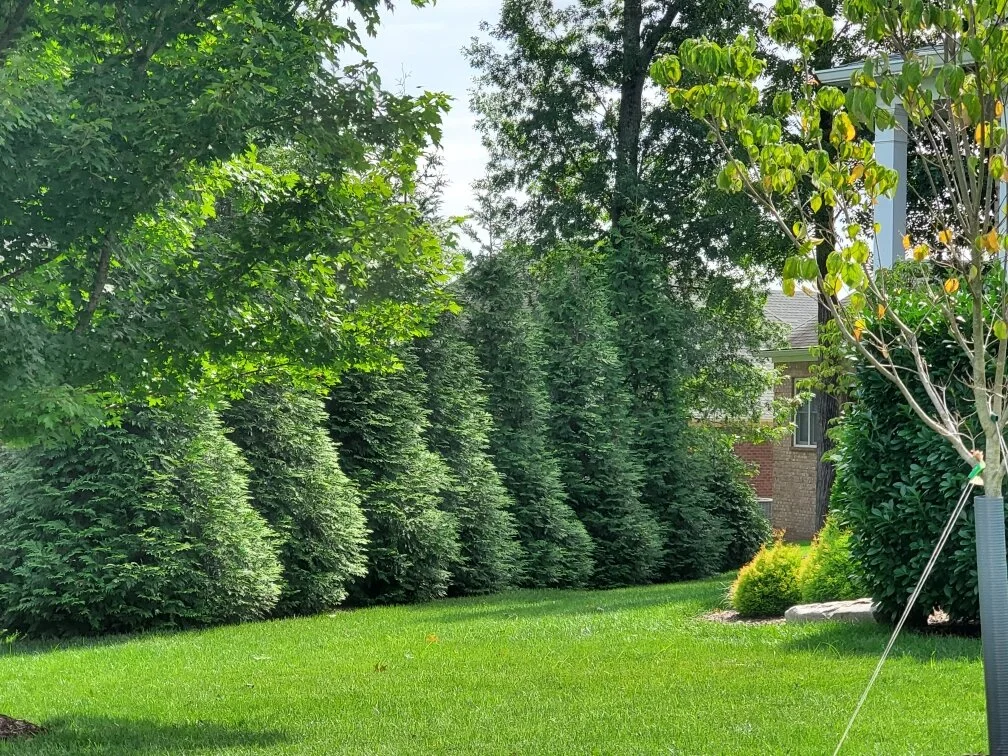
$207.90
LARGE, TOUGH EVERGREEN; DENSE FOLIAGE; EXCELLENT SCREENING TREE; GREAT FOR BIRDS; PLANT THIS TREE FOR FAST GROWTH AND PRIVACY.
Species: Thuja standishii x plicata
Plant Size, Type & Delivery Height: 1.5” diameter trunk; 6 Feet Tall; Container Grown
Ball & Burlap or Potted: Potted
Mature Height: 60 feet
Growth Rate: Fast; >36”/year
Sunlight: Full Sun to Part Shade. Needs at least 4 hours of direct sun per day.
Drought & Heat Tolerant: Yes
Description: This fast-growing evergreen can grow as much as three feet per year. Fully mature trees can be as tall as 60 feet, and as wide as 20 feet. The virtually maintenance-free Green Giant has very small, glossy, scale-like leaves that darken in color or bronze in the winter. When grouped together Green Giants make an excellent privacy screen and wind block, as well as reduce noise. The leaves have a pleasant aroma when squeezed and its botanical name, thuja, comes from the Greek word, perfume. Green Giant’s beautiful green leaves and pleasing fragrance make the perfect cuttings for winter holiday decoration. This tree is also tough! It resists most insects, diseases, and periodic drought. It is more deer resistant than other arborvitaes and will withstand heavy ice and snow. This is a great tree for birds as the dense foliage provides nesting sites and protection from weather.
Growing Considerations: This tree likes full sun but will tolerate some shade. It needs at least 4 hours of direct sunlight each day. It grows in a broad range of soil types from acidic loamy to sandy to clay alkaline soils. It does not do well in very wet, soggy areas.
Mono-Culture Risk: Frequently Planted
Invasive Risk: None
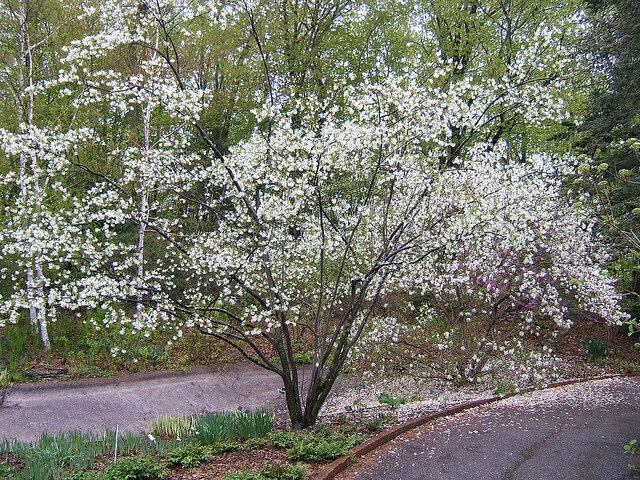
$204.75
NATIVE TREE; POLLINATOR FAVORITE; EXCELLENT TREE FOR FOUR SEASON INTEREST; RED-ORANGE FALL COLOR, EDIBLE BERRIES, ATTRACTS BIRDS
Species: Amelanchier laevis
Plant Size, Type & Delivery Height: Ball and Burlap; 6-7 feet tall, Clump Form
Mature Height: 25-30 feet
Mature Spread: 15-20 feet
Growth Rate: Meduim > 12 inches/year
Sunlight: Broken Full Sun, Part Shade, Shade
Drought & Heat Tolerant: Not Drought Tolerant
DESCRIPTION: This native small-canopy tree has something to offer in every season. A showy, fragrant display of five-petaled white blooms in the spring, delicious berries for pies and jams in the summer, red-orange foliage in the fall, and striking gray bark in the winter. The deep purple berries, high in vitamin C, were collected and preserved by Native Americans to prevent scurvy in the winter months. The delicious berries resemble a blueberry in both appearance and taste. They have a hint of almond flavor, which makes them an excellent choice for pies or muffins. Animals and birds enjoy the fruit as well, so you’ll have to beat them to the ripe berries on your tree. It is the host plant for Red-Spotted Purple and Viceroy butterflies and is visited by many other pollinators. Plant the Serviceberry as a small shade tree, street tree, in a woodland setting, or as a large shrub in borders.
GROWING CONSIDERATIONS: The Autumn Brilliance Serviceberry prefers some shade but does well in full sun. It will tolerate full shade but with full shade you will likely see less fruit production. It prefers moist, well-drained soil and does not do well in dry conditions. It does best in fertile, acidic soils but is tolerant of alkaline and clay soil. Rust, fire blight, and some insects may affect the tree cosmetically but seldom do damage.
Mono-culture Risk: None

$254.10
LARGE CANOPY; GOOD URBAN TREE CHOICE; INTERESTING BARK, NATIVE
Plant Size, Type & Delivery Height: 6-7 feel tall; Ball and Burlap; 1.5”caliper
Mature Height: 70-100 feet
Growth Rate: Fast; 3-4’/year
Sunlight: Full Sun,
Drought & Heat Tolerant: Medium Drought Tolerance
Wood Type: Hardwood; Strong Tree
Tree Form: Umbrageous; Large & Wide; Big Leaves; Produces Dappled Shade
Description: Majestic and umbrageous, the American Sycamore is among the oldest species of tree on Earth. This fast-growing native tree is also one of the largest trees in North America and symbolizes strength. George Washington recorded a Sycamore that measured 45 feet in circumference. These trees are often hollow when they reach 200- 300 years old, and American pioneers often stabled a livestock animal and even lived in them until their cabins could be built. A Sycamore’s canopy is broad and dense, and its maple-like leaves produce tons of shade in the summer. It produces one-inch seed balls that hang on long stems like ornaments in the fall and winter. The seed balls give the Sycamore its nickname “Buttonball.” This tree provides food and nesting sites for birds such as hummingbirds, red-tailed hawks, and woodpeckers. The yellow leaves in fall, seed ball ornaments, and interesting bark provide year-round interest. Sycamores are exfoliating bark trees, and as they grow, shed their brown bark to reveal a trunk that is ivory white, for this reason, they are a stunning winter specimen tree when they become large.
Special Growing Considerations: The Sycamore is suitable for most any growing condition but is sensitive to extreme drought. Avoid planting within 15 feet of a house, concrete sidewalks or driveways as they have aggressive roots. For this reason it does not make a good street tree. It is adaptable to most soil types but prefers moist loamy soil. Sycamore Anthracnose is a fungal disease that can occur during cool wet spring weather. It can damage foliage and may cause premature leaf drop.
Mono-Culture Risk: None
Invasive Risk: None

$201.60
VERY LARGE TREE; LIVING FOSSIL OF A TREE; FAST GROWING; PYRAMIDAL SHAPE; A DECIDUOUS REDWOOD
Species: Metasequoia glyptostroboides
Plant Size, Type & Delivery Height: 30 Gallon ; Greater than 6 Feet Tall
Mature Height: 75-100+ Feet
Growth Rate: Fast; 24-36”/year
Sunlight: Full Sun
Drought & Heat Tolerant: Not Really
Tree Form: Pyramidal
Description: The Dawn Redwood was once one of the most common trees on the planet with fossil records dating back 50 million years ago. It was thought to have only existed in the past , as fossils, until the 1940s when it was discovered growing in China. Since then it has made its comeback around the world as a novelty tree in many cities across the planet in arboretums, parks, and bold landscapes. This tree is closely related to the bald cypress and sequoia and so imagine that the two of those trees mixed. You can see the striking resemblance; the dawn redwood grows like a bald cypress shape and has the potential for height like a sequoia. This tree has such a fascinating history and ancient existence, that we feel it belongs in most any city around the world. This tree will one day become ginormous if allowed and will be an incredible focal point for the next generation and beyond. It is a deciduous tree, turning reddish brown in the fall before dropping its feathery leaves. The base of the trunk will often have a very pronounced fluting buttress, much more pronounced than even the bald cypress that you so often typically see.
Growing Considerations: This tree will become ginormous eventually. It will grow 2-3 feet every year once established and happy. So give it plenty of room. Think about the future of where you’ll plant it as best as possible. Think beyond your lifetime and even the lifetime of your property. Rather than planting it in the middle of your yard, perhaps in the corner where it could be worked around more easily is best?
This can be a tough tree suitable for some street tree plantings, but it does prefers a more acidic soil, which usually means a darker soil versus a more red soil. It does not do well with drought conditions typically, so find a place where it stays consistently moist.
Mono-Culture Risk: Low; Not Frequently Planted
Invasive Risk: None
THIS TREE HAS DIFFERENT SIZE VARIATIONS. 15 GALLON (~1.5”) AND 30 GALLON (~2”) DO NOT HAVE TREE PLANTING INCLUDED WITH PURCHASE.
45 GALLON (~3”) SPECIMENS INCLUDE TREE PLANTING.
45 GALLON TREE SPECIMENS INCLUDE A TREE DIAPER IN ORDER TO REDUCE MORTALITY RATES.

$225.50
LARGE CANOPY TREE; STRONG TREE; LEGACY TREE; EXCELLENT FOR WILDLIFE; UMBRAGEOUS
IMPORTANT NOTE! All oaks will be delivered and planted after January 1st to ensure transplant success.
Species: Quercus alba
Plant Size, Type & Delivery Height: 15 - 45 Gallon Sizes; 6-12 feet tall.
Ball & Burlap or Potted: Container Grown, or Balled Burlap depending on source availability
Mature Height: 50-80 feet
Mature Spread: 50-80 feet
Growth Rate: Medium; 12-24”/year
Sunlight: Full Sun, or Part Shade for Slow Growth
Drought & Heat Tolerant: Yes; Prefers Moist
Description: The white oak tree (Quercus alba), not to be confused with the group of trees known as ‘white oaks,’ is the quintessential white oak. It exemplifies what we love about this group of trees with their interesting shapes, and their large lateral branches that grow as far out as the tree grows tall—this tree is the mother earth tree for the southeastern half of the North American continent, it seems. So much wildlife can sustain itself from trees like these. Intricate systems of life use this tree for food, make food from other critters using this tree for food, find home and rest in its branches—in times like these where every yard is a vital connection for our ecosystem, planting a tree like this is so important. Even if you don’t care so much about the wildlife aspect of a tree like this, you can certainly appreciate its majestic form and its giving branches that provide so much shade. If you have a large yard, we think you should strongly consider planting this tree.
Growing Considerations: This tree can grow in almost any soil type, including clay-like soils, but it really prefers moist loamy acidic soils. These soils usually look dark and are more fluffy or terse in their nature. You’ll want to give this tree a large space. It will grow fast in full sun conditions, but perhaps you have a mostly sunny patch of yard that you want to get a tree started where you’ll know one day existing trees will age out, or will be removed for some other reason, then you could plant this tree there too. It’s best for a tree like this that you plant to leave a legacy for the future. Plant it smart, try to think ahead of what may happen to it or your property when you have moved on. It’s a special tree when it becomes big, and it would be a tragedy if it were just planted in the wrong place when someone wants to do an expansion or demolition. Do your best to give it a long life for all to enjoy.
Mono-Culture Risk: None; Not Frequently Planted
Invasive Risk: None
IF YOU ORDER A 45-GALLON (3”) TREE, THIS PRICE INCLUDES PLANTING COSTS. THESE TREES ARE VERY LARGE, AND MACHINERY WILL BE NEEDED TO PLANT THESE TREES SAFELY. THIS PRICE ALSO INCLUDES A TREE DIAPER INSTALLATION IN ORDER TO REDUCE MORTALITY RATES.
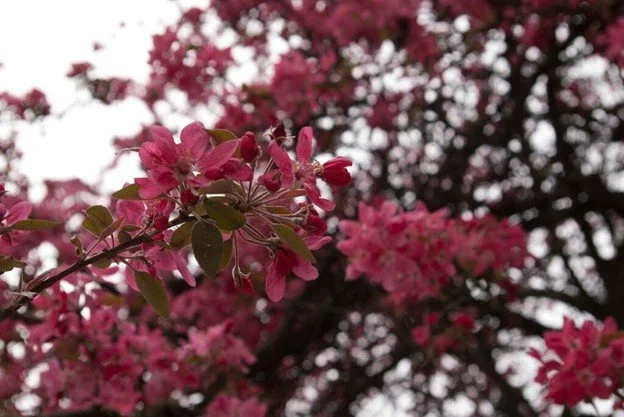
$258.50
VISUALLY APPEALING; BRIGHT PINK FLOWERS; GLOSSY OVATE FOLIAGE, GREAT FOR POLLINATORS AND ATTRACTING BIRDS
Species: Malus
Delivery Plant Size, Type & Height: 1.5” diameter trunk; More than 6 Feet Tall; Container Grown
Mature Height: 20 feet
Mature Spread: 15 feet
Growth Rate: Moderate 10-18 inches/year
Sunlight: Full Sun
Drought & Heat Tolerant: Moderate Drought Tolerance Once Established
Description: Striking color in every season with dense branching and glossy leaves that turn orange red in the fall. The tree typically reaches a height of 15 to 20 feet and spreads about 15 feet wide. This slender tree makes it an excellent choice for small gardens, tight spaces, or as an accent tree.
One of the standout features is the profusion of vibrant pink blossoms in spring, creating a stunning display and attracting bees and other pollinators to the garden. After the flowers fade they bear small red fruit that will be a food source for birds into the winter.
Overall, crabapple trees are compact, visually stunning, ornamental fruit, good disease resistance, and easy maintenance. These features make it an excellent choice for adding texture interest, color, and beauty to any space.
Growing Considerations: Plant Crabapple trees in a sunny spot, making sure they are watered regularly through the hot summer months.
Mono-Culture Risk: None
Invasive Risk: None
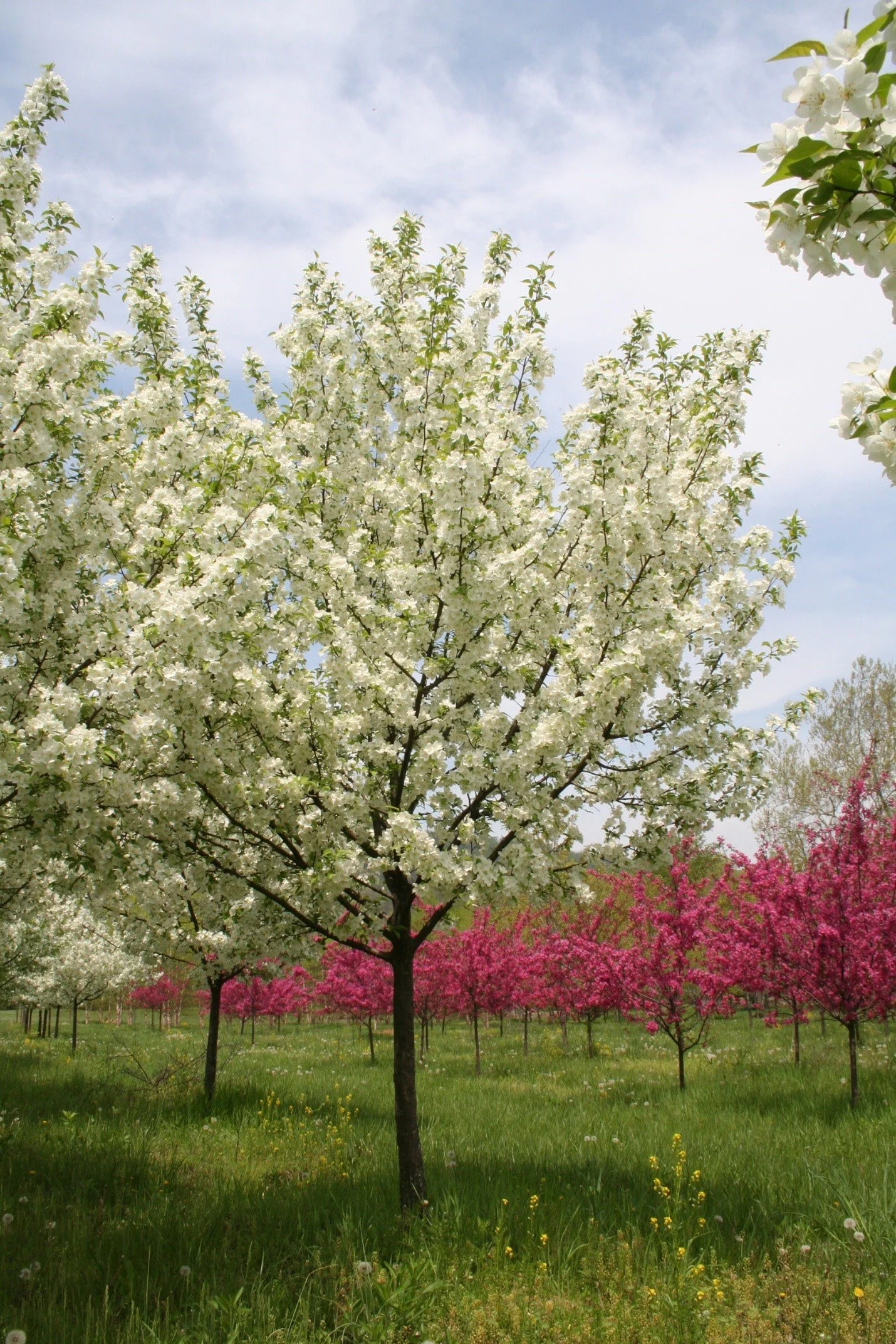
$258.50
ELEGANT ORNAMENTAL CULTIVAR; WHITE FLOWERS; YELLOW FALL FOLIAGE;
Species: Malus "Spring Snow"
Delivery Plant Size, Type & Height: 1.5” diameter trunk; More than 6 Feet Tall; Container Grown
Mature Height: 20-25 feet
Mature Spread: 20-22 feet
Growth Rate: Moderate 6-12 inches/year
Sunlight: Full Sun
Drought & Heat Tolerant: Moderate Drought Tolerance Once Established
Description: A compact ornamental cultivar with a rounded crown of glossy, oval shaped leaves that turn shades of yellow and orange in the fall. The Snowdrift crabapple produces a profusion of beautiful white flowers in spring, creating a stunning, elegant display while supporting bees and other pollinator populations.
Looking for a Crabapple tree that doesn't produce fruit? The Spring Snow is your tree! Perfect for patios and courtyards where a gorgeous ornamental with less mess is preferable.
Overall, the Spring Snow crabapple tree offers a compact, rounded form, stunning spring blossoms, good disease resistance, and easy maintenance. These features make it an excellent choice for adding interest, color, and texture to smaller landscapes as well as a great addition to as a stand out tree in larger landscapes.
Growing Considerations: Plant the Spring Snow Crabapple in a sunny spot, making sure it is watered regularly through the hot summer months.
Mono-Culture Risk: None
Invasive Risk: None

$208.95
SMALL CANOPY TREE; FEBRUARY’S PRETTIEST TREE; EARLIEST BLOOMING CHERRY; VISUALLY SPECTACULAR
Species: Prunus 'Okame'
Plant Size: 1.5” diameter trunk; Greater than 6 Feet Tall
Mature Height: 20-30 feet, with a spread of 15-25 feet
Growth Rate: Moderate; 13-24”/year
Sunlight: Full Sun to Part Shade
Drought & Heat Tolerant: Moderate Tolerance
Description:, This stunning ornamental tree known for its early and abundant display of vibrant, pink flowers is certain to sooth your winter blues, with blooms starting in February. The Okame is the earliest blooming cherry tree, blooming three weeks before the popular Yoshino Cherry, providing an important source of nectar and pollen for emerging bees and other early pollinators when other flowering plants are not yet available. Once the flowering spectacle has passed, the Okame cherry tree transitions to a canopy of lush green leaves. This rounded crown of ovate, elliptical leaves with serrated edges, creates a visually pleasant, interesting and textured backdrop. In autumn, the leaves turn a rich bronze or fiery orange hue. This deciduous tree is a popular choice for urban landscapes and gardens due to its exceptional beauty, hardiness and relatively compact size.
Special Growing Considerations: Beyond its striking aesthetics, the Okame is known for its adaptability and capacity to thrive in various climate conditions. It prefers full sun to partial shade and can grow in a wide variety of soil types. Preferring moist, well-drained soil, once established, the Okame can withstand moderate periods of reduced water availability.
Attributes: Early Flowering, Attractive, Ornamental, Compact Size, Deciduous, Hardy, Pollinator Friendly, Low Maintenance
Mono-Culture Risk: None
Invasive Risk: None

$208.95
SMALL CANOPY TREE; VERY SHOWY, MULTILAYERED PETALS; REMARKABLE BEAUTY
Species: Prunus serrulata 'Kwanzan'
Plant Size: 1.5” diameter trunk; Greater than 6 Feet Tall
Mature Height: 20-25 feet
Growth Rate: Moderate; 13-24”/year
Sunlight: Full Sun
Drought & Heat Tolerant: Mild Tolerance
Description: This captivating ornamental tree is a true treasure and focal point for any landscape. The “Showiest Japanese Cherry Tree” with its crown of multiple layered blossoms in varying ombre shades, from pale to vibrant pink, creates a full and voluminous display. Beyond its remarkable flowers, the Kwanzan cherry tree provides visual interest throughout the year as it transitions to a canopy of lush green leaves. Smooth and glossy, with an ovate or elliptical shape and serrated edges, the Kwanzan foliage creates a visually pleasant, interesting and textured backdrop. In autumn, the leaves turn to warm shades of bronze, gold and red. This deciduous tree is a popular choice for adding aesthetic value to any landscape due to its exceptional beauty, and relatively compact size.
Special Growing Considerations: To ensure this beauty thrives and blooms to its full potential, it should receive at least 8 hours of full sun daily. Kwanzan prefer well drained, fertile, slightly acidic soil. Make sure to keep this tree adequately watered, especially during hot, dry periods.
Attributes: Profusion of pink double flowers, Attractive, Fruitless Cultivar, Compact Size, Deciduous, Vase Shaped, Blooms Mid Spring
Mono-Culture Risk: None
Invasive Risk: None
$199.50
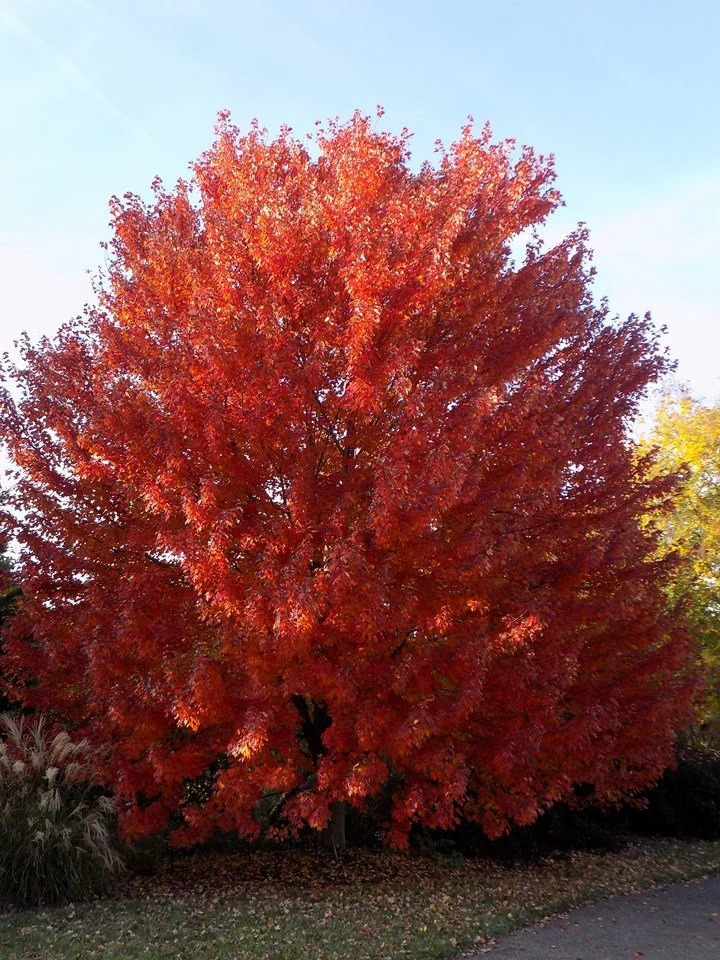
MEDIUM CANOPY TREE; EXCEPTIONAL RED FALL COLORS; SYMMETRICAL CROWN; SEEDLESS
Species: Acer rubrum “Sun Valley”
Plant Size, Type & Delivery Height: 1.5” caliper and 3” caliper trunk available ; Greater than 6 Feet Tall
Ball & Burlap or Potted: Ball & Burlap
Mature Height: 35 feet
Growth Rate: Fast; 12-24”/year
Sunlight: Full Sun to Part Shade
Drought & Heat Tolerant: Slightly
Description: The red maple is an easy choice for most any yard. The tree is best known for it’s stunning intense red color in the fall and it’s usually the first tree to bloom in the spring with deep red flower poofs, bees foraging for an early spring food source especially love red maples. The young stems of this tree are usually tinged red in the winter as well and it has a smooth gray trunk that appears almost ceramic. It’s a tree you can’t go wrong with if you’re not sure exactly what kind of tree to get, you can’t really go wrong with a red maple for your selection.
Growing Considerations: This is a fairly tough tree. It likes most any soil type. It prefers a more wet soil year-round but can withstand a periods of dryness once established. Best planted in the yard and not next to concrete or asphalt because the roots are shallow and may buckle if planted too close to roads, sidewalks or driveways. Tolerant of pollution and very cold hardy.
Mono-Culture Risk: None
Invasive Risk: None
Bundles:
Summary Block
This block has no content yet. Items you add to the page connected to this block will display here.
Featured
Nashville Tree Conservation Corps is showing up for Nashville's trees. Your generous gift will fund new trees and protect existing canopy through our policy and advocacy work.
$25 can water a new tree
$100 can fund a small tree from local farmers
$250 can fund a tree and professional planting
$1,000 can water 10 mature trees in summer
All gifts are tax deductible. Tax ID: 83-3548812