
City Tree Spotlight: What Nashville Can Learn From Austin, TX
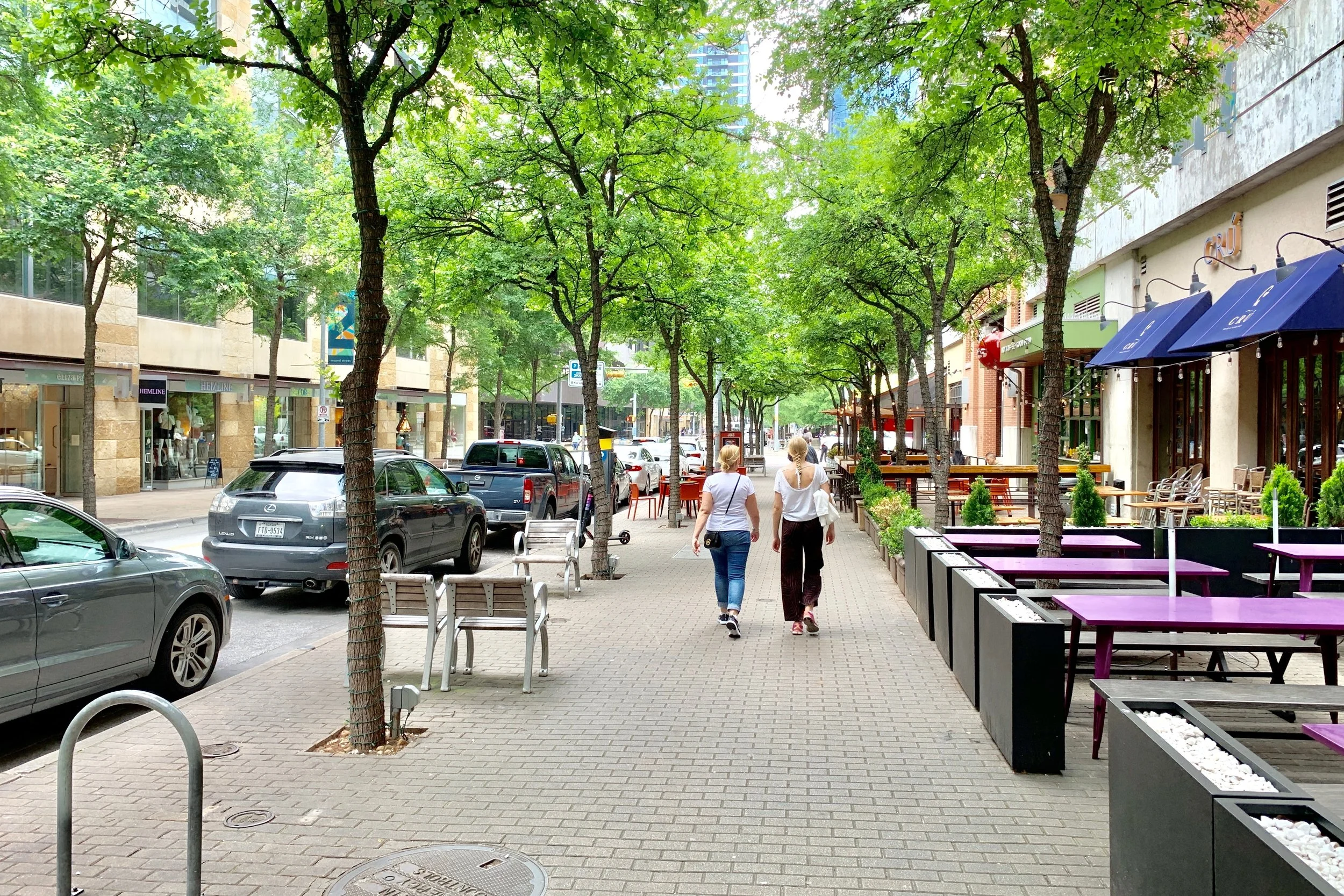
As a hot, drought-prone place that’s been rapidly expanding in recent years, Austin, Texas, has valuable lessons that Nashville can draw on to improve our own urban canopy. While our two cities have some similar approaches to tree regulation, Austin offers unique success stories in the areas of urban heat management and water conservation. In this article, we’ll look at Austin’s strategies to manage those concerns, then consider how Nashville might benefit from taking similar approaches—the Nashville way.
Southern Environmental Pressures
Austin’s regional grasslands and rolling hillsides have a hot, dry climate with long summers. Although the Texas environment contrasts with Nashville’s highland forests and wooded wetlands, our southern cities share certain conditions:
Hot, dry summers.
Development and growth pressures.
Uneven canopy distribution.
Water management and conservation challenges.
To confront the warm, arid climate, as well as the area’s rising summer temperatures (from both the urban heat island effect and climate change), the city of Austin recognizes that the tree canopy is critical for cooling the city.
Austin’s Climate Action and Resilience Department oversees long-term strategies like tree canopy expansion and strong protection policies to maintain existing coverage, while Austin’s Water Department collaborates on water capture and conservation programs that affect trees and the wider canopy ecosystem.
Trees for Urban Heat Management
Austin has deeply incorporated trees into their heat mitigation strategies, especially through canopy maps and heat mapping tools to identify high-need areas. With its long, hot summers and drought-prone climate, the city openly values the ecosystem services urban trees and canopies provide that can reduce heat island effects, such as:
Cooling from shade and moisture release.
Soil stability and permeable ground cover.
Groundwater storage.
The majority of Austin’s urban trees are contained on residential parcels, highlighting the important role of homeowners in caring for the local canopy ecosystem. However, the canopy is unevenly distributed across the city, so in addition to maintaining mature trees, the city’s urban forest plan supports increasing canopy coverage in historically disadvantaged neighborhoods to ensure that areas with fewer trees get more tree planting.
Another way Austin is actively protecting the integrity of its canopy is with firm protections for mature trees on residential land: permits are required for the removal of all trees that have a trunk width of 19 inches or more in diameter (about a foot and a half wide) on private property, with special consideration required for trees more than 24 inches in trunk width of certain native species (such as Pecans and Bald Cypress trees).
By planting new trees and keeping mature ones in place, Austin is building up their area-wide resilience in the face of environmental change.
Supporting Water Conservation
The dry climate of central Texas has led to a water-consciousness in Austin’s urban forest management. Austin Water collaborates with the Office of Sustainability on certain water conservation and sustainability efforts, including strategies that tie to the city’s climate and sustainability goals, such as watershed protection, reuse systems, water capture, and water conservation outreach.
Austin’s 2018-2025 Rain Catcher pilot program offered incentives like rebates and discounts to eligible property owners to install rain gardens, trees, and/or cisterns to slow down stormwater and reduce erosion, help with drainage, and conserve water. In a roughly one-square-mile area of Northern Austin, 117 large cisterns, 65 rain gardens, and 124 street trees were installed on residential properties. The program has ended, but its success serves as a model for future programs.
Currently, Austin offers several other rebate programs, including support for:
Installing a full rainwater harvesting or cistern system.
Converting turf lawns into native, water-efficient landscaping to reduce watering needs.
Irrigation upgrades, water timers, and landscape-related water reduction measures.
These water catchment programs demonstrate the city’s commitment to encouraging conservation across Austin. More broadly, Austin’s Water Forward strategy formally coordinates long-term canopy goals and actions across departments to link the urban tree canopy’s health with water issues and general climate resilience.
Lessons From Austin for Nashville
Tactics that Nashville could study from Austin’s experiences with Texas heat and drought include:
Data-driven planning to combat urban heat and support water management.
Permit requirements for mature tree removals of certain sizes and species on private property.
Public programs that incentivize residential landscape water conservation, capture, and reuse.
Formal cross-department coordination of urban canopy and water management strategies.
Strengthening removal protections on big, mature trees (which take many years to reach maturity and perform impactful ecosystem services) can have real long-term effects on a location’s ability to manage both stormwater and heat as neighborhood-wide green infrastructure.
Especially with recent Tennessee state legislation reducing protections for wetlands, local legislation can help encourage responsible management and reasonable environmental protections within and around Nashville. Trees are essential to Tennessee wetlands, which in turn have important implications for the Nashville area’s ability to manage heat and water.
Learn more about the foundational importance of wetlands in our article on the 2025 statewide deregulations of wetland management standards.
Although Nashville’s seasonal droughts can stress trees, we also regularly receive substantial rainfall, which means that green landscapes that capture water for drought resilience can also channel excess water in heavy rains and storms. This can reduce flooding and runoff, recharge groundwater, and support tree growth without further stress on the water supply. In general, preserving the canopy in robust condition for both heat and water management will result in the city being more resilient to seasonal extremes and variability.
Austin and Nashville have many differences, but both cities are showing increased interest in urban canopy protection. We love what Austin has been up to in this regard, and there’s always more to do. Let’s take what lessons we can from our southwestern neighbors to make Nashville trees thrive.
How You Can Support Nashville Trees
Residents don’t have to wait for policy changes to take action! If you have space to plant a tree in your yard, check out our tree sale to find the right fit. With a donation to the Nashville Tree Conservation Corps, you can help us in our mission to promote, preserve, protect, and plant the tree canopy. You can also donate a tree for us to plant, or sign up to volunteer and help us plant trees!
For regular news, care tips, and information on Nashville’s urban forest, subscribe to our email newsletter, and check out our Linktree for more ways to connect.