
Conservation Development In Nashville: Preservation Success Stories
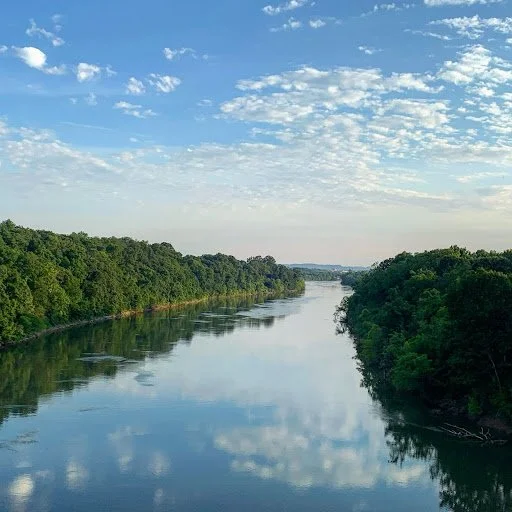
In 2022, Nashville implemented a tree conservation rule that requires certain new residential housing developments to preserve at least 20% of standing trees on wooded sites. Since the ordinance was adopted, there have been multiple cases of compliance with meaningful results! Here, we'll go over four examples of building projects in Nashville that reserved space for canopy preservation while meeting the real needs of a growing urban environment.
What Is Conservation Development?
Conservation development is a land-use approach that treats natural resources as essential infrastructure within the built landscape, balancing construction needs with preservation and maintenance of natural spaces.
This strategy recognizes that trees and other natural landscape features perform valuable ecosystem services for communities that can’t be reproduced otherwise, such as cooling effects, stormwater management, and air filtration. Incorporating conservation goals into development plans helps make new construction projects more resilient and sustainable.
Preservation Success Stories
Metro Nashville passed a 2022 ordinance requiring at least 20% tree preservation on certain new developments in exchange for allowing the house lots to be smaller on a sliding scale: more preservation equals smaller lots allowed. Smaller lots mean denser development, which can have positive environmental impacts across the city when paired with strong tree preservation standards, urban canopy goals, and stormwater management plans.
We at the Nashville Tree Conservation Corps are very happy to report on the positive outcomes of this ordinance, which we advocated for, helped draft, and supported through its review and approval. That process took many hours of work over nearly a year.
Below are four examples of the ordinance being complied with successfully, demonstrating the impact that baseline conservation standards and regulations can have on the design of urban communities.
Harpeth Overlook
Harpeth Overlook is a residential community in West Nashville that was approved in April 2025 for 35 new lots on nearly 16 acres of wooded land in the heart of the Harpeth River watershed. The development plan conserves 30% of the standing woodland, which is maintained as an essential feature of the secluded suburb.
The site is naturally heavily wooded with a stream that runs through it, natural slopes, floodway and associated buffers, as well as protected trees. The plan doesn’t propose any building within the floodway or the buffers except for a walking trail, which doesn’t result in the removal of any trees.
A homeowner’s association (HOA) will be responsible for the management and maintenance of open spaces and landscape buffers. In addition to its preserved woods, the community features carbon-neutral home design.
The full development plan can be found beginning on page 68 of this Metropolitan Planning Commission report.
Jenkins Landing
A proposed subdivision in Hermitage (pending approval), Jenkins Landing plans to construct 90 single-family lots on a site of about 49 acres and conserve an awesome 50% of the standing trees (kudos to the plan designers, Kimley-Horn)! The development extends an existing subdivision and keeps a large portion of the currently standing trees intact as an integral space.
In the project’s plan, the notes specify that the trees-to-remain must be protected from construction damage by installing fencing and signage (labeled “tree root protection zone”) at the drip line or 10 feet from the trunk, whichever is greater.
Once construction is completed, the plan directs the planting of canopy and understory street trees in the public right-of-way, which will help the canopy grow back within the newly built space.
Bella Terra
Bella Terra is a subdivision of 53 homes being built in Antioch by Habitat for Humanity of Greater Nashville on a site of about 20 acres, of which 22% will be preserved as natural, open space. Much of the preserved space is wooded and reaches from the outer portion of the subdivision into the center of the built area.
Natural areas on the site include slopes as well as protected and heritage trees. There are also two stormwater collection ponds designated within the community space. The full plan can be found in this document, beginning on page 20.
Stewarts Ferry King
Stewarts Ferry King is a plan (pending approval) to create 33 lots on a site of about 31 acres, conserving 20% of the standing trees of the site as required by Nashville’s conservation development guidance, mostly along the outer edges, which border a shoreline woods along Percy Priest Lake. The site also includes a waterway that won’t be disrupted, in accordance with Nashville’s stormwater regulations.
Residential Canopy Care in Nashville
Conservation development is an approach that helps manage certain large-scale construction projects, but homeowners themselves can make the decision to plant and maintain trees on their property. Most of Nashville’s canopy is located on residential land, so homeowners have a big effect on local canopy care!
If you’ve been thinking about planting a tree in an open space in your yard, check out NTCC’s tree sale for below-retail prices for trees sourced from local nurseries and delivered to your door. Or, volunteer to help us plant a tree somewhere in Nashville! If you’re able, consider making a donation to help fund our work supporting the city’s canopy.
Subscribe to our email newsletter for more info and check out our Linktree for more ways to connect.