
Nut Trees in Nashville
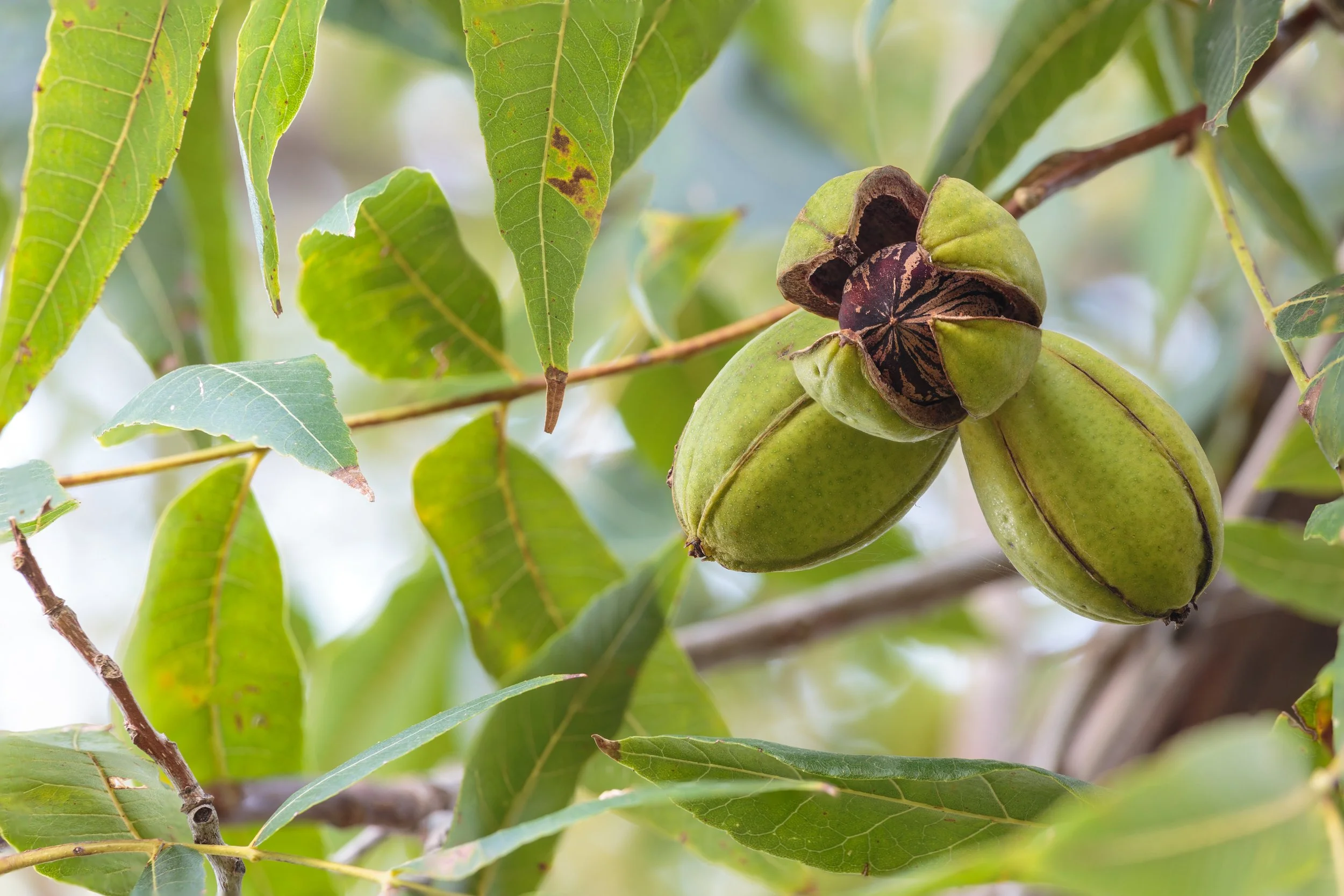
Although they can be a little messy in certain parts of the urban forest, nut trees are important members of Nashville’s wooded ecosystem. Tree species that produce nuts add biodiversity to the canopy, provide a major food source for wildlife and people, and create ecosystem services that maintain and improve Nashville’s quality of life in many ways. In this article, we’ll profile some of the most common nut trees in Middle Tennessee, then share some tips on managing these trees and eating their produce.
Nut Trees in Nashville’s Urban Forest Ecosystem
Nashville has several native nut-producing tree species, with a couple of caveats. Oak, walnut, pecan, hickory, and beech trees are big canopy trees, while hazelnuts are large shrubs that can be raised like an understory tree. Chestnut trees, as we’ll explore, are mostly non-native or cultivated varieties today, following huge losses of American Chestnut due to a fungal disease.
Nut trees offer a range of benefits to the local environment:
Ecosystem services such as shade, soil stability, air filtration, and rainwater management.
Habitat for wildlife, providing food and shelter.
Edible products for humans that we eat raw, roasted, or baked.
Nuts are technically fruits that are dry with a hard shell. Their edible portion is nutritious, rich in fats, protein, minerals, and fiber. Their high fat content makes them an excellent energy-dense food source, which helps wildlife survive cold months.
Squirrels are well known for collecting and burying all types of tree nuts, which they find later by memory, but they aren’t the only animals that do this! Chipmunks also hide nuts in the ground, and so do jays and crows, while woodpeckers stash nuts in holes and crevices high up in tall trees. Other animals, like deer and raccoons, rely on nuts in the autumn and early winter while they’re available on the ground.
Below, we’ll take a look at each of Tennessee’s major nut trees’ unique characteristics and contributions to our urban forest’s ecosystem.
Oak
Oak trees are keystone canopy species in Tennessee: huge, broad, sturdy, and spreading, they host a huge range of wildlife species, some of which rely on acorn production for fall and winter survival.
Walnut
Black walnut is a large, rounded canopy species that produces the familiar rich-flavored food. They have elongated leaves and thick-shelled nuts, and are common in Tennessee’s hardwood forests and urban landscapes.
Pecan
One of the U.S.’s favorite nuts, pecan is native to central and southern North America. These broad-canopy trees grow straight trunks with upward-reaching branches and long, fanning leaves, creating a sturdy, slightly open form.
Hickory
Hickory trees, especially shellbark and shagbark, produce sweet nuts that humans and wildlife alike enjoy. Hickories grow a tall, rounded, fairly open crown, which squirrels, chipmunks, bats, and birds use for shelter.
Beech
American beech trees have distinctive smooth, greyish bark. They are a canopy species that can tolerate shade well as they mature. These trees produce beech nuts, which support wildlife throughout the cool months.
Hazelnut / Filbert
The hazelnut, or filbert, grows on a large shrub or small tree, depending on its shape. When grown as a tree, hazelnuts are multi-stemmed understory specimens that produce their distinctive, popular native American nut.
Chestnut
American chestnut is a canopy tree that is no longer common in the wild due to chestnut blight, a fungal disease that decimated chestnut trees across the eastern U.S. during the early to mid-20th century. Today, we can plant non-native chestnut species, or American chestnut cultivars bred to be resilient to the disease.
Managing Nut Trees in the Built Environment
With some strategic planting and good maintenance, we can get the benefits of nut trees in our Nashville yards and neighborhoods:
If you’re worried about a sidewalk or driveway mess, plant new nut-producing trees in the backyard, where they might have more space to grow large and drop nuts within a grassy area.
A nut gatherer is a yard tool that rolls over nuts to collect them, helping pick up nuts from grass to avoid them getting pulled into lawn mowers, which can damage blades.
When nuts like acorns and walnuts fall and are left in place, they are often collected by wildlife before they accumulate too much. The ones that do break down in place contribute to soil quality and bulk, adding organic matter to the ground.
Nut trees may irritate people with seasonal allergies, and if you’re allergic, choosing a low-allergen tree for your yard may be preferable. Similarly, if you have a nut food allergy, you should be cautious about planting nut-producing trees.
Eating Tree Nuts
Enjoying freshly harvested and roasted, raw, or baked nuts (according to their type) is one of fall’s pleasures! All the species we’ve discussed produce edible nuts; the main difference is that some need processing to remove bitterness and irritants.
Before eating nuts that you gather, be sure to positively identify the species and discard moldy/rancid nuts. Don't eat nuts collected from roadsides or areas treated with chemicals.
Acorns: Eat only after leaching. Shell them, crush the kernels, and repeatedly soak/rinse in hot or cold water until the water stays relatively clear and the bitterness is gone. Then dry/roast and use as flour or whole nuts.
Walnuts: Shell and eat raw or roasted. Black walnuts have especially hard shells and a strong flavor; remove the husk promptly and let the nuts cure/dry before cracking.
Pecans: Shell and eat raw, roasted, or baked in a pie. Very easy to use, with no leaching required.
Hickory nuts: Shell and eat the kernels; they're often excellent roasted. Some species are very bitter and are better avoided for eating unless you're certain of the species.
Beechnuts: Generally edible in moderation. Shell and roast; don't eat large quantities raw. Avoid moldy/rancid nuts.
Hazelnuts: No special leaching necessary. Shell and eat raw or roast. Remove the thin skin if desired; roasting makes them sweeter.
Chestnuts: Cook before eating. Score the shells and roast, boil, or otherwise cook them; the flesh becomes soft and sweet. Correct identification is important because horse chestnuts/buckeyes are not edible chestnuts.
Planting Nut Trees in Nashville
“Nut season” is also the start of tree planting season! Browse our tree sale, open from September through February. We have several species of oak trees that each produce their own type of acorn, one of Nashville’s most popular nut varieties.
Help us preserve Nashville’s Canopy by making a donation! Your generous gift will fund new trees and protect existing canopy that would take decades to replace. Or, donate a tree for us to plant in an open spot in Nashville.
Sign up to volunteer with us, and be sure you’re kept up to date by joining our email list. Check out our Linktree for more ways to connect!