
How Nurseries Supply Nashville With Its Trees
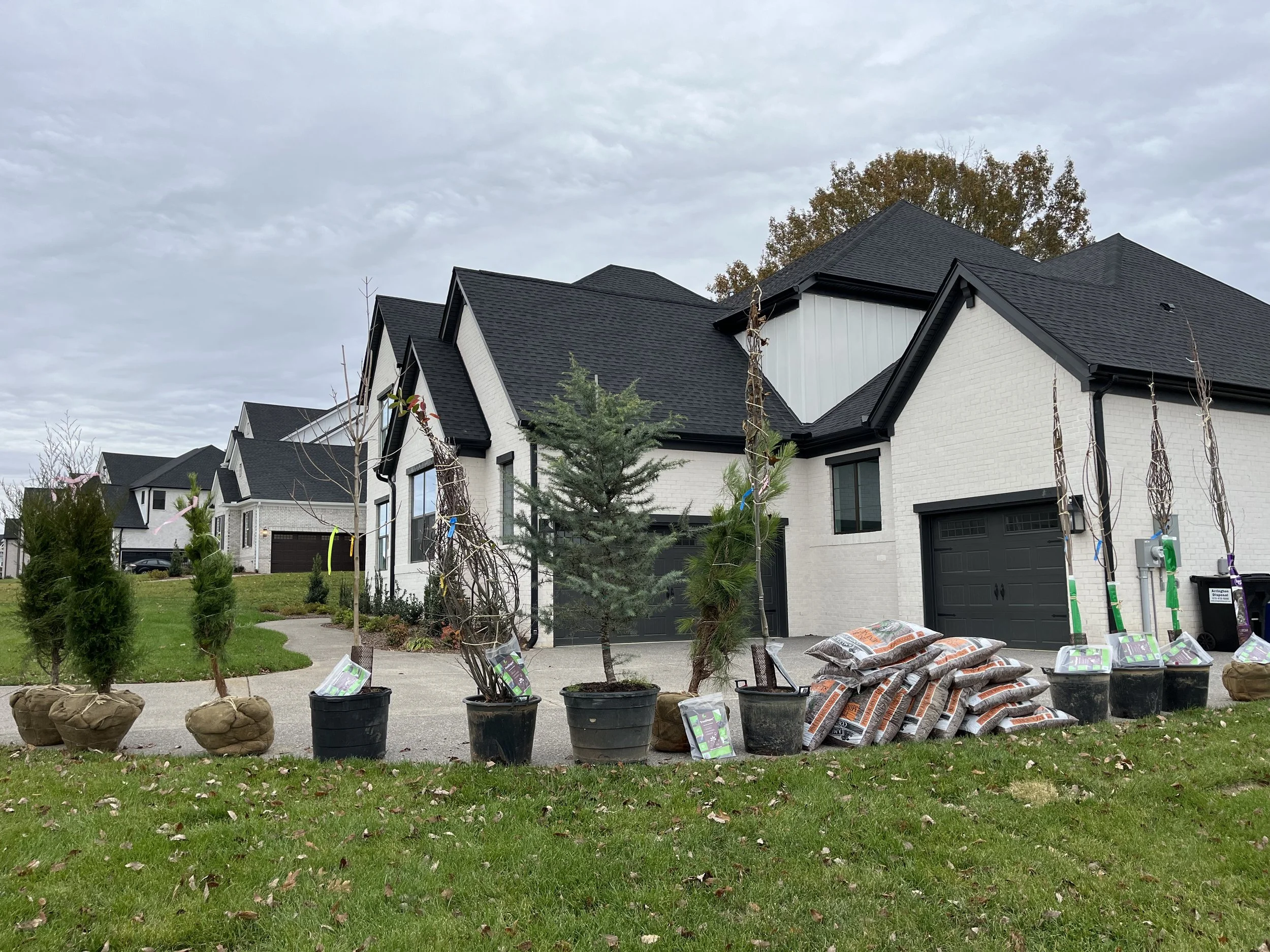
Most of Nashville’s urban trees start their first several years outside of the city limits in suburban and rural nurseries, where they’re raised from seed to sapling until they’re fit enough to be planted in yards, along streets, in parks, or even in wilderness areas. In this post, we’ll explore the relationship between Nashville and its surrounding nurseries, then look at Nashville Tree Conservation Corps’ own connection to local nurseries through our annual farm-to-yard tree sale.
Why Nurseries Are Important for Cities
The horticulture industry supplies greenery for urban environments, where intentional plantings are vital to the presence, conservation, and replacement of trees and other green cover, especially in a rapidly developing place like Nashville.
Nurseries are important for a variety of reasons that all contribute to a healthy urban canopy ecosystem:
Specimen quality: Young trees are in their primary growth stage at the nursery (the first 5 to 15 years), which affects the rest of their life wherever they’re planted. Nurseries must keep saplings healthy, in good form, and free of pests and disease while growing in close conditions and eventually being moved around.
Species cultivation: Tree growers usually offer a wide range of tree species and varieties to choose from. They grow trees from seeds or graft cultivars for fruit trees or to select for a resilient quality. Nurseries make essential contributions to urban tree resilience innovation.
Limited urban space for growing: Like other types of farms, tree nurseries supply their regions with plants where they otherwise can’t grow. In the city, dense settlement and smaller parcels leave little room for cultivating trees, while natural regeneration of trees is unlikely in urban neighborhood conditions.
Unique urban requirements for planting: City environments have a range of soil types and available space that limit what types of trees can grow well in a given location. Cities, including Nashville, often have official planting requirements for public trees, while urban forest plans usually rely on purchasing nursery stock saplings rather than growing trees from seed.
Range of planting project sizes and needs: Nurseries often sell in bulk to landscape architects, building contractors, garden centers, and other large-order clients, which requires having a lot of trees available at any given time. This is in addition to many smaller, individual landscaping projects that may only require a few trees at a time.
Ongoing need for new plantings: The consistent availability of trees by nurseries allows purposeful garden design and landscaping, as well as conservation, restoration, and reforestation projects that are always occurring across the city.
In general, cities depend on nurseries to grow the trees that produce the wide range of ecosystem services, including shade, soil stabilization, and stormwater management, that improve environmental health and quality of life in urban landscapes.
What’s The Difference Between Container Trees and Field-Grown Trees?
Nurseries usually grow and sell trees in one of two ways: field-grown (also known as “balled and burlap”) and container-grown. Field-grown trees are grown in the ground, then dug up and their roots wrapped in burlap. They tend to be larger but lose some roots when dug, so they may take longer to establish.
Container-grown trees, on the other hand, grow and are sold in pots, keeping nearly all their roots. They're often easier to transplant and establish faster, though older ones can develop circling roots if left in containers too long.
There are pros and cons to each method, but many professionals that we have consulted consider the balled and burlap method to be the best way to move a tree. Transplant shock affects both, but it's usually greater in field-grown trees. This shock is usually minimal, and there are precise measurements and factors that go into digging trees out of the ground before they are wrapped in burlap. This is one of the important reasons why we plant trees in the fall and winter: it ensures the tree has time to re-establish its roots during the dormant months and have strong growth in the spring.
Nurseries in Tennessee
Tennessee has over 500 nursery operations across the state, and many of them are family-owned. These businesses range in size from small, individual growers on a few acres to multiple-hundred-acre tree farms. Learn more about our state’s nursery industry through these professional organizations:
Tennessee Nursery & Landscape Association: www.tnla.com/
Middle Tennessee Nursery Association: www.mtna.com/
AmericanHort (America’s national horticulture association): www.americanhort.org/
Tennessee’s State Nursery
Tennessee has a state-run nursery whose mission is to support forestry and conservation. The Tennessee Department of Agriculture Division of Forestry operates the East Tennessee Nursery in Delano, TN, which grows millions of native tree and shrub seedlings each year adapted for reforestation, forest conservation, wildlife habitat, erosion control, and other planting projects. They also sell trees in bulk to landowners, agencies, nonprofits, and individuals.
Planting Trees Around Nashville
Trees are routinely being planted across the city by Metro Nashville’s Urban Forestry Division, local nonprofits like NTCC and Root Nashville, and residents on private properties. Storms, development, and natural turnover contribute to tree loss in the urban canopy, requiring replanting efforts to be sure that trees get replaced and cared for up to and throughout maturity.
NTCC’s Tree Sale Relies on Local Nurseries
For Nashville tree planting needs, consider NTCC’s farm-to-yard tree sale! Our program can sell trees for lower prices than garden centers by cutting out retail markup. We work with a tree broker to sell us steeply discounted trees: Bryan Shelton with Tennessee Tree and Shrub. He knows all the tree farms in Tennessee, and he is a trusted Metro and Root Nashville vendor.
Because we offer a limited (yet wide-ranging) selection of tree species, we are able to streamline this operation to be very efficient and pass on the savings to Nashville residents. For an additional fee, you can also choose to have Bryan Shelton’s crew plant your tree.
NTCC’s tree sale will be active from September 2026 through February 2027, so consider planning ahead for any fall or winter planting this year!
On September 26th, 2026, NTCC will be holding a volunteer event to do cleanup work in Shelby Arboretum in the East Nashville neighborhood. Check out this post for more information on the event, or click here to sign up to volunteer!
There are more ways to support NTCC’s work in our urban canopy: donate a tree for us to plant, or donate to NTCC to fund our mission-driven work. Sign up to receive our email newsletter, and check out our Linktree for more ways to connect!