
Spring Pest Watch in Nashville’s Urban Canopy
When the weather warms, the whole ecosystem wakes up: tree leaves emerge, migrant birds return, and insects are active again. Many of these insects are essential to the local food web and plant reproduction cycle, although some are detrimental to the health of trees and the canopy at large.
In this article, we’ll go over the most common insect pests to watch out for in Nashville during the warm months of the year, as well as what to do if and when they show up. Since the majority of Nashville’s canopy is on residential properties, homeowners play an essential role in monitoring their small portion of the urban forest.
Common Nashville Tree Pests
Peak pest emergence in Nashville is in April and May, as warm temperatures settle in and stabilize. Most pests target fresh spring growth and weakened trees, so early monitoring matters. Some pests target specific trees (like the emerald ash borer and crape myrtle scale), while others can be found throughout the canopy.
Some of the most common tree canopy pests in Nashville include:
Emerald ash borer (invasive)
Gypsy moth caterpillar (newly invasive, high risk)
Bagworm and tent caterpillar (both native)
Bark scale (some native, some invasive)
Aphids (some native, some invasive)
Flatheaded and roundheaded borers (mostly native)
Japanese beetle (invasive)
If you see any of these insects on your tree(s), consider a DIY remedy if it’s a small infestation of a native insect. For a larger infestation or an invasive pest, contact a certified arborist. If you’re unsure, reach out to us. Nashville Tree Conservation Corps is here to help you find the best option.
Signs of Tree Pest Damage
During the warm months of the year, there are certain signs of pest damage to watch for:
Sticky residue or sooty mold on leaves.
Curling, yellowing, or distorted new leaves.
Small holes or skeletonization of leaves.
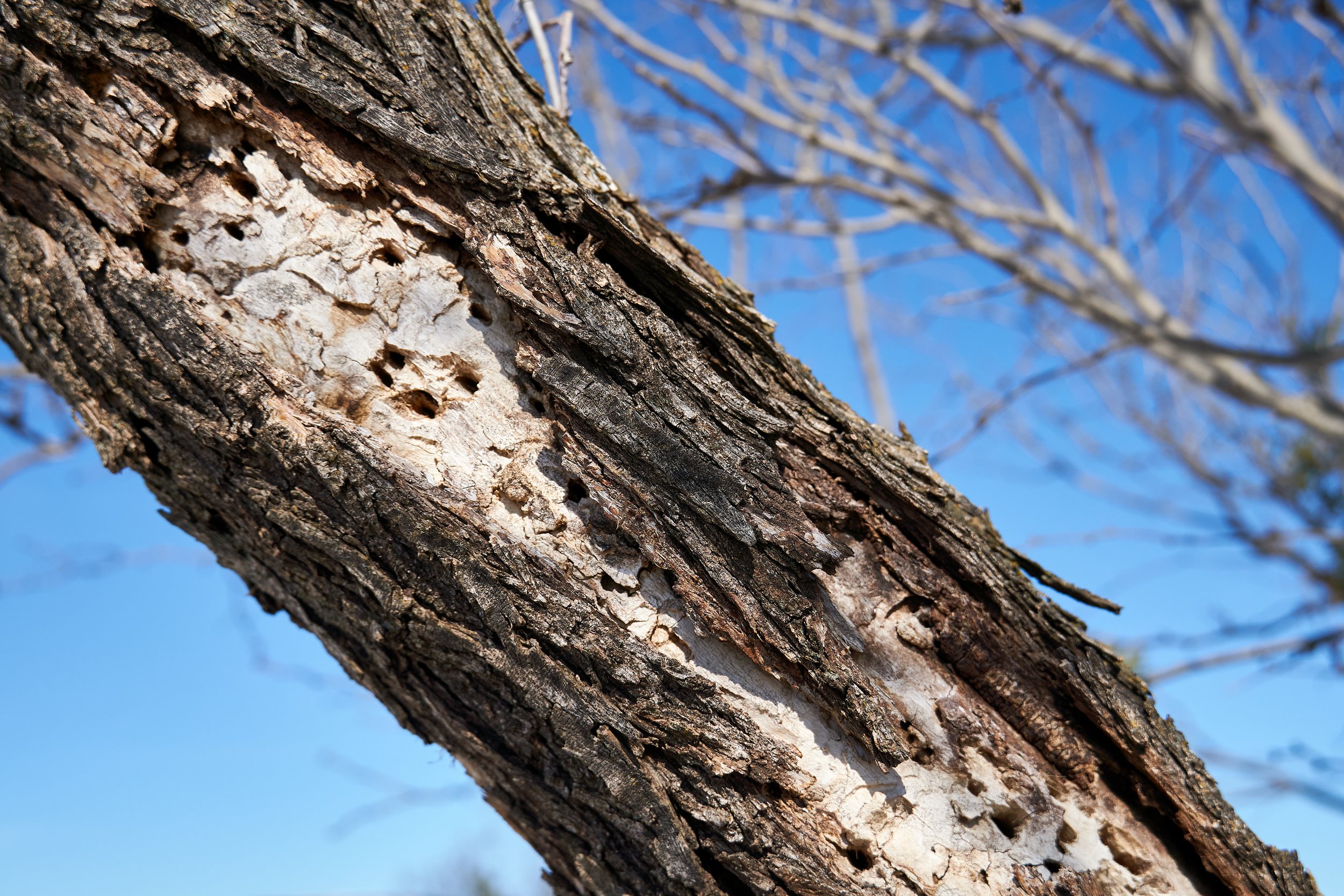
Holes in the bark or at the base (a sign of borers).
Dieback on branch tips.
Contact a certified arborist if damage to a tree (or multiple trees) is spreading quickly, if it affects multiple branches, or if you’re unsure how to identify or treat the issue.
Protecting Trees from Pests
Here are some key actions that Nashville residents can take to protect trees from pests:
Regularly check leaves and bark for early signs of pest presence.
Prune damaged material.
Use horticultural oils, insecticidal soaps, or target sprays for small infestations.
Avoid moving firewood or nursery stock too far to prevent spreading pests.
Maintain tree health throughout the year by watering, mulching correctly, and avoiding damage to the tree.
Diversify plantings with a mix of species to reduce the risk of widespread loss of one particular type of tree to a specialized insect.
Consult a certified arborist for large trees, borer presence, severe infestations, or if you’re unsure how to identify or treat the issue.
In Nashville’s urban canopy, homeowners are on the front line of monitoring the condition of trees across the city: the people best positioned to care for a tree are those closest to it, spreading out city-wide canopy care across the city’s parcels and population. Every small contribution adds up in important and impactful ways!
Insects in Nashville’s Urban Forest
Healthy trees are better able to recover from damage, and they host local wildlife (like good insects, birds, and other small animals) that, in turn, support good tree health. Big, healthy trees provide lots of ecosystem services that stabilize the environment and maintain quality of life in the area, which we benefit from day in and day out!
When one or more trees are damaged or die from pest infestation, it has implications for the wider area: the loss of many trees at a time can have real consequences for the local ecosystem, while the spread of an insect across an area becomes very difficult, if not impossible, to contain. When lots of mature trees are lost at once, the ecosystem services they normally provide, such as shade and local moisture management, are also lost.
When trees are lost for any reason, replacement is encouraged! Careful selection and maintenance of a new tree adds age and species variety to the local landscape, providing the homeowner with an opportunity to nurture the specimen into a strong and healthy mature tree.
Due to the ongoing recovery efforts for this year’s destructive winter storm, the Nashville Tree Conservation Corps’ tree sale is momentarily paused, but we will resume taking orders later in the year for the next planting season, Fall/Winter 2026/27.
In the meantime, you can donate to NTCC to support our work supporting Nashville’s canopy. You can also donate a tree for us to plant in a needy place somewhere in the city, and sign up to volunteer with us.
Sign up for our email newsletter for regular news and tree care tips, and visit our Linktree for more ways to connect.