
What Is a TRAQ Certified Arborist? Exploring Tree Risk Assessment
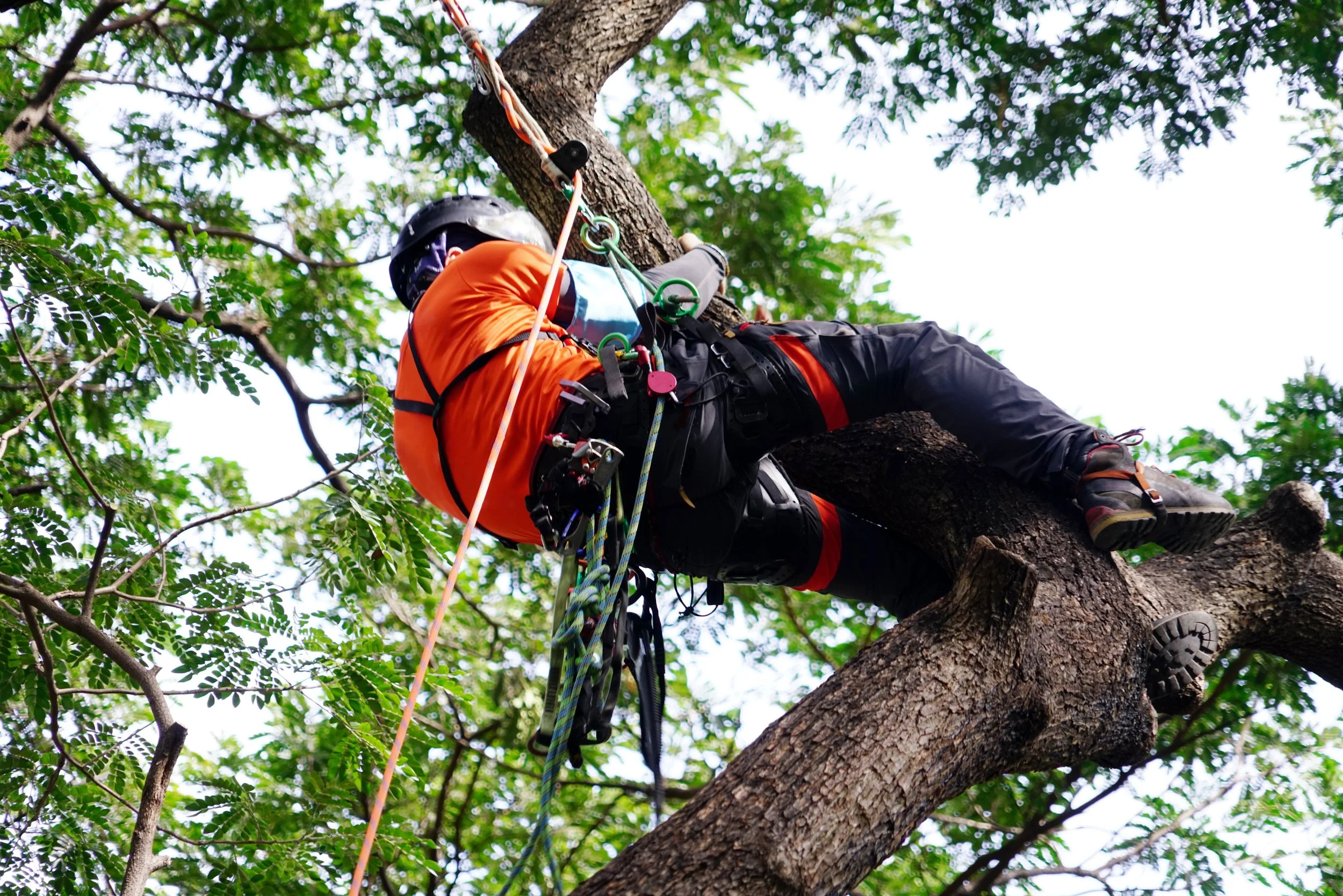
Trees in urban areas grow in close proximity to people and property, which can create certain risks, especially in strong weather. The Tree Risk Assessment Qualification (TRAQ) supports a certified arborist to assess a tree for structural soundness and make statements on the tree’s condition for care decisions, insurance needs, and other purposes. Here, we’ll go over how the risk assessment qualification helps an arborist evaluate a tree’s condition, and when homeowners should look for arborists who have the TRAQ credential.
What Is the ISA Tree Risk Assessment Qualification?
The International Society of Arboriculture (ISA) Tree Risk Assessment Qualification supports ISA Certified Arborists in evaluating a tree’s structural condition using standardized methods. TRAQ professionals can identify risk factors and document findings for reports to property owners, municipalities, or insurers.
Tree risk qualified arborists use their specialized skills to help tree owners and risk managers make decisions that promote the safety of people and property and enhance tree benefits, health, and longevity. For arborists, the Tree Risk Assessment Qualification:
Helps communicate risk to clients clearly with consistent terminology and reference material.
Allows for repeatable inspection protocols and the creation of legally defensible documentation.
May be preferred or required for consulting and risk assessment contracts.
Increases credibility with property owners, insurance entities, and regulatory bodies.
TRAQ certification helps arborists reduce preventable tree failures and prioritize the removal of structurally unsound trees. A risk assessment also helps a professional arborist refine pruning strategies for a specimen's form and strength based on its risk condition. In general, TRAQ arborists help increase the overall resilience and safety of the urban forest one tree at a time.
When Do You Need a TRAQ Arborist?
A TRAQ arborist’s services are used for:
Property risk assessments.
Site planning and hazard mitigation advice.
Expert reporting that may be used in legal or insurance contexts.
Insurance companies often need to know if a tree was hazardous before its failure, and a TRAQ report provides documentary evidence based on a standardized evaluation of the tree's condition before and after an event like a strong storm. This can be critical in claim submissions and disputes between homeowners, neighbors, and insurance companies by showing whether damage was unavoidable due to the weather or if there was inadequate maintenance.
TRAQ arborists are trained to analyze and communicate about structural factors rather than relying solely on visible tree damage (such as broken limbs or large cracks). Even a healthy-looking tree may fail if it has poor branch architecture, was improperly pruned, or has unseen internal decay or root failures.
Some trees may suffer damage in a particularly strong storm regardless of their health. A TRAQ evaluation is critical when:
Insurance claims are involved.
Liability is questioned.
Municipal decisions are challenged.
Large-scale post-disaster triage is required.
For assessment, maintenance, or insurance needs, find ISA-certified Nashville arborist services at treesaregood.org and look for the TRAQ credential. Read more about choosing a tree professional in our article on the importance of working with certified arborists!
TRAQ for Storms and Natural Disasters
In Nashville’s climate, trees face thunderstorms, high winds, tornado risk, and occasional ice storms. The Tree Risk Assessment Qualification becomes especially important in the context of strong seasonal storms because these events significantly increase the potential for tree failure and public safety risk: they can cause heavy limbs to break or entire trees to fail, especially if a tree has weak structure, disease, or poor pruning.
TRAQ arborists assess the real risk of failure from heavy wind and ice loads, and take actions like pruning, reinforcement, or removal before and after storms hit. Risk-informed arborists can be proactive in prioritizing trees near homes, schools, utilities, streets, and sidewalks, where impacts of tree failure can be severe.
Municipalities often use TRAQ arborists for pre-storm tree inventories, storm-response planning, FEMA documentation, and utility-corridor management.
After a storm, TRAQ methods help arborists:
Distinguish between trees that are able to be saved and those that are hazardous.
Evaluate partially cracked or twisted trunks.
Document risk defensibly for insurance reporting.
TRAQ arborists evaluate standing trees for structural risk and make care decisions, while good initial planting choices by homeowners and tree managers also affect long-term survival potential in Nashville’s seasonal weather patterns.
Plant Trees in Nashville With Risk in Mind
When planting new trees, it’s important to choose the right tree for the right place (keeping long-term growth and mature height of a specimen in mind) and to avoid structurally weak species often damaged by wind or ice, such as non-natives like the Bradford pear and silver maple.
Instead, favor strong, native trees such as oaks, maples, sycamores, tulip poplars, and other species that generally withstand storms better over time and contribute to the urban canopy’s resilience. Browse the Nashville Tree Conservation Corps’ tree sale for a wide range of examples of Nashville-hardy trees of many shapes and sizes.
If you’re unable to plant a tree but still want to support NTCC’s mission, we welcome and appreciate financial contributions from Nashvillians, who are essential funders of our work!
Do you know of a spot that could use a tree in Nashville? Tell us where! You can also donate a tree for us to plant, or volunteer with us to help plant and maintain trees across the city.
Subscribe to our email newsletter to stay updated on tree care tips and canopy status, and check out our Linktree for more ways to connect with us.