
Winter Storm Fern Recovery in Nashville
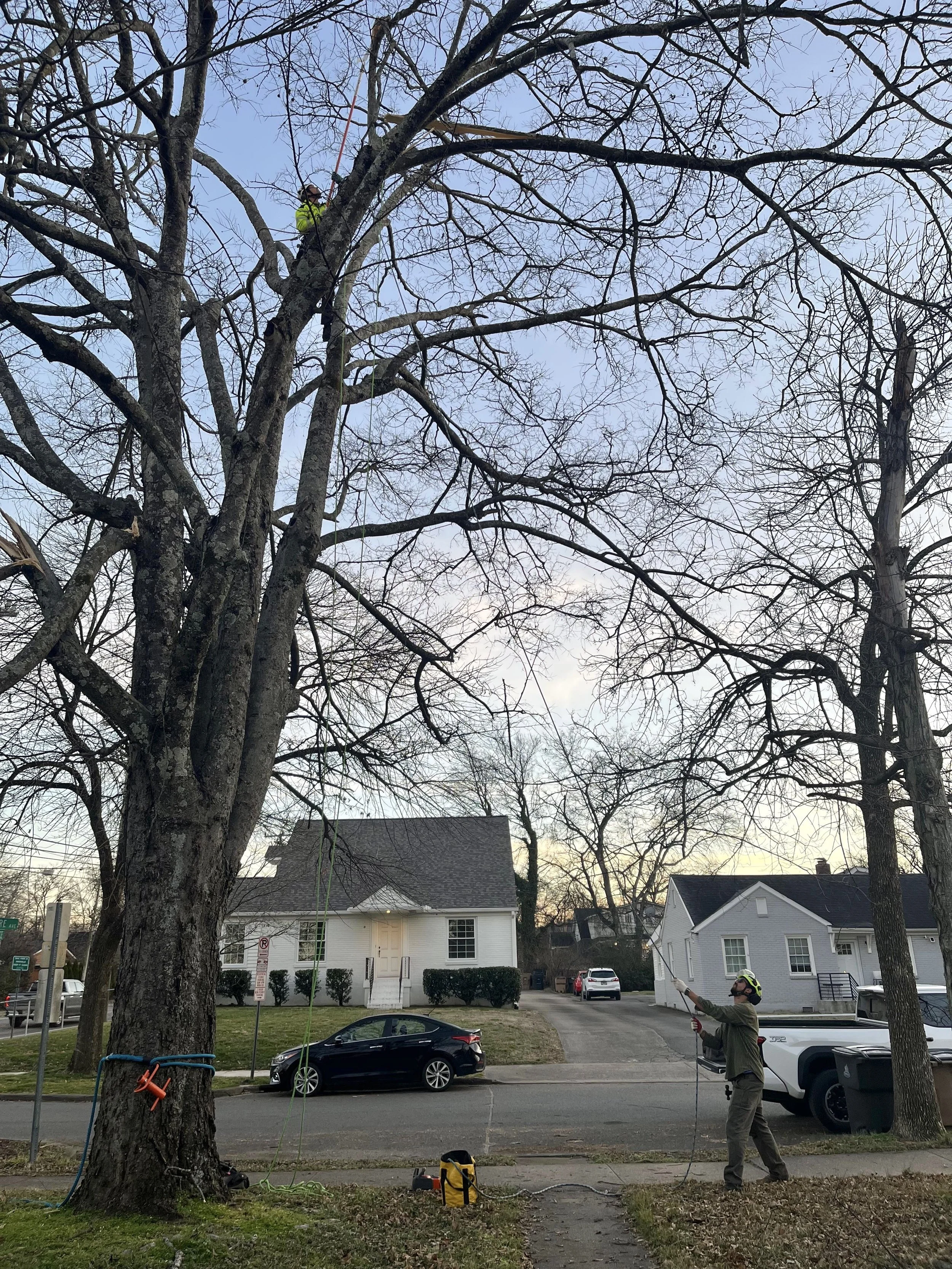
In the aftermath of Winter Storm Fern, with heavy ice bringing down large limbs and entire trees across many neighborhoods, Nashville Tree Conservation Corps has been actively engaged with recovery efforts. We’ve shared advice with local news reports on how to manage impacted trees and replant lost canopy, and we’ve organized a storm response program called Operation Overstory 2026 to provide emergency tree work by certified arborists to support affected Nashville residents.
In this post, we’ll share information about our emergency tree response program and how residents may benefit from the service, and then we’ll go over our advice for homeowners on managing the disaster recovery process.
Operation Overstory 2026
NTCC’s Operation Overstory, which we developed in 2020 to distribute thousands of trees following the destructive tornado in March of that year, has been re-launched in response to January’s ice storm. The aftermath has created an overwhelming need for tree-related crisis cleanup across Nashville: an estimated minimum of 5,000 trees died in Nashville's park system alone, with the extent of damage to trees on private property still unknown.
While United Way and Hands On Nashville are mobilizing volunteers to help with storm cleanup, there is a critical shortage of skilled arborists to address hazardous tree situations on private residential property. NTCC is launching this emergency response program to address the need by activating our network of arborists with experience in hazardous tree work, and who have a commitment to preserving trees.
The response program will provide free emergency tree services to vulnerable Nashville residents affected by the winter storm whose damaged trees pose immediate risks to people, property, and the urban tree canopy.
We give heartfelt thanks to our dedicated partners for their contributions to this work, Dendro Tree Care and Davey Tree Nashville.
We’re also very grateful to United Way of Greater Nashville and donors to the winter storm recovery fund for supporting us with a $25,000 grant towards this effort!
NTCC In the News
Our board chair, Chris Leonard, was interviewed twice by WPLN in February to offer recommendations on next steps residents can take to manage the impact of the ice storm. In a reassuring tone, he highlighted that while some standing damaged trees may need to be removed, a surprising number are resilient enough to bounce back.
An important takeaway from his guidance is that damaged trees with lost or broken limbs, or major cracks or breakage, should be inspected by an ISA (International Society of Arboriculture) Certified Arborist, ideally one with a tree risk assessment qualification (TRAQ). These skilled professionals can assess the extent of a tree's damage, provide next-step guidance on removal or recovery care, and issue statements for insurance claims (which should be filed as soon as possible following the damage event and arborist assessment). To find an ISA certified arborist, visit treesaregood.org and look for the TRAQ qualification.
The full WPLN interviews can be found here:
NTCC was also featured in an NFocus Magazine article on Nashville organizations that are contributing to the winter storm canopy recovery efforts in various ways. They emphasized our message that protecting what remains of the canopy is just as critical as planting new specimens.
Replanting Trees After Storm Damage
Some people may be hesitant to replant a tree after storm damage, especially if that tree caused damage to a building, vehicle, or electrical lines during the storm. However, replanting the lost canopy is essential! Trees in an urban forest impact stormwater flow, wind speeds, soil stability, urban heat, and wildlife habitat, among other ecosystem services and public health effects.
In Nashville, the tree canopy is mainly contained in residential properties, which means that homeowners will play a big part in the recovery. While this disaster has been devastating, the loss of trees has created opportunities to improve the canopy’s overall strength.
A lot of non-native species didn’t do well in the storm, like Bradford Pears and Silver maples, while certain native trees, like hackberries and structurally unsound specimens of a variety of species, also broke under the ice. As we move forward, it’s important to replace the weak canopy with stronger trees.
Some of the most resilient native canopy trees, with strong wood and good branch structure, include:
These trees also represent some of the species that weathered the storm best. Browse NTCC’s tree sale for more examples of trees that are well-suited for Nashville’s climate.
When Can You Replant a Tree After Removal?
If a tree must be removed due to damage, be sure to remove the stump woodchips from the ground and fill the hole back in with a quality topsoil and compost blend before planting a new tree. As long as the site is properly prepared and it’s the right planting season (fall or winter), a tree can usually be replaced right away. Learn more about tree removal in our article on the subject!
To be sure trees are planted safely in relation to buildings and infrastructure, check out our article on choosing the right location for a new tree.
Planting and Preserving Trees in Nashville
We must face the facts: this will be a long period of cleanup, replanting, and regrowth. Environmental care is an ongoing activity, however, and this opportunity to strengthen the landscape can be met with thoughtful, informed action guided by a long-term perspective and a deep appreciation for the urban canopy ecosystem.
Consider making a donation to NTCC to help fund our work to promote, preserve, protect, and plant Nashville’s canopy. It’s because of volunteers and local contributions that we’re able to serve Nashville as we do!
Due to the ongoing recovery efforts for this year’s destructive winter storm, our tree sale is momentarily paused, but we will resume taking orders later in the year for the next planting season, Fall/Winter 2026/27. You can also donate a tree for us to plant in a needy place somewhere in the city, and sign up to volunteer with us.
Sign up for our email newsletter for regular news and tree care tips, and visit our Linktree for more ways to connect. If you have any questions or opportunities to collaborate, contact us directly!