
Seasonal Change and Tree Risk Assessments: Spring
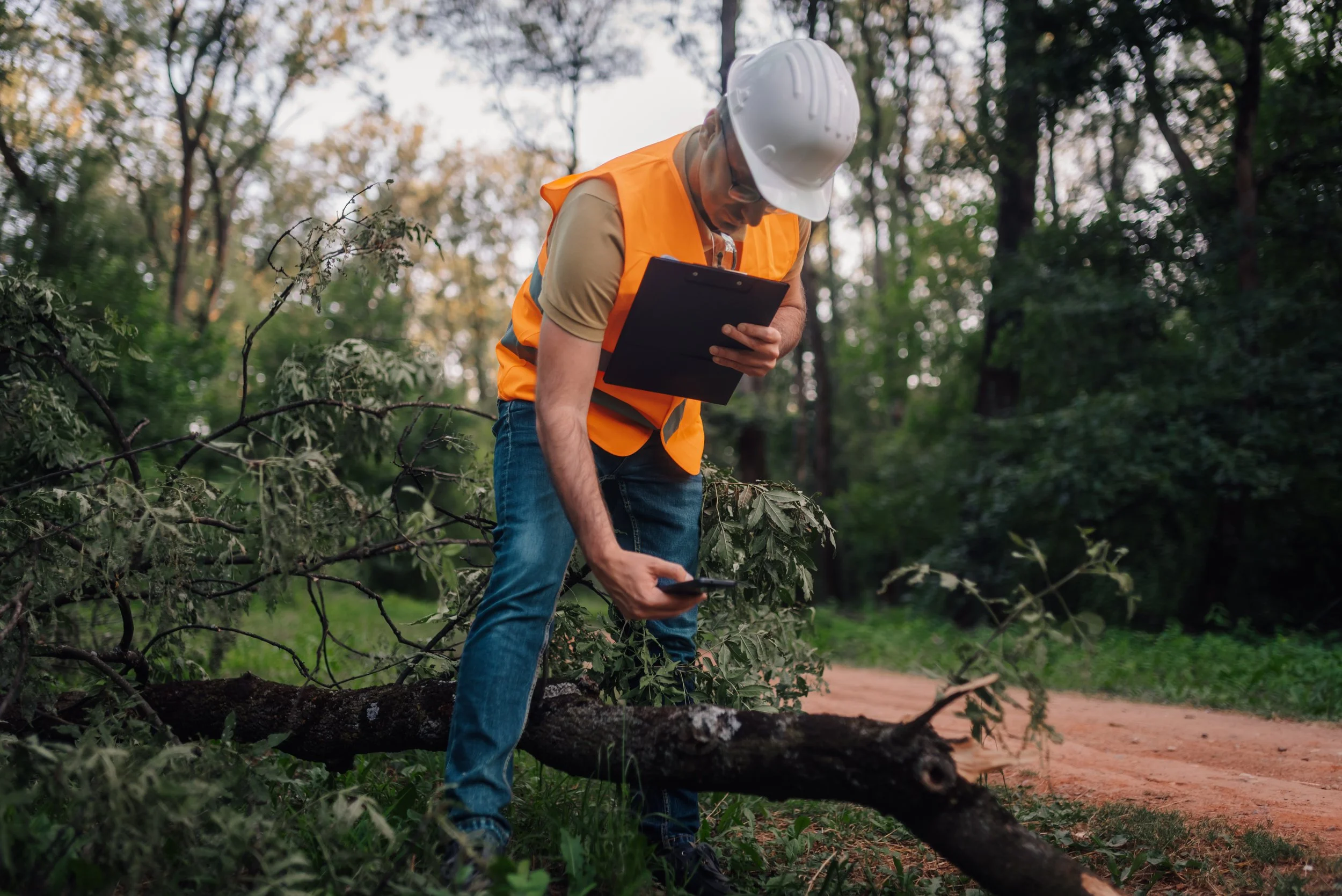
Spring is the start of Nashville’s storm season, and it’s one of the best times to have your tree(s) inspected by a certified arborist! The stressors of winter can damage a tree in ways that might not be noticeable until after the tree has sprouted its foliage, and even then, it might not be evident without a close look.
In this article, we’ll explore how spring conditions can show and stress weaknesses in a tree’s structure, what arborists look for in a springtime risk assessment, and why regular monitoring of every tree’s health is an important contribution to the condition of Nashville’s whole urban canopy. Towards the end, we’ll share what homeowners can do to keep an eye on the trees in their own yards between arborist appointments.
Common Tree Problems in Spring
During winter, trees can be damaged by freezing temperatures, snow, and ice, which can weaken branches or crack trunks, potentially harming the tree or people and property around it.
When a tree buds and fills in its crown, the added weight puts pressure on its branches, and any recently weakened spots can be made worse. While the added weight of the leaves strains the tree, the newly grown foliage can also hide the weak spots from a casual examination. Strong spring storms put even more stress on a fully-leafed tree, which catches the wind and blows around with force, potentially causing weak limb connections to snap.
Cracks in the trunk from freeze also carry springtime risks: after temperatures warm, active pests and fungi can enter exposed wounds if they didn’t fully seal. Healthy trees can often seal small cracks on their own, but large breakage may need to be examined by a certified arborist to prevent infection and decay.
What Is a Springtime Tree Risk Assessment?
A springtime risk assessment by an arborist, especially after a harsh winter, will allow the professional to look closely at a tree’s structure to spot any new weaknesses and perform any necessary pruning. When arborists inspect and prune a specimen in spring, they improve the tree’s structure in a way that strengthens their ability to handle the transitional season’s weather by:
Removing or trimming limbs with poor unions.
Removing dead or decaying branches.
Selectively thinning to reduce leaf density and lower wind catchment.
Balancing the crown to evenly distribute weight.
Identifying hidden structural problems like cracks, cavities, root damage, or fungal decay.
Certified arborists are tree healthcare professionals trained to examine individual specimens. The International Society of Arborists offers a Tree Risk Assessment Qualification that supports the professional’s ability to diagnose potential risks of a given tree, particularly in regard to the safety of people and property around it. Risk assessments are also useful when insurance companies and certain legal situations require professional assessments of a tree’s condition before or after a potential incident.
Connect with an ISA Certified Arborist this spring to assess the condition of your trees following Winter Storm Fern by visiting treesaregood.org, and look for the TRAQ certification for a risk assessor.
How Often Should You Have an Arborist Inspection?
Arborists typically assess a tree every two to three years, but sometimes you need to have an inspection due to impactful weather events, tree emergencies, or other unexpected needs.
Arborists can assess a tree’s structure at any time of the year, but spring is one of the best times to have it done in preparation for warm-weather storm season. Springtime also allows inspection of a tree’s foliage, which is an important way trees can signal their health status.
Routine structural inspection of trees, however, is often easier for arborists in winter, when trees are leafless. In any season, pruning for stability is one of the main ways an arborist can support a tree’s resilience. Healthy and well-shaped trees are better able to withstand the elements and heal from minor damage. Homeowners should always be on the lookout for certain obvious issues with trees on their property (more on that below), and contact a certified arborist when the need is noticed.
The Ongoing Nature of Tree Care
Tree maintenance is an ongoing activity, and over spring, homeowners can monitor the tree’s condition by watching for certain obvious signs of damage or stress as the season settles in:
Unseasonal yellowing, spotting, or browning of leaves.
Branches that aren’t producing leaves while the rest of the tree is.
Hanging branches or loss of bark.
Cracks, holes or cavities in the trunk.
Fungal growth on the trunk or at the base of the tree.
If you notice any of these, reach out to a certified arborist for a tree assessment! The health of every tree in Nashville impacts the people, property, and other trees around it. While a hazardous tree poses a threat to our safety, an unhealthy tree can become hazardous to other trees when it hosts infections that can spread to nearby plants. Healthy trees, on the other hand, are more resilient to diseases, pests, and minor damage from storms.
When you plant a new tree, remember that trees in urban areas are more isolated and exposed to the elements than those in natural woodlands, and they require long-term attention and care to remain healthy. Big, strong trees in good condition perform ecosystem services like air purification, soil stability, and wildlife habitat, among others, that are essential to maintaining the quality of life across an environment.
Due to the ongoing recovery efforts for this year’s destructive winter storm, our tree sale is momentarily paused, but we will resume taking orders later in the year for the next planting season, Fall/Winter 2026/27.
In the meantime, you can donate to NTCC to support our work supporting Nashville’s canopy, whatever the needs may be. You can also donate a tree for us to plant, and volunteer with us to land a hand. If you haven’t already, sign up for our email newsletter to keep updated on the canopy news and care tips, and check out our Linktree for more ways to connect.