Nashville Trees, Soil Erosion, and The Urban Canopy
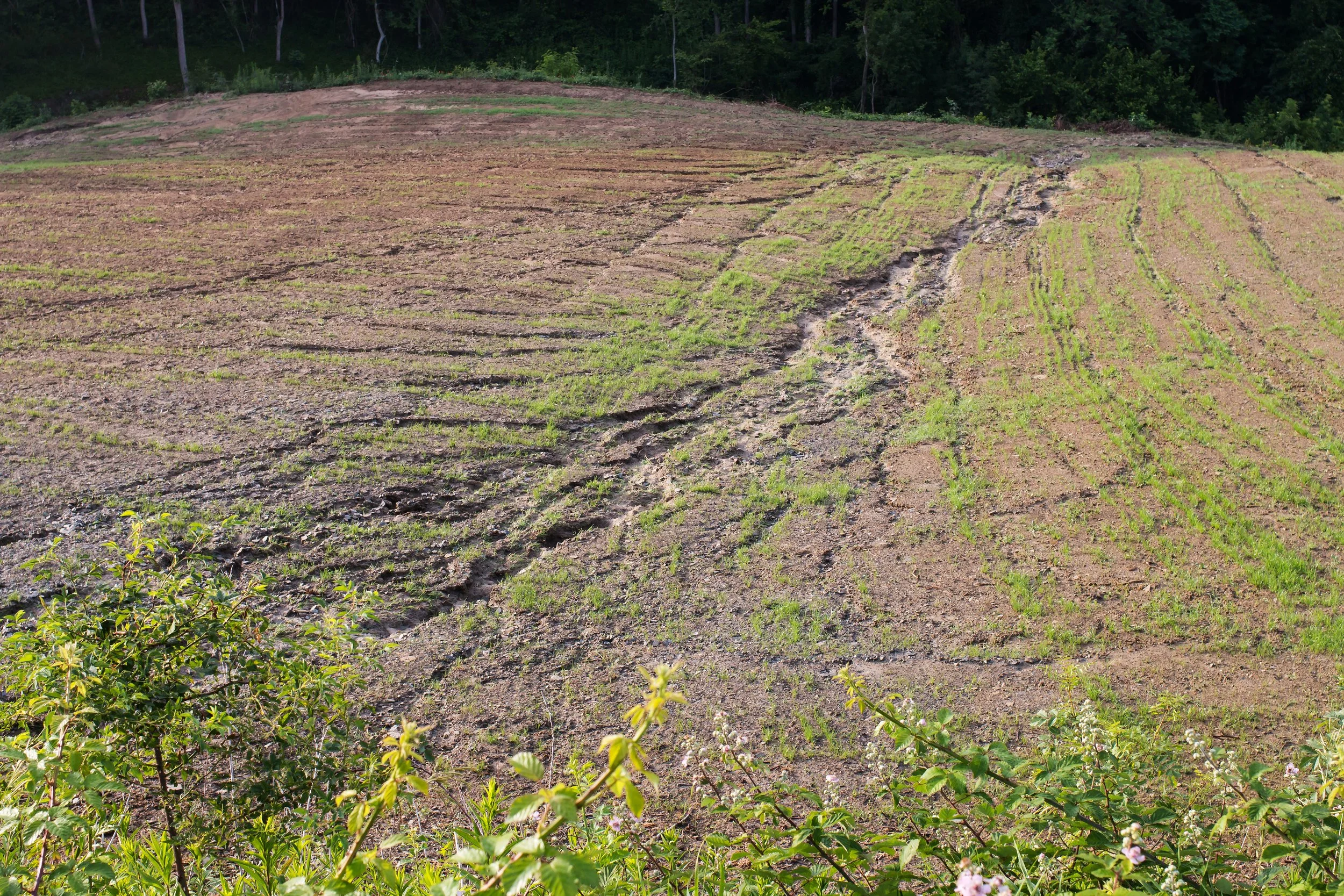
When soil gets swept away from residential yards by rainwater, trees lose access to nutrients, moisture, and structural stability, while the displaced soil collects in nearby waterways and drainage systems. Fortunately, strategies that favor soil stability also support tree canopy health! In this article, we’ll go over the causes and effects of erosion in urban areas, and towards the end, we’ll offer tips for Nashville residents on preventing erosion, building soil, and planting trees that are especially good at holding soil in place.
Soil Vulnerability in Nashville’s Urban Canopy
Topsoil is essential for tree health because it supplies trees with nutrients, water, and oxygen that get absorbed by roots as nourishment. The soil also provides material for the roots to grip, creating a mutually stabilizing relationship between the tree’s roots and the topsoil, which is held in place by the structure created by plant root systems.
When soil is disturbed by heavy rainfall and carried away with the water runoff, trees lose their vital growing environment, and the loss of individual trees adds up to impacts on the area-wide canopy and its ability to provide local and regional ecosystem services.
Rainwater runoff is the main driver of erosion in Nashville, but it’s not the only cause. The presence of trees and other plants, soil conditions, and soil bulk (amount, density, and structure) all affect whether soil stays in place or whether it’s vulnerable to displacement when it rains.
Tree Roots and Soil Stabilization
Trees prevent soil erosion in various ways. First, their roots hold soil together. Tree foliage also softens the impact of rainfall before it hits the ground. And leaf litter improves soil structure and moisture retention.
When trees are cleared from a naturally wooded place, those stabilizing factors are no longer present, either. In urban areas, removing trees leads to faster runoff of rainwater and stormwater, increased soil exposure to rainfall, and increased instability of sloping land.
During a storm, surface water moves quickly across pavement, rooftops, and streets, washing loose topsoil away. The transported soil becomes sediment that builds up in drains and creeks, leading to flooding in streets and along waterways. As heavy rain events become more frequent and intense in Nashville, the presence of mature, healthy trees across the urban environment will be essential for long-term, area-wide resilience.
Erosion, Waterways, and Wetlands
In addition to flooding and infrastructure strain, water quality and water-based ecosystems are affected downstream by local erosion. Pollutants and sediment buildup affect the movement of water through waterways, impacting wildlife habitat, waterbody structures, and drinking water quality. Learn more about surface water movement in our article, “Nashville's Watersheds and the Urban Forest.”
Wetland ecosystems in and around Nashville are important erosion-control and stormwater management systems. They slow and store floodwater, trap sediment before it reaches rivers, and keep soil saturated and stable.
Much of Tennessee's wetlands have already been lost, and recent state deregulation of wetland protections make private-side decisions to conserve trees and natural environments even more important for long-term local and regional stability. The loss of wetlands leads to more flooding, more erosion, and poorer water quality in Middle Tennessee and across the state. Learn more in our article, “What Deregulating Tennessee's Wetlands Means for Our Trees, Our Ecosystems, and Our Communities."
Soil Compaction and Erosion
Soil compaction is one of the biggest causes of urban soil erosion: when soil gets packed down tightly, less air and moisture can penetrate the material, creating a hard, dry surface. This is mostly caused by the following:
Dense, clay-heavy soil, which is common in Nashville.
Foot traffic under trees.
Mowing when the ground is wet.
Construction activity.
Compaction increases erosion because water can’t infiltrate the ground, leading to more runoff that moves quickly across hard, dry terrain, carrying loose topsoil with it.
Compacted ground can be improved according to its condition:
Clay-heavy soil can be amended with compost and/or sand to create a more porous topsoil.
Compaction from foot traffic can be remedied with aeration and by adding a layer of compost.
Avoid mowing when the ground is wet.
During construction, put up signs and fences that keep heavy machinery at least as far away from tree trunks as the drip line of the tree (under the edge of the reach of its crown).
Dense soil that doesn’t absorb moisture also can’t transmit nutrients to trees, while loose, well-structured soil (porous with lots of moist organic matter) allows water to seep into the ground and hosts the topsoil decomposers that make nutrients available.
Too-loose soil, however, can be eroded easily, especially without roots holding it in place. Well-structured soil with plant roots and organic matter stays more firmly in place.
How to Recognize Erosion Around Trees
Signs that a residential yard has been affected by erosion include exposed tree roots, bare, hard ground, drainage paths after rain, and soil piled up at the base of a slope.
Erosion damages trees over time by:
Loss of topsoil: less soil means less nutrients and moisture for trees.
Root exposure: roots can dry out or get damaged from exposure to the open air.
Reduced stability: trees grip into the soil for stability and can end up leaning or falling over if soil is lost over time.
Preventing Erosion in Nashville
Homeowners can make a real impact in erosion control on their property with thoughtful, intentional decisions about yard maintenance. To prevent erosion on residential properties consider the following:
Manage vegetation by maintaining trees and deep-rooted grass, shrubs, and flowers.
Fill in and cover bare soil with plants.
Avoid soil compaction.
Add organic matter like mulch and compost to improve water infiltration and moisture retention.
Aerate soil when necessary.
Capture excess water with rain gardens.
Channel water with drainage design in yards that are prone to flooding.
Keep trees on sloping land to hold their shape.
Properties with wetlands and floodplains (next to waterways) are critical to maintain because they naturally provide erosion-control services at a large scale. At the neighborhood scale, residents together can affect area-wide conditions by making strategic landscaping choices on their individual properties.
Both canopy and understory tree species contribute to erosion control: canopy trees with deep roots provide a strong, foundational infrastructure, while understory species fill in gaps between larger trees and help hold topsoil in place. They work best together! Some Nashville native canopy species with deep roots include:
Native understory trees that help with urban canopy erosion control in Nashville include:
Flowering Dogwood
Serviceberry
Build soil bulk and quality in your yard with compost and mulch, as well as by leaving fallen leaves on the ground over winter. Keep an eye on the soil quality around the tree throughout the year, especially in rainy periods: exposed roots, bare soil, and pooling water on flat terrain are all signs that the soil is low in quantity and/or compacted. Remember that healthy soil supports healthy trees, and each tree contributes to the condition of Nashville’s urban canopy!
Due to the ongoing recovery efforts for this year’s destructive winter storm, the Nashville Tree Conservation Corps’ tree sale is momentarily paused, but we will resume taking orders later in the year for the next planting season, Fall/Winter 2026/27.
In the meantime, you can donate to NTCC to support our work supporting Nashville’s canopy. You can also donate a tree for us to plant in a needy place somewhere in the city, and sign up to volunteer with us.
Sign up for our email newsletter for regular news and tree care tips, and visit our Linktree for more ways to connect.