
Nighttime Tree Ecosystem Services in Nashville’s Urban Canopy
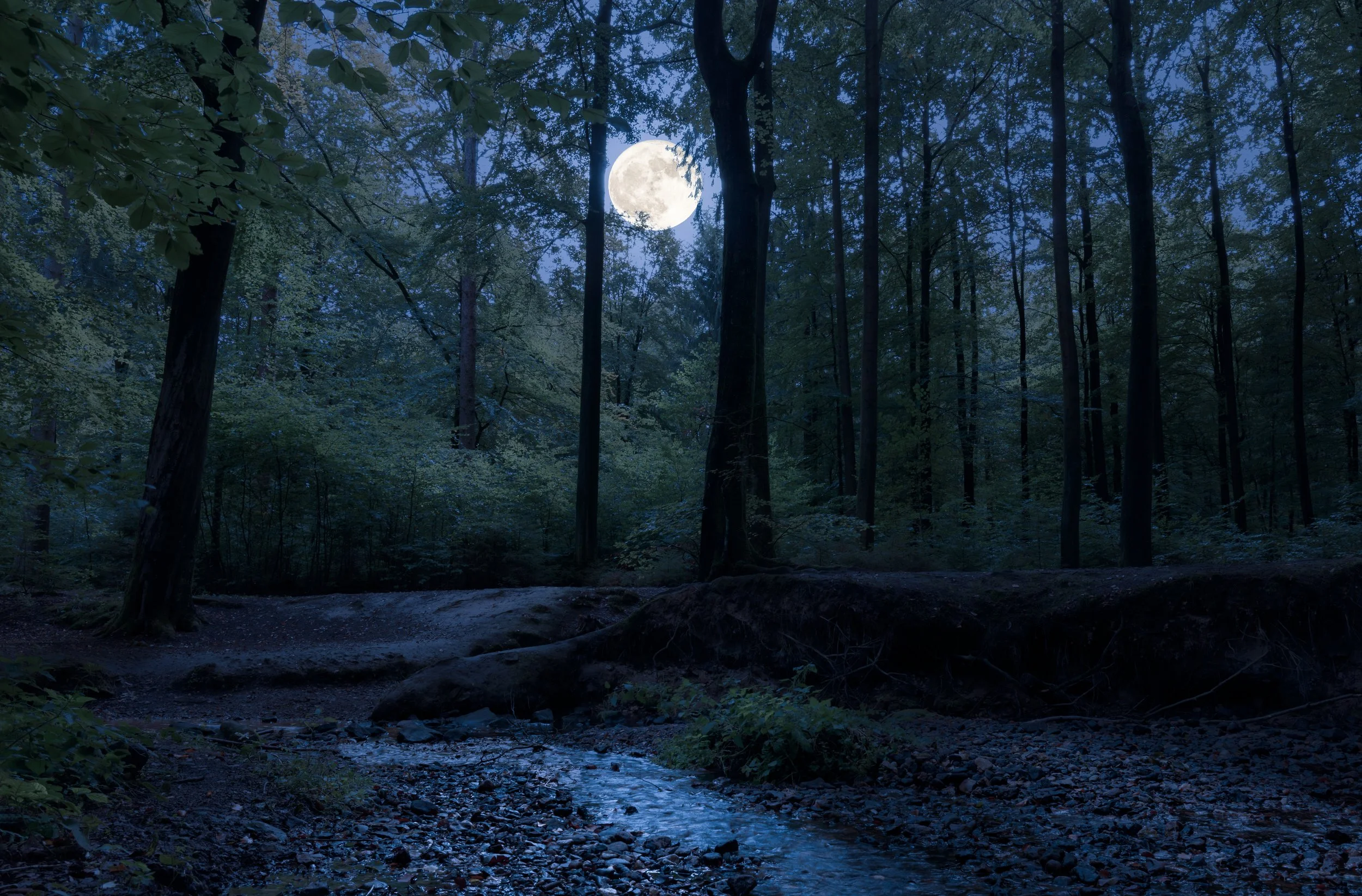
Discussions about the benefits of a healthy urban forest often focus on daytime effects, but did you know that trees also perform many important processes at night?
After dark, the canopy impacts overnight temperatures (especially in the summer) and supports the nocturnal ecosystem that operates while the rest of us are asleep. In this article, we’ll take a look at what trees do at night, and towards the end, we’ll share some tips on how homeowners can help support Nashville’s nighttime landscape.
What Ecosystem Services Do Trees Perform at Night?
The daytime and nighttime processes of trees are tightly linked, forming a self-reinforcing cycle that contributes to the stability of the whole canopy ecosystem. A tree’s nightly impact in the urban forest includes:
Self-repair and maintenance
Cooling effects and urban heat relief
Buffering of city sounds and artificial light
Hosting nocturnal wildlife activity
Let’s dig deeper into each of these goings-on.
Specimen Self-Repair
Trees photosynthesize and store energy during the day, and at night, that energy is used to fuel repair and growth, as the specimen maintains itself. They also continue water absorption overnight, although more slowly. Water uptake at night is important to restore moisture lost during the day, especially during the summer (but keep in mind that the best time to water trees is in the morning, so that excess moisture can evaporate throughout the day; evening waterings may lead to saturated soil and fungal growth).
Overnight Cooling Effects
Trees lower temperatures during the day by creating shade and releasing moisture into the air. This also affects how much heat is retained in the environment that gets released over the night.
While the sun is out, especially in warm weather, the built environment absorbs and retains heat in hard materials like concrete, asphalt, and buildings. When the heat radiates at night, the local temperatures can remain elevated overnight when it’s warm enough, despite the relief of the dark. This is known as the urban heat island effect, where urban areas are warmer than surrounding greener suburban and rural areas.
An effective canopy can reduce nighttime urban heat because the trees shade surfaces during the day, so pavement and buildings absorb and store less solar energy. With less heat stored, there’s less to radiate overnight. A tree’s moisture release can also help cool nighttime temperatures.
Trees, Sound, and Light at Night
At night, the presence of leafy trees can change how sound travels after dark, dampening noise from traffic, neighbors, and other nighttime activity. Similarly, trees contribute to blocking some urban light and glare, improving ecological darkness throughout the canopy.
Canopy and light interactions can create both benefits and challenges associated with visibility and safety, and also potentially affect the natural rhythms of fauna and flora, including trees. Cities continue to try to balance the ecological impact of nighttime lights.
Nocturnal Wildlife Habitat
Although many animals retreat to their nests and dens to sleep, tree habitats can become very active at night, with a different set of pollinators and predators than during the day. When night falls, crickets, frogs, toads, and owls create the lovely ambient sounds of an evening woodland waking up.
Native trees like oak, maple, tulip poplar, sycamore, and hickory all support large insect populations that emerge from bark and leaves to feed, mate, or move around under the cover of darkness. Many caterpillars, moths, beetles, and aphids are most active at night, while lightning bugs are a summertime evening favorite.
Moths are major nocturnal pollinators that a range of native plants depend on, and many spiders and predatory beetles actively hunt smaller insects in bark and leaves at night. As carnivores, owls mostly eat small animals like mice and lizards, though other nocturnal birds, like nightjars, feed on insects. Bats, however, are the major nighttime predator of insects, targeting moths, mosquitoes, and beetles.
Bats are a highly influential nocturnal animal, consuming huge numbers of insects and playing a leading role in the canopy ecosystem. Bats are found throughout Nashville’s urban woodland setting, feeding on abundant insets near streetlamps, along the Cumberland River, and across Nashville’s wide urban canopy and surrounding forests. Many bats roost in the loose bark and high branches of certain native canopy trees, like oak, hickory, and sycamore.
Other nocturnal woodland mammals like opossums, racoons, foxes, coyotes, skunks, and small rodents have adapted to Nashville’s neighborhoods and city spaces. Snails, slugs, and salamanders also emerge at night, requiring dark, cool conditions.
Does the Tree Canopy Affect Our Sleep Quality?
Cool temperatures, consistent darkness, and reduced noise all contribute to better sleep quality. A 2020 study linked longer sleep duration with surrounding tree canopy coverage, finding that urban greening strategies may help support improvements in sleep.
How Can Nashville Residents Support the Nighttime Canopy Environment?
To support resilience in Nashville’s urban forest both day and night:
Plant and care for multiple types of native species (tree biodiversity increases niche ecosystem services).
Choose native tree species for native wildlife habitat.
Plant big canopy species for shade to reduce daytime heat absorption and nighttime heat release.
Plant understory trees strategically to block light, reduce noise, and create privacy.
Nashville Tree Conservation Corps’ tree sale returns in September! Check out our selection and plan for this fall or winter’s landscaping needs.
If you don’t have a space to plant a tree, you can donate a tree for us to plant, and sign up to volunteer for when we need a hand with planting or maintenance projects. We appreciate financial donations as well, which are an essential source of funding for our work in Nashville’s urban forest. Stay connected on what we do by signing up for our email newsletter, and check out our Linktree for more ways to connect!