
Succession Planning for Trees: Managing Tree Age Diversity in Nashville
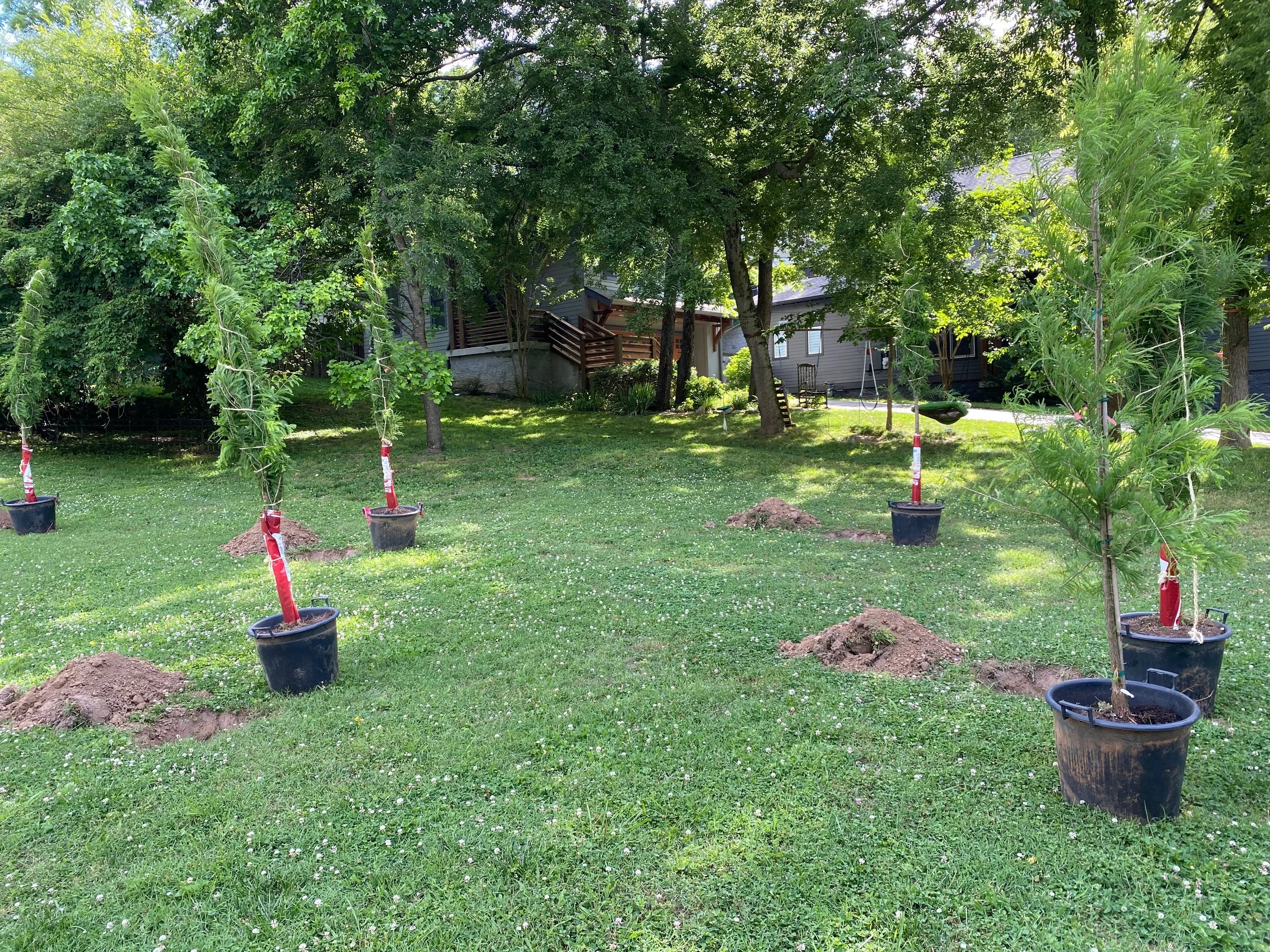
When a tree needs to be removed, there’s a period of years to decades before a newly planted specimen reaches the size of the one it replaced. This gap in coverage can be reduced by planning ahead for specimen replacements and maintaining a variety of ages of trees in the canopy. When possible, planting a new tree years before a planned removal can help maintain an area’s ecosystem services and productivity over time, with reduced disruption.
In this article, we’ll explore succession planning for Nashville trees and why it’s important to always have younger trees growing among the big, mature ones across an area. Then, we’ll share how homeowners can consider the future of their property’s landscape with some simple planning steps or in collaboration with a certified arborist.
What Is Succession Planning for Trees?
You might know about succession planning from the world of business, where executives and other leaders take newer recruits under their wings in hopes of developing them for the future. That way, when the seasoned professional retires or leaves, there’s someone waiting to take over and the enterprise doesn’t grind to a halt. This is a natural concept, so it’s easily applied to trees!
Succession planning for trees refers to planting younger specimens beneath or near mature trees many years before they need to be removed to ensure continuous canopy coverage as older trees decline. This provides a more gradual transition of landscape features and reduces gaps in ecosystem services in that location, such as shade, air purification, and wildlife habitat.
For example, when a big, old bur oak starts to show signs of slow decline years before it will need to be removed, an arborist may recommend planting a successor tree nearby: far enough to not compete with the tree, but close enough to eventually replace its effect. As the younger tree grows over the next decade or two, it gradually assumes the shade function, so when the time comes for the older tree to be removed, the property retains more significant canopy cover than starting over with a sapling.
In addition to smoother tree transitions that allow for continued ecosystem services, a good succession strategy helps a property retain tree-related appraised value by accruing those years of growth. Every property is unique and will have particular constraints and opportunities for landscaping.
Why Succession Planning for Trees Is Important for The Local Ecosystem
A healthy mature forest usually contains seedlings, saplings, mid-age trees, and older specimens, as well as decomposing wood, fungal networks, and layered habitat, but many urban forests are missing parts of that cycle. Across an urban area, there may be:
Aging canopy trees with almost no regeneration underneath or nearby.
Monocultures vulnerable to pests or disease.
Trees with little to no other greenery around them.
Disturbed soil and varying quality from parcel to parcel.
Lack of tree maintenance, like not pruning around infrastructure or buildings, or underwatering in hot locations.
Non-replacement of some lost trees, whether to age, damage, or clearcutting.
More active management of urban forest parcels and landscapes can help improve those conditions where they exist. Urban forests like Nashville have certain garden-like characteristics that create both challenges and opportunities for good ecological management in the built environment:
Intentionally planted trees, with intentional species choice.
Purpose-driven plantings: privacy, ornament, wildlife habitat, soil stability, and shade.
Need of conscious maintenance, including pruning and watering requirements, and caution near utilities and machinery.
Dependence on people in the built environment’s modified conditions, such as urban heat, hard surface cover, buildings, specimen isolation, and water availability.
Varying space and soil constraints that allow only specific types of trees to fit and thrive.
Ongoing threat of invasive or opportunistic plants and pests that thrive in open, disturbed, or difficult conditions.
So instead of a self-sustaining successional process, cities create ecosystems that often depend on continuous human management to remain stable.
Over time, urban forests have become neither fully natural nor fully engineered systems, but a mixed system operating under unique environmental conditions. Succession planning engages with the fact that urban ecosystems don’t naturally regenerate and maintain themselves without intentional planting and long-term stewardship.
Succession Planning in Nashville’s Canopy
A tree succession plan will be unique to each property, depending on the size, age, condition, and expected longevity of existing trees, as well as the site's growing conditions. It's helpful to develop a succession plan in consultation with a certified arborist who can take into account tree conditions, property constraints, and the complexities of coordinating growth.
Here are a few considerations for a successful succession strategy:
Plan for mature size: Plant replacement trees where they have adequate space to reach maturity without creating conflicts with existing trees, structures, utilities, or overhead power lines.
Shade and sun availability: If the new tree will grow in any shade, be sure the species can tolerate it. If there is open, sunny space in another part of the yard, a sun-loving tree is an option.
Tree species diversity: An aging tulip poplar may be replaced with another tulip poplar; however, if there are already many tulip poplars nearby but few beeches or sycamores, consider planting a different species to improve the long-term biodiversity and resilience of the local tree canopy. Be sure the selected species is compatible with your property's soil and site conditions.
Protect young saplings: Protect young trees from deer, mechanical damage, drought, and severe weather, and provide supplemental watering during establishment.
Keep records of all tree care assessments and work history, tree purchase documents, and any other relevant information in a tree records file, which will be useful to inform future succession planning.
For any questions about the trees in your landscape, feel free to reach out to us at Nashville Tree Conservation Corps! Our tree sale is returning in September, so now is a good time to start planning for tree plantings this fall. We source our trees directly from local nurseries, allowing us to sell them to Nashville residents at below-retail prices.
Our tree sale is focused on getting trees to residents, not on profits for us: we rely largely on donations from Nashville residents and groups to fund our work to promote, preserve, protect, and plant trees in the city. Nashvillians can contribute to our operational funds, or donate a tree for us to plant.
Sign up to volunteer with us, and be sure you’re on our email newsletter list for updates on Nashville’s urban forest and residential tree care tips. Check out our Linktree for more ways to connect.