
How Trees Near Schools Can Impact Student Learning Experiences
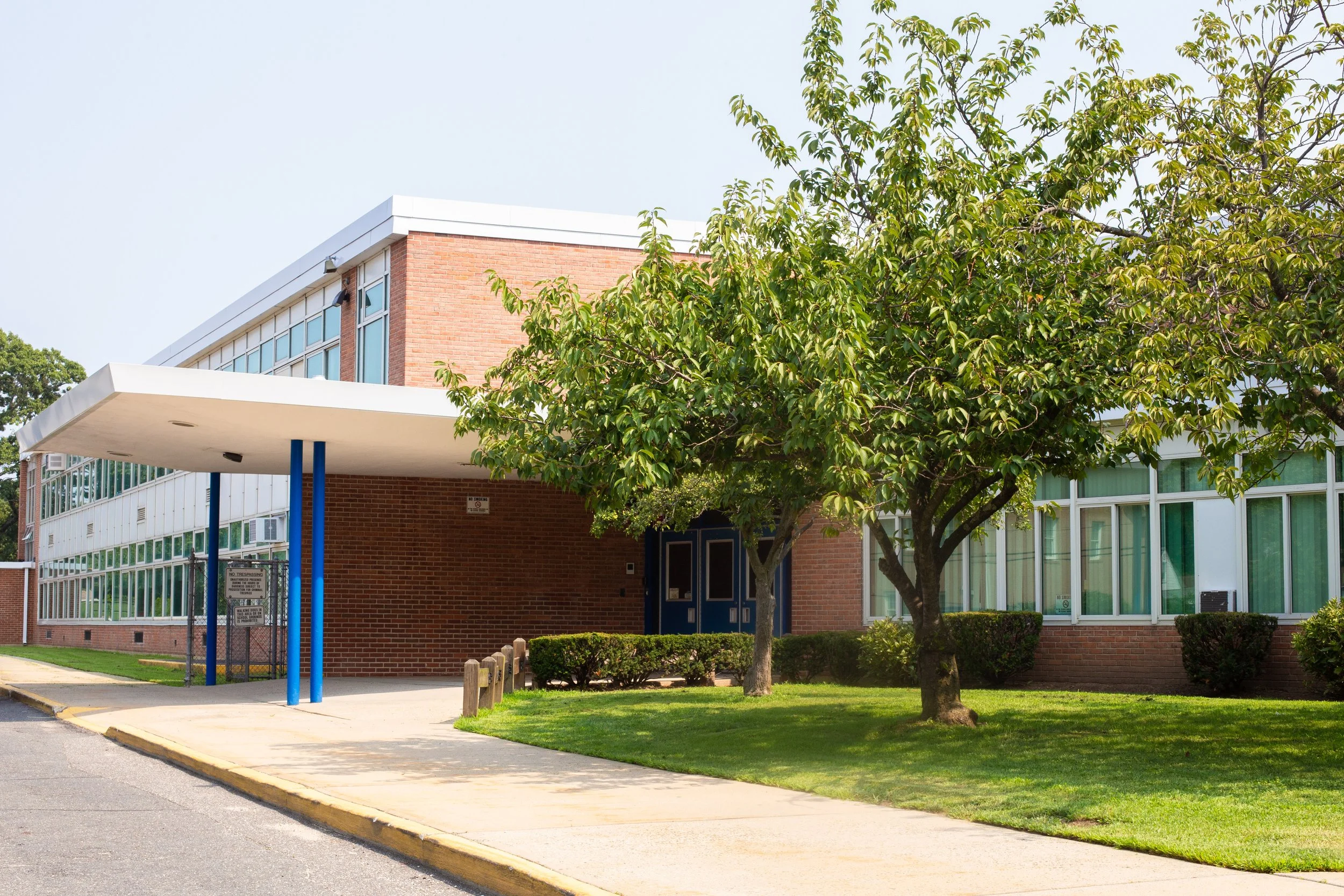
The original academy, in Plato’s Greece, was a grove of trees where the ancient philosopher taught his students about the world. Today, educational institutions usually hold class indoors, but with travel to and from school, as well as recess, field trips, and other outdoor study opportunities and extracurricular activities, education still draws students outside.
Studies show that trees in and around schoolyards have a positive impact on student learning experiences due to a mixture of ecosystem service effects and direct exposure to greenery. In this article, we’ll examine some of the research that shows how canopy cover near schools (as well as opportunities to engage with vegetation) can support educational outcomes.
Towards the end, we’ll share how residents can donate a tree to a Nashville school through NTCC’s school tree planting program!
Trees as Educational Infrastructure
In a 2005 study based on a nationwide phone survey of attitudes towards urban trees and memories of childhood experiences with gardening and nature, it was found that both passive and active interactions with plants during childhood were associated with positive adult values about greenery. The strongest influence came from active gardening, such as picking flowers or planting trees.
The same study found the opposite to be true: that low exposure to greenery potentially leads to a lower value, or consciousness, of nature, implying that adult environmental awareness and attitudes towards conservation can be formed to a significant degree by exposure in childhood.
The school setting, then, is an important developmental environment, where children spend more than half of their day. While canopy cover is increasingly recognized as essential urban infrastructure, a 2026 paper called for school trees to be specifically recognized as critical elements of a city’s environmental management strategy.
Many academic studies on the impacts of trees and natural environments on student performance can help us connect landscape conditions with educational experiences. Below, we’ll look at this from a few perspectives:
Environmental effects from ecosystem services.
Engagement with trees and plants on school grounds.
Psychological impacts of exposure to greenery.
The potential for academic impacts.
Let’s explore!
Tree Ecosystem Services and Schools
Many urban schools are surrounded by impervious surfaces and have limited tree canopy, creating environmental conditions that can affect children’s comfort, health, and learning.
Heat is particularly important: excessive heat can impair cognitive performance, attention, and working memory, while trees and other vegetation can moderate local temperatures and provide shade in schoolyards, playgrounds, and other outdoor spaces.
Although air conditioning can battle warmth indoors, shade trees near schools help moderate local temperatures and provide relief from the sun, especially in schoolyards and playgrounds where kids spend recess, PE, and time before arrival and after dismissal.
Studies show surface temperatures can be many degrees higher on hard, sun-exposed surfaces and in open spaces than under tree shade. In 2026, NTCC researched this phenomenon in Nashville parks: we assessed and ranked the city’s 148 parks based on their need for shade, and the results are available on our website.
Trees and other vegetation can also reduce exposure to air pollution and help buffer environmental noise, both of which are associated with adverse health and learning outcomes in children.
Engagement With Nature in Schoolyards
A paper from 2014 investigated how playing and studying in green schoolyards can reduce stress and promote resilience factors in both elementary and high school students. The authors described how natural areas on school grounds helped students focus, relieve stress, build competence, and form supportive social groups.
A 2013 study on organic outdoor learning environments showed that the staff and children in their study all expressed their preferences for natural elements in their garden play area. The teacher and assistant observed a group of kindergarten children’s responses to the implementation of features including a teepee, mulch, greenery, flowers, and loose organic materials. In follow-up interviews, they reported positive child responses, including richer imaginative play, increased physical activity, calmer, more focused play, and positive social interactions.
School greenery is especially important in urban places, where tree cover and gardens may be inconsistent. A Belgian study on student attention in urbanized environments suggests that green space within the school may partially compensate for limited exposure to green space in highly urbanized environments, with beneficial effects on child development, attention, and well-being (while extending urban greenery benefits beyond the school boundaries).
Psychological Exposure to Greenery
Students are also mentally engaged with their environments throughout the school day. They take in their surroundings as they travel to and from school through surrounding neighborhoods, spend time on school grounds, and look out of classroom windows.
In a 2016 study of Illinois high schools, the authors found that classroom window views of green landscapes positively impacted students’ attention and stress levels during demanding schoolwork.
Similarly, a 2002 study showed that elementary- and college-aged students have better memory retrieval and improved learning outcomes in a relaxed learning environment, which calming natural landscaping can promote.
Academic Performance Near Trees
Multiple studies have investigated the impacts of tree canopy cover on academic performance, showing how the environmental benefits of tree canopy cover can support real learning outcomes.
An article from 2017 linked school environments and academic performance. The authors found that schools with more trees had a higher percentage of proficient or advanced scores in math and reading, while large expanses of open land (which they call “featureless landscapes”), had negative effects on academic performance.
A 2019 study examined how the outdoor environment surrounding schools impacted student performance, looking at tree cover density and public high schools across Illinois. They found that higher tree cover density within a one half-mile to one mile radius of the school was positively associated with academic performance and college readiness.
In a 2021 paper, the authors explored the role of a school’s landscaping on academic performance: they studied the surrounding greenness and academic achievement relationship in 450 public schools in Washington State, measuring the “buffer area” of tree canopy cover and total green cover. The authors found that planting trees within a roughly 275 yard buffer around the school can maximize the effects that the canopy cover may have on academic achievement.
Canopy and Classroom: Practical Takeaways
The key takeaways from the research on trees and student experience and performance include:
Exposure to and engagement with greenery during formative educational years can have lifelong benefits of environmental awareness and personal values held about nature.
The ecosystem services produced by trees and green cover affect physical comfort, which can impact students’ attention and memory.
Natural features in playgrounds are well-received by students and teachers, especially in urban areas, where access to greenery is often limited.
The visual environment can impact students’ experience, both in the school building and on school grounds.
Tree cover around schools is positively associated with student performance when taking into account their proximity to trees, on the way to school as well as while on school property.
While many variables factor into a student’s educational success, the research shows that the presence of trees can contribute to positive learning outcomes.
When trees are present in and around schoolyards, they can also be integrated directly into curricula as educational resources to increase awareness of the benefits of canopies and good landscaping, and build environmental literacy. Some of these ways include:
Tree-planting and tree-care activities with students.
Campus greening, gardening, conservation, or forestry clubs.
School orchard or community garden programs.
Art, photography, language arts, or science lessons focused on trees, forests, and landscapes.
Nature walks and tree identification activities.
Tree-themed volunteer projects with local parks or conservation groups.
Promotion of tree-oriented careers like arboriculture and forestry.
Green Schoolyards America, a school greening nonprofit, has researched the challenges, needs, and opportunities related to implementing more green cover on school properties, which include:
District policy and design standards.
Tree and landscape maintenance requirements over decades.
Dedicated, ongoing funding.
Building up these standards in Nashville’s schools would be a way for the city to expand the reach of the urban forest, investing in both critical environmental infrastructure and foundational educational resources.
In the meantime, planting trees where we can today is a real step we can take towards schoolyard greening around Nashville.
Donate a Tree to a Nashville School
Help Nashville schools combat shade by donating a tree through Nashville Tree Conservation Corps’ tree salel!
When you check out on the tree purchase page, you’ll be asked for the nearest cross-street for delivery. Enter “For a school,” and we’ll make sure it gets delivered, planted, and cared for with a maintenance plan at a school in need.
In conjunction with our shade report on Nashville parks, NTCC will promote the importance of school trees in our community and legislative advocacy for canopy cover in our children’s spaces, including parks, playgrounds, and schoolyards.
Connecting With Nashville Tree Conservation Corps
Our residential trees impact children at home and throughout the neighborhood as well, so if you have space to plant one or more trees this year, browse our tree sale, open from September to February!
On September 26, 2026, NTCC will be holding a volunteer event to do cleanup work in Shelby Arboretum in the East Nashville neighborhood. Check out this post for more information on the event, or click here to sign up to volunteer!
Join us on October 17th for An Evening Among the Trees, an intimate gathering with NTCC that provides us with an opportunity to connect with you, our supporters, and celebrate Nashville’s tree canopy. RSVP by October 9th. Get details and buy tickets on our events page.
Consider a donation to NTCC to help fund our mission-driven work, and sign up to receive our email newsletter. Check out our Linktree for more ways to connect!