
Working in Nashville's Urban Forest: Arborist Workforce Development
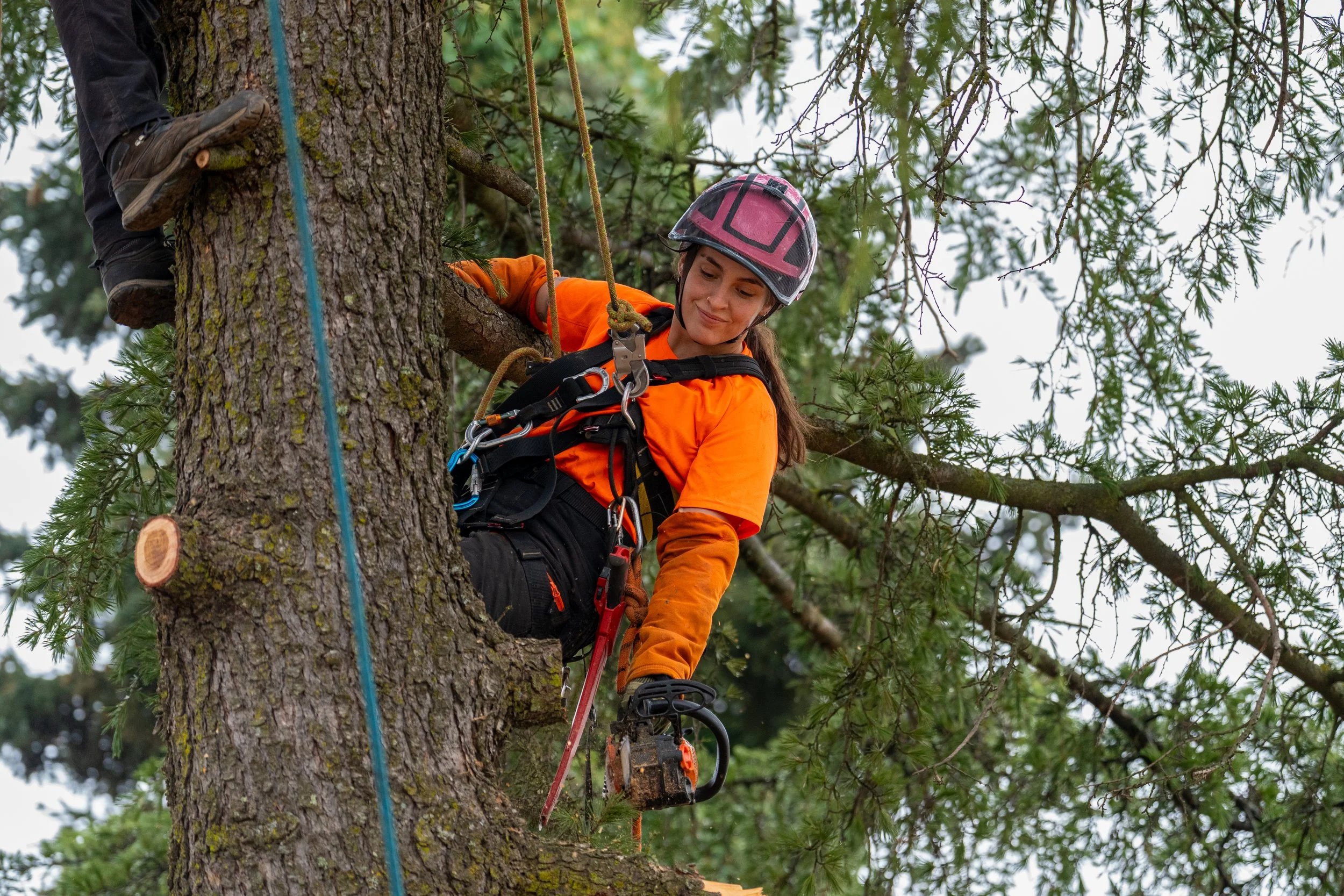
Arborists are in demand! Urban forests are increasingly important for environmental resilience, but many regions face shortages of trained arborists. Winter Storm Fern highlighted that Nashville is not an exception to this: when our own urban forest’s workforce was deployed, we recognized a critical shortage of local arborists to address the hazardous tree situations created by the storm.
In general, the urban forest needs skilled arborists for ongoing maintenance of each of the individual trees that, together, make up Nashville’s canopy. The standards, capabilities, and availability of the arborist workforce connect directly to our city’s tree canopy conditions.
In this article, we’ll look at some of the reasons for the arborist labor shortage, as well as the present and future workforce needs of urban forests. Then, we’ll go over the skill requirements, training options, and industry certification that provide professional development for arborists.
The Arborist Profession Needs More Workers
In nature, trees are more or less self-sustaining, but in cities and neighborhoods, trees require specialized care to remain safe and healthy within the built environment’s modified conditions. Planting and protecting trees are essential, but it’s the specialized care by trained arborists that keeps trees alive, in good shape, and able to perform vital ecosystem services like air filtration, cooling effects, and stormwater management.
The survival of urban trees depends on specialized labor from people who:
Knowledgeably assess their condition.
Prune and maintain them correctly.
Manage them for pests and disease.
Respond to damage after storms.
Provide special care for older trees.
We need more of these skilled people! The arborist industry currently has challenges that can be met with an expanded workforce. These challenges include an aging demographic, limited public awareness of arboriculture careers, and competition for labor with other trades.
There are certain aspects of the profession that require a level of commitment:
Physically demanding, potentially high-risk duties.
Safety and training requirements.
Insurance and liability requirements.
For many tree care professionals, it’s a meaningful and rewarding occupation. It’s largely spent outdoors, involves problem-solving, and contributes to environmental health and safety.
Arboriculture is highly skilled work, requiring discipline, judgment, plant science, equipment operation, and local ecological knowledge. When tree crews do their jobs perfectly, it seems like nothing happens: no branch failures, no canopy collapse, less heat stress, and less runoff damage.
Preventive labor can be hard to see and value because success is in the absence of issues, and tree maintenance tends to pay off over years and decades. Nevertheless, the need for a robust arboriculture industry for long-term urban environmental sustainability is increasingly appreciated.
Urban Forestry Career Outlook
Arborists are likely to be in strong demand in the future. Cities are investing more in their urban tree canopies as infrastructure to manage heat, water, and air quality, while more extreme weather creates a greater need for professionals who can perform tree risk assessments, proper pruning, and storm damage response.
At the same time, many experienced arborists are nearing retirement, creating a workforce gap in a profession that is hands-on, requires training, and is difficult to automate. Arborists with experience and certifications (more on that later) often have good job security because tree care is an ongoing, widespread need.
Arborist Workforce Development
Arborists are tree healthcare professionals, and they have to know about trees inside and out. They’re skilled in tree identification, pruning techniques, health evaluation and treatment, and best care practices that keep tree specimens in sturdy, healthy condition.
Arboriculture can be a long-term profession, with various tree service jobs within the industry, including:
Field operations: Climbing arborist, crew leader, and operations manager are all on-the-ground positions that prune, stabilize, and remove trees carefully and safely.
Tree health and diagnostics: Assessing, diagnosing, and treating trees for diseases, pest infestations, or other infections is an essential part of keeping trees healthy over their lifetimes.
Urban forestry and planning: Trained arborists have valuable experience and knowledge to contribute to city managers and legislators who rely on experts to advise and oversee urban forestry programs.
Consulting: Experienced arborists can provide knowledge and advice to tree managers, offer expert testimony in litigation, and create inventories and management plans for larger properties.
Research and education: Researchers and teachers lead the way in educating about tree care and best practices, sharing usable information that other professionals reference.
Business leadership: Sales, consulting, and company management are all essential administrative aspects of providing arborist services.
Experienced foresters and arborists often carry area-specific knowledge in their heads:
Which species do well in local soil types.
How utilities conflict with trees.
Which pests and diseases are prevalent.
Local flooding habits.
When workers retire, cities can lose institutional memory fast. That’s why it’s important for strong technicians to evolve their careers over time, to become teachers and managers for new arborists. The future of tree care depends on workforce growth and development, led by skilled and experienced arboriculture professionals.
Training for Careers in Arboriculture
There are a few ways that someone can enter the arboriculture field. Some arborists start out in an apprenticeship or training program with a reputable tree care company. They begin as ground workers, arborist trainees, or plant healthcare technicians and gain experience for arborist certification while actively working.
Others pursue a college degree in horticulture, botany, forestry, or urban forestry for a strong foundation in arboriculture before seeking technical training, while some students work part-time with a tree care company while studying.
The most recognized arborist credential is from the International Society of Arboriculture (ISA). To qualify for the ISA Certified Arborist exam, an applicant generally needs a combination of arboriculture-related education and/or practical experience.
Nashville area arborist training is offered through the Tennessee Urban Forestry Council, which hosts an ISA Certified Arborist Prep Course every August that covers tree biology, tree identification, soil science, pruning, risk assessment, safety, and climbing.
Learn more about ISA certification and arborist responsibilities in our article on certified arborist qualifications, and in our article on the ISA tree risk assessment qualification. Check out the International Society of Arboriculture’s website for more information about the credentials they offer, as well as their industry leadership and standards.
Arborists and Stewardship in Nashville
Arborists are essential caretakers of Nashville’s urban canopy, and we work with them all of the time! There are currently two ISA Certified Master Arborists on our Board of Directors. We’re happy to discuss careers in the arboriculture field with anyone who might be interested, so reach out to us to start a conversation!
Nashville Tree Conservation Corps is holding a volunteer day for tree maintenance in Shelby Avenue Arboretum in September! Sign up here to join us on Saturday, September 26, 2026, from 8:00 A.M. to noon, when we’ll perform some basic maintenance activities like spreading mulch and clearing brush for the hundreds of trees in our East Nashville neighborhood arboretum.
Due to the ongoing recovery efforts for this year’s destructive winter storm, the Nashville Tree Conservation Corps’ tree sale is momentarily paused, but we will resume taking orders later in the year for the next planting season, Fall/Winter 2026/27.
In the meantime, you can donate to NTCC to support our work supporting Nashville’s canopy. You can also donate a tree for us to plant in a needy spot somewhere in the city, and sign up to volunteer with us.
Sign up for our email newsletter for regular news and tree care tips, and visit our Linktree for more ways to connect.