
2026 Mid-Year Tennessee Legislative Wrap-Up: What's Next for Nashville's Canopy?
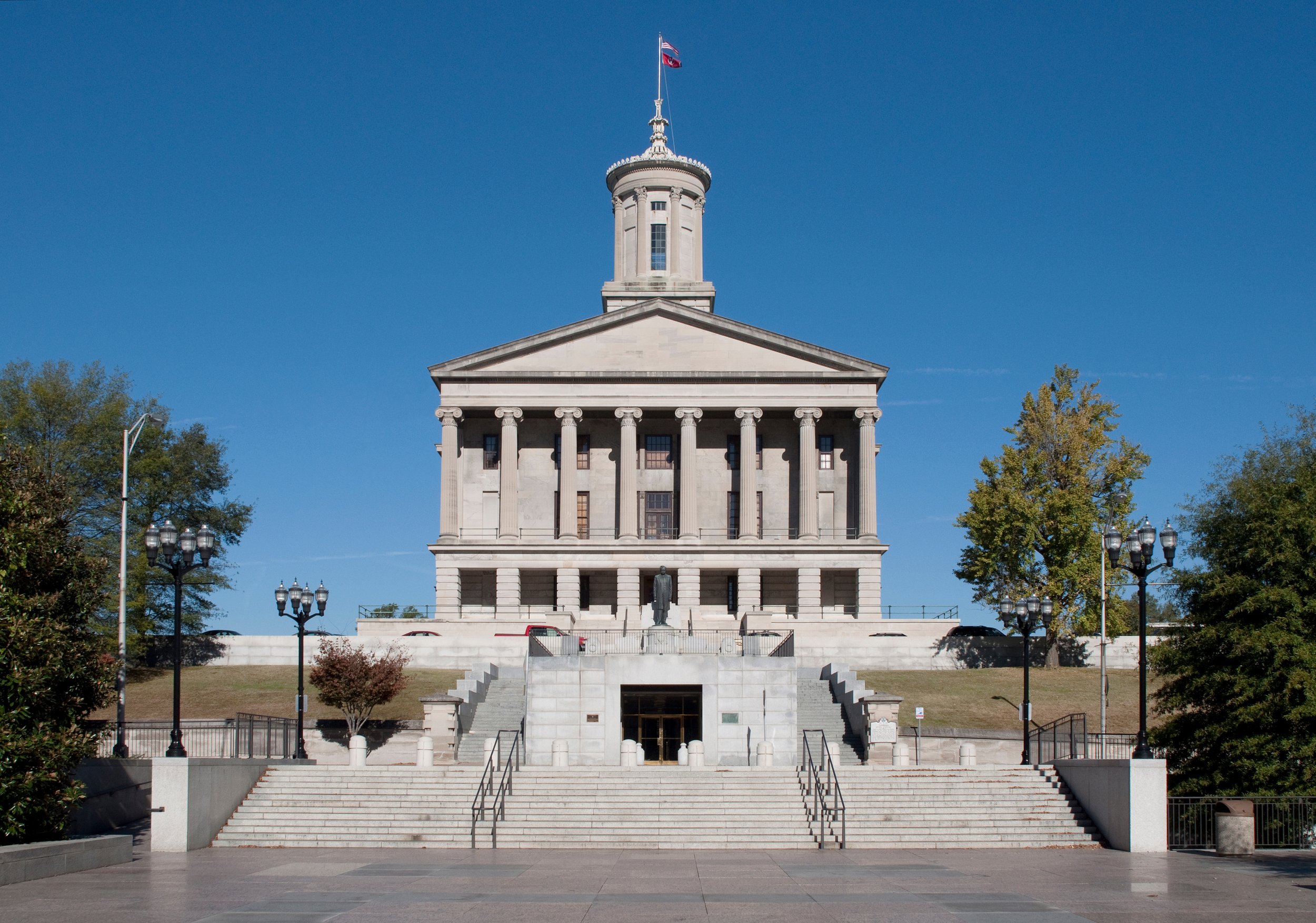
Nashville’s 2026 mid-year legislative landscape reflects a mixed but cautiously optimistic picture for the urban tree canopy, with themes ranging across development pressure, property rights arguments, and utility interests. In this post, we’ll break down what the outcomes of these pieces of legislation mean for Nashville and its residents, whether the bills passed or not.
Advocacy at Nashville Tree Conservation Corps
Advocating for sound tree legislation is an essential part of Nashville Tree Conservation Corps’ mission to promote, preserve, protect, and plant Nashville’s tree canopy! We explore what it means for us to call for good tree care in our article “Advocating for Canopies: What Does It Mean to Speak for the Trees?” You can learn even more about how NTCC takes initiative in Nashville’s urban forest in our article “How Environmental Nonprofits Bridge the Gap in Urban Forestry: The Role of NTCC in Local Environmental Stewardship.”
Stay up to date on the latest Nashville tree news by signing up for our newsletter! And get involved by becoming a volunteer with NTCC.
The Mid-Year Legislative Landscape for Nashville, TN
Nashville saw meaningful advocacy at the metro level for tree protections, a defensive victory at the state level, and active federal bills that NTCC is watching and supporting. We signed on in support of federal investment in green schoolyards and neighborhood tree equity alongside the Tennessee Environmental Council (TEC). At the metro level, we helped lead the charge on the NES Moratorium, working alongside the Cumberland River Compact and key council members to move it from concept to calendar, and we celebrated the extension of Nashville's tree canopy fund as an ongoing win for the long-term health of our urban forest.
Federal Tree Legislation and Its Impact on Nashville Trees
One of the active federal bills that we’re watching and supporting is for investment in green schoolyards and neighborhood tree equity (S 4258, Revitalizing America’s School Yards Act). NTCC signed in support of this measure alongside TEC. The bill would provide funding to transform asphalt-heavy school grounds into green, nature-based learning environments with grants of up to $1 million for shade, gardens, and outdoor classrooms, prioritizing schools in low-income areas facing extreme heat. This bill has been introduced and referred to the Senate Committee on Health, Education, Labor & Pensions for review to be considered for a vote on whether to sign it into law.
Learn about the importance of shade in children’s outdoor spaces in our article “The Children’s Canopy: Exploring The Impacts of Trees in and Around Playgrounds” and about environmental restoration in our article “How Trees Play a Key Role in Nashville's Environmental Remediation.”
Another recently introduced bill with canopy implications is HR 8474, the Neighborhood Tree Act of 2026. This legislation would amend the Cooperative Forestry Assistance Act of 1978 to provide States and communities with additional assistance to plant and maintain trees by establishing the Neighborhood Tree Fund at the United States Department of Agriculture and authorizing $2 billion in federal grants for tree-planting programs nationwide. This bill has been referred to the House Committee on Agriculture for review.
Tennessee Tree Legislation
In Tennessee, two bills that would have affected tree cover were rejected. HB 1837 / SB 1908, Tennessee Private Property Vesting Rights of 2026, sought to empower landholders to contest local zoning codes. Such a shift threatened to erode the power of municipalities to enforce tree-protection ordinances and various environmental conservation mandates. The bill would have allowed private owners to challenge local regulations, potentially compromising municipal forestry standards.
HB 402 / SB 1101, Property Tax Exemption, was also rejected: this bill aimed to establish a tax incentive for preserving tree canopy. The bill proposed allowing local governing bodies the option to grant tax exemptions for portions of land dedicated to maintaining mature forest cover. Although this one didn’t go through, we're always looking for policies that incentivize tree preservation, particularly for private property homeowners who contribute to the majority of our canopy. This was a move in the right direction, and NTCC’s policy team will continue to have conversations with lawmakers and partners about creative ways like this to incentivize preservation.
A State bill that did pass and affects trees is HB 1720 / SB 1771, Zoning Authority, which authorizes certain counties to adopt a resolution prohibiting a municipality or regional zoning commission from exercising zoning authority outside of its boundaries. Municipalities in counties that adopt this (Williamson, Rutherford, Wilson, etc.) would lose the ability to enforce tree preservation ordinances, canopy requirements, or green infrastructure standards outside their city limits. Davidson County (TN) is exempt.
This could accelerate development pressure in unincorporated areas with zero canopy protection. Nashville's regional canopy is connected: what happens in Williamson County affects Nashville's broader urban forest ecosystem.
The annexation piece (recently added amendment) is particularly important: it means developers outside city limits can now essentially opt out of municipal standards, including any tree canopy or green infrastructure requirements. If a developer declares they don't want annexation, they build to county standards only, which are typically far less stringent on canopy preservation.
This could create a patchwork of development where tree canopy requirements are inconsistently enforced across a region.
HJR 0089, a resolution acknowledging Tennessee Tree Day 2026, was passed to celebrate the statewide planting initiative spearheaded by the Tennessee Environmental Council. This yearly recognition of Tree Day is meant to officially support TEC’s cause. On Tennessee Tree Day, March 21st, 2026, the event distributed more than 62,000 native trees! Learn more about the yearly event and the organization that runs it on their official website.
Nashville Metro Tree Legislation
Here in Nashville, an ordinance was passed amending Chapter 5.11 of the Metropolitan Code of Laws (BL 2026-1287 Amendment 1, Tree Canopy Funding Extension), relative to providing funds for restoring and maintaining Nashville and Davidson County's tree canopy. The legislation removes the sunset clause on Nashville’s tree canopy fund, allowing continued funding for planting and maintenance programs. This is excellent news! The commitment of resources to environmental maintenance benefits us all, directly and indirectly, in many ways every day. We explored public funding of urban forestry programs in our article, “City Tree Spotlight: What Nashville Can Learn From Charlotte, NC.”
The Nashville community and Nashville Electric Service (NES) continue to strive to find the best way forward in regard to managing both the tree canopy and electric utilities. NTCC worked with lawmakers and the Cumberland River Compact to urge NES and the Electric Power Board to implement a temporary moratorium on recently announced vegetation management changes until after the completion of a study to determine the necessity and increased efficacy of the new, more aggressive policy and its risks. This resolution, RS 2026-1995, was passed, and we will continue our work with the many stakeholders in the Nashville community to improve and maintain canopy care standards.
Due to the ongoing recovery efforts for this year’s destructive winter storm, the Nashville Tree Conservation Corps’ tree sale is momentarily paused, but we will resume taking orders later in the year for the next planting season, Fall/Winter 2026/27.
In the meantime, you can donate to NTCC to support our work supporting Nashville’s canopy. You can also donate a tree for us to plant in a needy spot somewhere in the city, and sign up to volunteer with us.
Sign up for our email newsletter for regular news and tree care tips, and visit our Linktree for more ways to connect.