
Logging in Tennessee State Forests: Exploring Management Standards and Strategies
Tennessee State Parks and State Natural Areas are renowned for their recreation and scenic beauty, yet our lesser-known sixteen State Forests represent neglected treasures that merit more attention!
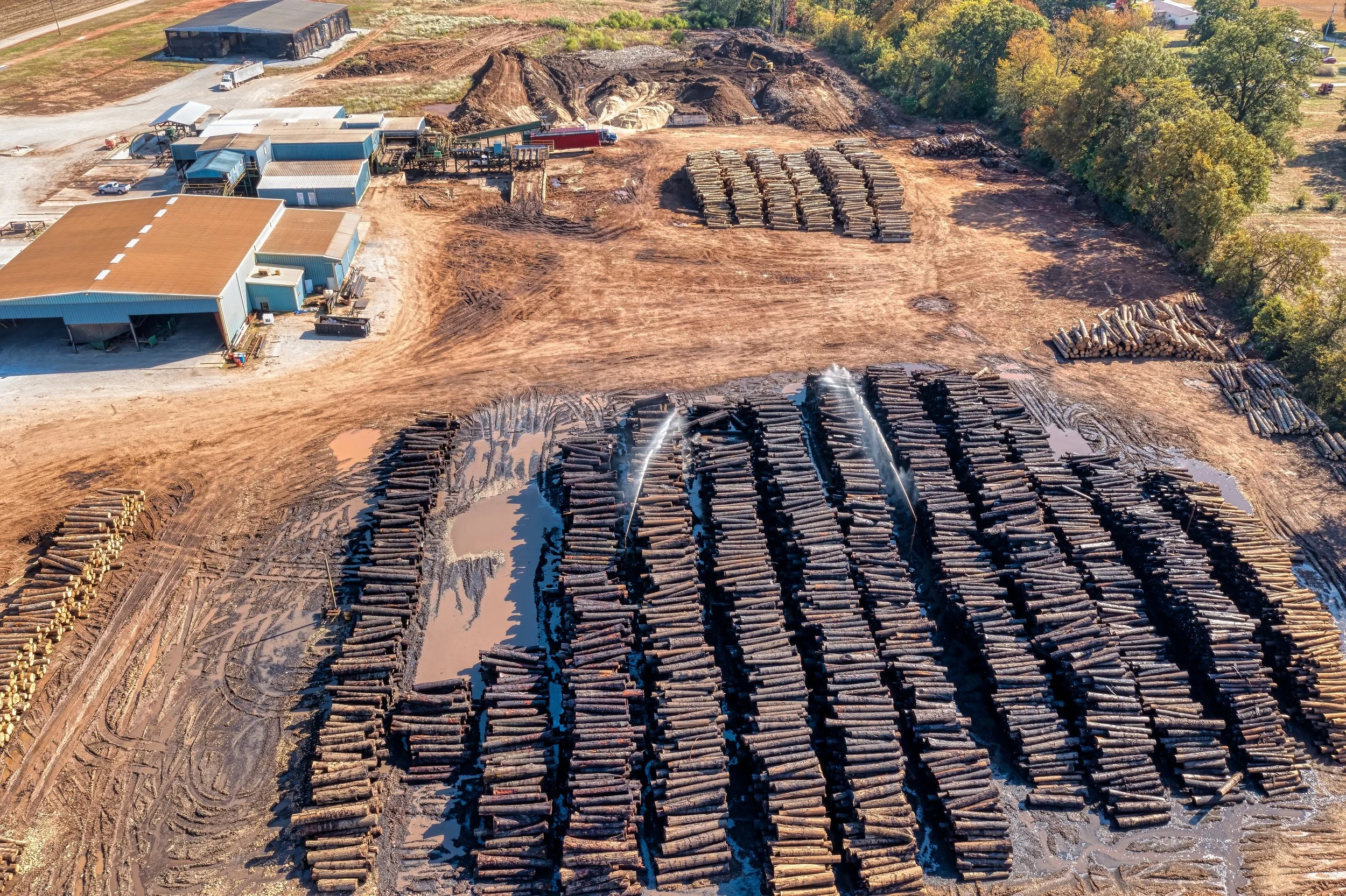
Unlike State Parks and State Natural Areas, timber harvest is performed in Tennessee State Forests, which offer multiple use values in addition to timber, such as public recreation, research and educational opportunities, regional ecosystem services, and environmental biodiversity. However, past and current logging practices have resulted in degraded environments.
In this article, we share our discussion with Davis Mounger of Tennessee Heartwood to explore the group’s work in researching and advocating for a more ecological, longer-term approach to timber harvest in State Forests. Towards the end, we’ll share how Tennessee residents can raise their voices in support of better stewardship practices in our wonderful, valuable State Forests.
Some Background on Tennessee Heartwood
Tennessee Heartwood is a grassroots organization committed to protecting Tennessee’s State Forests and strengthening community-led conservation efforts. They monitor and work on public lands ranging from the Cherokee National Forest to the Land Between the Lakes National Recreation Area and Tennessee's State Forest system.
Davis Mounger is the cofounder and one of several fieldworkers. In collaboration with his dedicated team, Tennessee Heartwood performs research on forest conditions and is currently advocating for legislation to improve State Forest management standards.
“Unsustainable logging of these forests is creating significant long-term loss in biodiversity,” Mounger told us. “This is most noticeable in State Forests like Prentice Cooper, Franklin, Standing Stone, and Chuck Swan, where you see stands of mature oak and hickory forest being cut down and the open space degrading into thickets of maples and poplars, as well as invasive species like tree of heaven and autumn olive. This isn’t limited to State Forests; it’s a trend in the region that’s been going on for quite some time.”
Tennessee Heartwood’s advocacy aims to ensure that stands of biodiverse native oak-hickory forests are retained when trees are cut for timber. This would mean improved state management standards at all phases of timber harvest: long-term planning, surveying, more selective cut logging practices, as well as attentive post-harvest management of tree regrowth.
Mounger told us that they are currently “on the ground floor, reaching out to legislators and staff, raising awareness of these issues. We’ve been monitoring and analyzing State Forest conditions for quite a long time and documenting short and long-term trends.”
Tennessee’s Oak Dominant Forests
The shift from oak-dominated forests to maples, poplars, and other opportunists reduces habitat quality for wildlife species that rely heavily on oak trees, which support high biodiversity by producing abundant acorns and hosting a large number of insects, which in turn support birds, mammals, and other creatures.
Along with oaks, the hickories, cherry, walnut, persimmon, and countless species of shrubs and other plants are vital parts of healthy and productive Tennessee forest ecosystems. When these habitats disappear, the ecological impacts are substantial. Mounger went on to explain the various use values of the forest that he believes can be better balanced with timber harvest by more sustainable management and retention of biodiversity and certain older stands.
Tennessee State Forest Use Values
There are several uses of Tennessee’s State Forests beyond timber production. These include:
Education and research: As part of their mission, State Forests are supposed to be used for research by various groups, in particular to develop science-based best practices information to support private forest owners. There is also ecological research happening at Franklin State Forest. The Cross Creek Forest Dynamics Research Area is one of the oldest continuous forest research sites in the region.
Recreation: Public access to wilderness and high-quality, engaging recreational environments in Tennessee is particularly important as a state where most land is privately held. Prentice Cooper State Forest on the south Cumberland Plateau is a favorite destination for hiking and hunting, while the Standing Stone State Forest/State Park complex has extensive recreational opportunities ranging from fishing and backcountry hiking to cultural heritage sites.
Ecosystem services: The oak-hickory ecosystems throughout Tennessee State Forests purify air, moderate temperatures, store carbon, and create wildlife habitat. Upland pine and mixed hardwood forests stabilize soil on sloping land, while bottomland hardwood wetlands help filter water and reduce flooding. More generally, forests contribute to regional watershed, stormwater, and water cycle management.
Biodiversity: The composition of the environment (the types of trees, other plants, fungi, and wildlife) determines the magnitude of the ecosystem services a forest performs, which we rely on for a good quality of life and access to resources. From the Mississippi River bottomlands of Tully State Forest to the glades of Cedars of Lebanon, our sixteen State Forests cover a range of vibrant and dynamic ecosystems.
When forests are managed responsibly, trees remain a renewable resource. However, as Mounger explains, economic activities that don’t actively manage regrowth may reduce the quality of the environment and its capacity to regenerate.
Timber Harvest in Tennessee State Forests
One of the issues with the state’s timber harvest management seems to be a lack of balance between economic and ecological values.
Mounger explained, “The state uses Sustainable Forestry Initiative (SFI) standards as metrics of success, but these were made for industrial forestry operations in the western US. It’s not designed to be a monitoring protocol for state forestry in the east, where we have comparatively little public land. The standards aren’t useless, but they aren’t even being followed consistently here. There are SFI standards for things like biodiversity, old growth, retention of denning trees (specimens with cavities or hollows where animals can find shelter), snag (standing dead trees that also provide habitat), and more that the agency should be following.”
Another problem is cutting itself. “Even sites that aren’t technically clearcuts are too heavily logged to retain biodiversity. Some cuts leave open areas with skinny trees that aren’t vigorous enough to be viable seed sources. We need trees of vigor and size to be left as keystone specimens that will reproduce and fill in spaces when trees are removed.”
Mounger suggests that considering alternative practices in their timber programs, such as thinning and other selective cutting practices rather than clearcutting to retain the composition of the forest, could improve long-term outcomes of timber harvesting and environmental quality.
“The mission of State Forests is to promote sustainable forestry, and it’s supposed to be educational for landowners. It’s not meant to really compete with private timber on the market.”
Cost-Benefit Analysis in Tennessee State Forestry
Mounger mentioned the importance of performing ecology-informed cost-benefit analysis to project long-term values compared against short-term returns.
“I would argue the State Forest isn’t a big player in the timber market, and it isn’t necessary for them to participate on an industrial scale for there to be a healthy timber market in Tennessee.”
In fact, some forests have been degraded to the point that it’s hard to make a sale. Timber sales in Tennessee can be viewed publicly, and some stands that propose a timber sale receive no bids.
“Some forests have been overcut and logged heavily in the past, and now, 30 to 50 years later, they produce low-grade trees that are not commercially desirable. We’ve even seen demonstration sites that were meant to showcase regeneration and are dominated by opportunistic growth. The quality of biodiversity and timber values are going down due to past land use that degraded productivity. With the expansion of seed banks of poplars and maples, it doesn’t look good from an ecological or economic standpoint.”
Although more comprehensive management costs money, the loss of productive stands reduces future timber revenue streams in addition to losing biodiversity, educational access, recreational enjoyment, and the regional ecosystem services that support them all.
Sustainable Management in Tennessee State Forests
Despite the evidence showing that current management strategies aren’t working out, Mounger said, “We just don’t have legislation that provides guidance to retain native forests or ecological values as a complementary part of State Forest management. When existing forest management statutes were written, ecological conditions just weren’t on people’s radar. These issues have accelerated in the last 50 years.“
Improving standards is an economically efficient first step because the structures already exist; the quality requirements just need to be applied. The complexity of the situation will ultimately require more sustainable long-term planning, as Mounger explains, “We’ve talked about trees, but we haven’t talked about shrubs, wildlife populations, or soil; there are also complicated arguments about fire, storms, and climate as factors in shaping forest development and structure. It’s easy to oversimplify what’s going on on the ground, but multiple pressures interact with forests over time.”
Developing Best Practice Standards in Tennessee State Forests
State Forest conditions are directly tied to policy standards and adherence to them, and Tennessee Heartwood’s perspective is based on years of research that provide evidence of the need for policy improvements. Their ongoing work engages with the complexity of public forest management by advocating for:
Sustainable harvesting methods with a long-term horizon.
Post-harvest monitoring and evaluation at a landscape scale.
Localized, multi-use management strategies.
Stronger ecosystem evaluation standards.
Identification and protection of certain old-growth stands within Tennessee State Forests.
Ecological restoration strategies for degraded forest environments.
Ten-year plans that engage public comment and input from the scientific community.
Recreation, scientific research, and education in State Forests.
Mounger praised the numerous opportunities that exist in preserving the remote wilderness that State Forests hold. “They should be celebrated and promoted! Even some forests that are heavily logged still have a few old-growth areas that are underappreciated or not well-known. There is beautiful biodiversity and geological formations in Tennessee’s State Forests.”
Reach out to your state officials to voice your concern about logging standards in State Forests and your desire that they be protected and maintained for public access to high-quality Tennessee environments today and in the future.
Find out more about each of Tennessee’s sixteen State Forests on the Tennessee Department of Agriculture’s website.
For more information on Tennessee Heartwood, contact Davis Mounger at info@tennesseeheartwood.org or visit www.tennesseeheartwood.org. To learn more about the challenges faced by Tennessee’s State Forests, visit www.tennesseeheartwood.org/tennessee-state-forests.
Due to the ongoing recovery efforts for this year’s destructive winter storm, the Nashville Tree Conservation Corps’ tree sale is momentarily paused, but we will resume taking orders later in the year for the next planting season, Fall/Winter 2026/27.
In the meantime, you can donate to NTCC to support our work supporting Nashville’s canopy. You can also donate a tree for us to plant in a needy place somewhere in the city, and sign up to volunteer with us.
Sign up for our email newsletter for regular news and tree care tips, and visit our Linktree for more ways to connect.