
Seasonal Change and Tree Risk Assessments: Fall and Winter
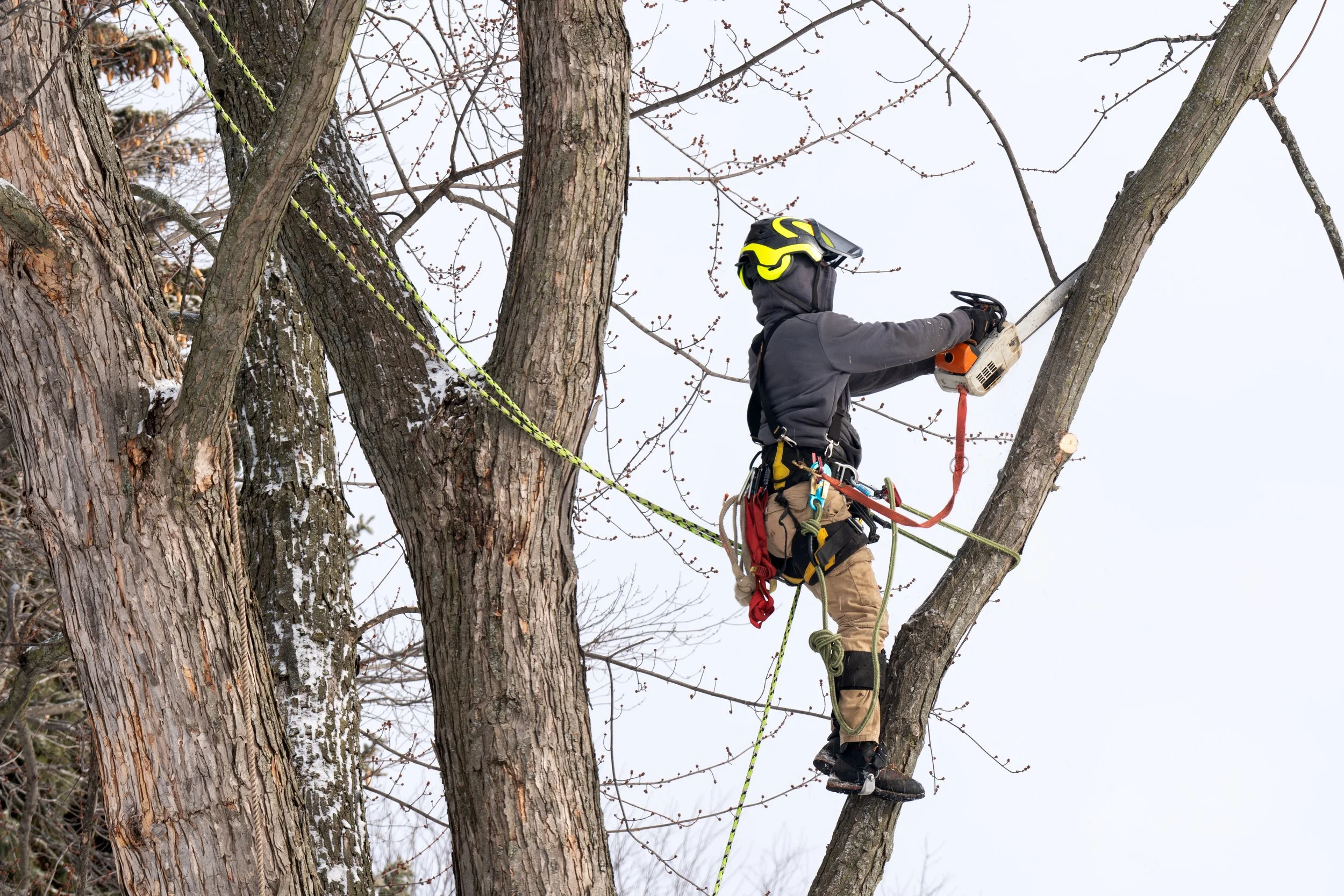
The period after a tree drops its leaves and enters dormancy is one of the best times of the year for an arborist to perform a risk assessment. After a long growing season, the upper portion of the tree becomes more visible, more easily accessible, and if there’s any removal to be done, it can be done cleanly and without damage to the tree.
In this article, we’ll cover how a tree’s leafless condition during the cool months helps arborists assess a specimen's structural risks, and why regular monitoring of each tree’s health is an important contribution to the condition of Nashville’s urban canopy. Towards the end, we’ll share what homeowners can do to keep an eye on the trees in their own yards between arborist appointments.
Why Should You Have a Tree Risk Assessment in Fall or Winter?
In fall, trees enter dormancy and drop their leaves; by the time the process is complete, the upper portions of deciduous trees are bare for the season, and fluid and energy transport to the branches slows to a much lower rate.
Arborists perform risk inspections and pruning programs during fall and winter because:
The tree’s form is more visible: With leaves off, the branch structure, defects, deadwood, cavities, weak branch connections, and overall architecture are much easier to see.
Branches are more easily accessible: Without leaves, a tree’s branches can be seen clearly and accessed more easily and safely to cut into closely and precisely.
If there’s any removal to be done, it can be done sooner rather than later, cleanly, and without damage to the tree.
Certified arborists are tree healthcare professionals trained to examine individual specimens. The International Society of Arborists offers a Tree Risk Assessment Qualification (TRAQ) that supports the professional’s ability to diagnose potential risks of a given tree, particularly in regard to the safety of people and property around it. Risk assessments are also useful when insurance companies and certain legal situations require professional assessments of a tree’s condition before or after a potential incident.
Connect with an ISA Certified Arborist this fall or winter to assess the condition of your trees by visiting treesaregood.org, and look for the TRAQ certification for a risk assessor.
How Often Should You Have an Arborist Inspection?
Arborists typically assess a tree every two to three years, but you may need an inspection after severe weather, tree emergencies, or other unexpected events.
Most trees in proximity to humans are more evolved to grow in forested areas, and their form and structure develop differently in the greater space and light usually available in properties, which is why they often require more inspection and maintenance around people and infrastructure.
While routine structural inspection of trees is often easier for arborists in winter when trees are dormant, risk assessments in spring (or throughout the growing season) can offer another perspective on a specimen’s condition. A tree’s foliage is an important signal of their health status.
Pruning live tissue is best done in dormancy, although minor pruning or time-sensitive pruning can be done most times of the year. In any season, pruning for stability is one of the main ways an arborist can support a tree’s resilience.
Healthy and well-shaped trees are better able to withstand the elements and heal from minor damage. Homeowners should watch for clear issues with trees on their property (more on that below) and contact a certified arborist when those signs show up.
The Ongoing Nature of Tree Care
Tree maintenance is ongoing, and over fall and winter, homeowners can monitor a tree’s condition by watching for obvious signs of damage during the leafless months, including hanging branches, bark loss, and cracks, holes, or cavities in the trunk.
Learn more about common winter issues to look out for in our article, “Winter Tree Problems.”
If you notice any of these signs, reach out to a certified arborist for a tree assessment! The health of every tree in Nashville impacts the people, property, and other trees around it. While a hazardous tree poses a threat to our safety, an unhealthy tree can become hazardous to other trees when it hosts infections that can spread to nearby plants. Healthy trees, on the other hand, are more resilient to diseases, pests, and minor damage from storms.
When you plant a new tree, remember that trees in urban areas are more isolated and exposed to the elements than those in natural woodlands, and they require long-term attention and care to remain healthy. Big, strong trees in good condition perform ecosystem services like air purification, soil stability, and wildlife habitat, among others, that are essential to maintaining the quality of life across an environment.
Browse Nashville Tree Conservation Corps’ tree sale, open through February! We offer a range of healthy, hardy specimens delivered to your yard from local Nashville nurseries.
Join us on October 17th for An Evening Among the Trees, an intimate gathering with NTCC that provides us with an opportunity to connect with you, our supporters, and celebrate Nashville’s tree canopy. RSVP by October 9th. Get details and buy tickets here!
Help us preserve Nashville’s Canopy by making a donation! Your generous gift will fund new trees and protect existing canopy that would take decades to replace. Or, donate a tree for us to plant in an open spot in Nashville.
Sign up to volunteer with us, and be sure you’re kept up to date by joining our email list. Check out our Linktree for more ways to connect!